“The Wonder-Seeking Mind of the Peasant”

By October 1913, picture houses had begun to be a permanent presence not only in such Irish cities as Dublin, Belfast and Cork but also in towns with even as few as 5,000 inhabitants. In such places, the film show would be the first professionally produced mass entertainment available on a long-term basis. However, many towns still relied on travelling companies to bring professional entertainment of any kind, including film shows. Clearly, population was not the only factor, but it was very likely in 1913 that a town with 10,000 people or more would have had at least one permanent picture house, but only some towns of around 5,000 had a dedicated film venue, and most of the latter were likely to be served by travelling picture or picture-and-variety shows. However, market towns of 5,000 might have a dedicated picture house if they also had a good train service and a local person or persons with access to capital who saw the opportunities being exploited successfully elsewhere.

In early October 1913, Paddy, the Irish correspondent for the British trade journal Bioscope reported on a film-and-variety show by Clarence Bailey in Ballina, Co. Mayo:

To County Mayo is rather a far cry. Nevertheless, picture shows go there from time to time, and no touring show is thought so much about as the “livin’ pictur’” one. At Ballina recently, we had Clarence Bailey’s show, a mixture of variety and films. Some of the latter included the “Derby of 1913.” Wild West subjects naturally predominate in travelling shows of this nature, the breathless rush over the dusty plains appealing to the wonder-seeking mind of the peasant (Paddy).

This piece’s use of brogue and mention of “the peasant” was typical of Paddy’s humorous condescension in covering small-town and rural Ireland. Peasants are hicks who live in the far-away west, unsophisticated provincials who lap up Westerns and out-of-date news and in so doing, provide a telling contrast to the readers of Paddy’s column as well as demonstrating the increasing reach of the metropolitan film business. Nevertheless, Paddy also provides some unique details of film exhibition in the west of Ireland a century ago. Travelling shows such as Bailey’s are very difficult to track because they often did not advertise in the local newspapers of the towns they visited, and consequently, the newspapers – the source most likely to provide details of local reception – frequently ignored them unless something else newsworthy occurred. The September-October issues of the Western People and Ballina Herald do not mention, let alone give details of the programme. Clearly, Bailey was not in the first rank of Irish travelling exhibitors, which included the town-hall showman James T. Jameson and the fairground exhibitor John Toft. Bailey’s name is known to film scholars (Barton 14), but Paddy allows us to place him in Ballina showing Westerns and the newsreel of the Epson Derby that retained some interest four months after the race not only because of an abiding interest in horseracing among an audience who had not yet seen these moving pictures but also because this was the race at which suffragette Emily Wilding Davison was killed by King George V’s horse (some fascinating discussion of this case here and here).

Ballina had recently experienced its own suffragette controversy, when Irish Women’s Franchise League members Helen Chevenix and Clara Moser visited the town on 14 August to organize a town-hall meeting for 2 September. When the women held an impromptu meeting in the street, the conservative Protestant Balina Herald claimed that “though on the whole the crowd seemed sympathetic, some unruly parties kept interrupting, and on one occasion an egg or an orange – we don’t quite know which – was flung and narrowly missed one of the ladies” (“Lady Suffragettes in Ballina”). At the September meeting, the Western People explained that the women lost the sympathy of the largely nationalist audience by a “very ill-timed reference to the assistance ladies in the North were giving Sir Edward Carson in his swash buckling campaign against Home Rule [which] made many persons think that the lady who unburdened her mind in this manner came there to preach the cause of Unionism, under the guise of a Suffragette” (“A Suffrage Meeting”). The People strongly denied the “statement that the motor car conveying the Suffragettes and their friends was stoned as it left the hall after the meeting,” all that occurred being “confined to derisive booing and shouting” (ibid.). How these local incidents may have affected reception of the film, or how the film may have cast new light on the local events, or even which film of the Derby was shown is difficult to say, but the picture shows by travelling exhibitors such as Bailey provided the opportunity, at least, to re-examine them.
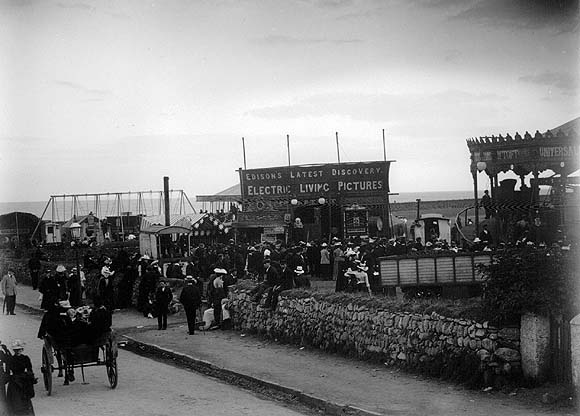
Toftpwp358

John Toft’s fairground cinematograph show at Tramore, Co Waterford, in 1901. From National Library of Ireland’s catalogue.

With a population of 4,662, Ballina did not have a dedicated venue at which such opportunities might arise on a regular basis. However, Ballinasloe, a town with the slightly larger population of 5,608 was in October 1913 awaiting the opening of a long-running, if not permanent, film venue. Although in the western county of Galway, Ballinasloe is located along the Galway-Dublin road and rail line, at the terminus of the Grand Canal. It is on the eastern border of that county, which means that it was and is nearer to the middle of the country than the west coast, and as such has long been an important meeting point between east and west, epitomized in its longstanding October fair, one of the oldest in Ireland. The town transport links and the fair’s large crowds drew travelling entertainers, so that in September 1913 alone, two travelling film companies visited before John Toft arrived to take part in the fair.
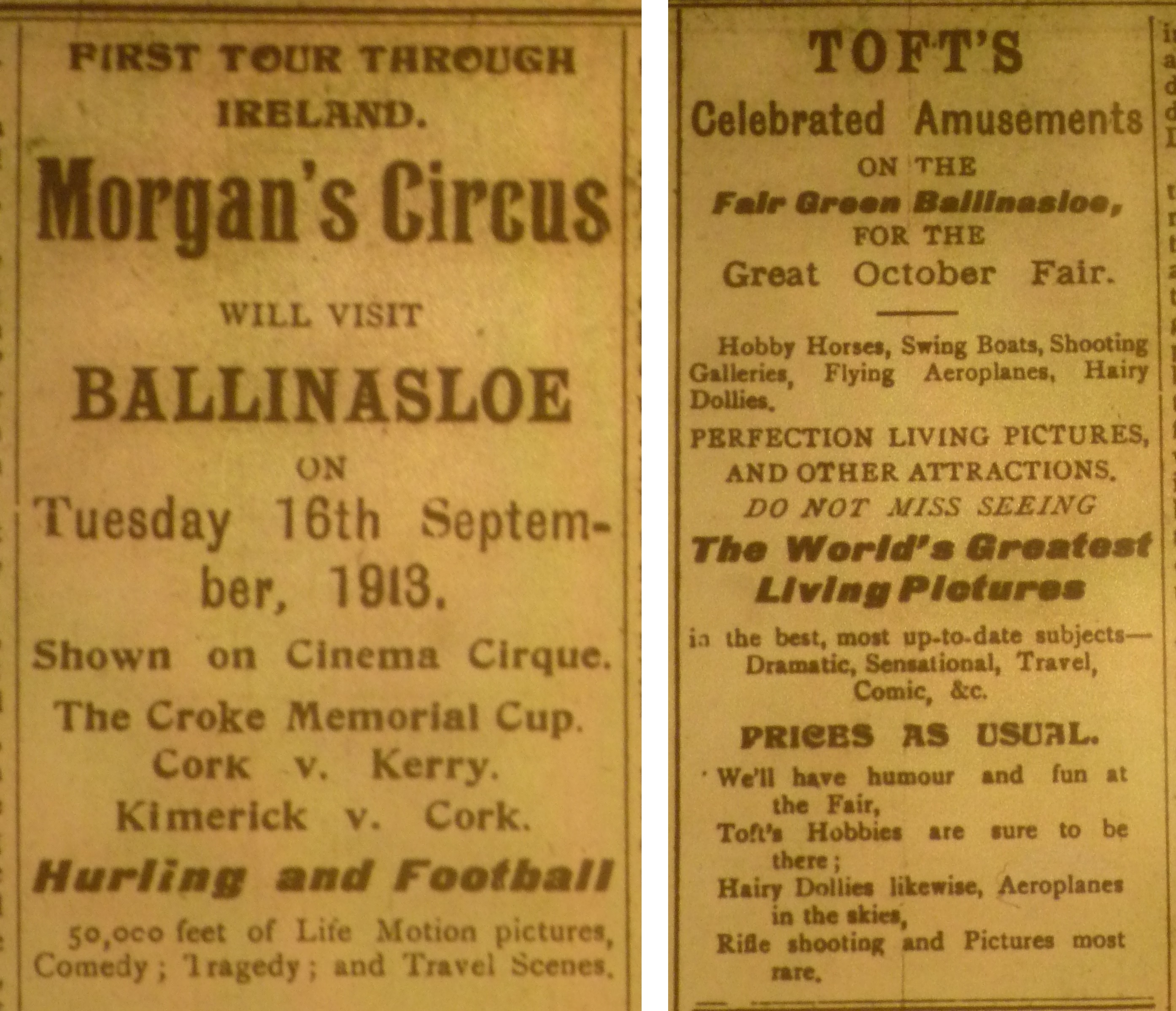
Cirque and Tofts Ballinasloe 1913

Circus and fairground shows with film: Morgan’s Cinema Cirque and Toft’s Amusements in Ballinasloe, autumn 1913. Ads for the East Galway Democrat 13 Sep. 1913 and 20 Sep. 1913.

Toft displayed a remarkable ability to manage publicity and consequently increase his audience. The East Galway Democrat praised his “readiness to aid every good work” that included his

“Benefit Night” this week in aid of the Temperance Hall, his generous subscriptions to the Nursing Fund, the Fund for the Poor, and the Gaelic League, as well as his kindness in giving the patients and inmates of our public institutions a little enjoyment. […] It is not to be wondered at that Mr Toft’s Amusements are well patronised, and that he makes friends wherever he goes (“Local Topics: Deservedly Popular Show”).

However, when Toft travelled on from Ballinasloe a few day after the end of the fair, local businessmen John Thomas Greeves-O’Sullivan and Timothy J Dolan opened a winter season of their Greeves-O’Sullivan and Dolan Picture and Variety Company, running at the Town Hall from 24 November and over the Christmas period. “No expense has been spared to provide first-class pictures,” the Democrat revealed, “and the machine to be used for the purpose of showing them is one of the latest on the market. An experienced operator has been engaged, and the Ballinasloe Orchestra will discourse selections during the entertainments” (“Local Topics: Picture and Variety Co. for Ballinasloe”).
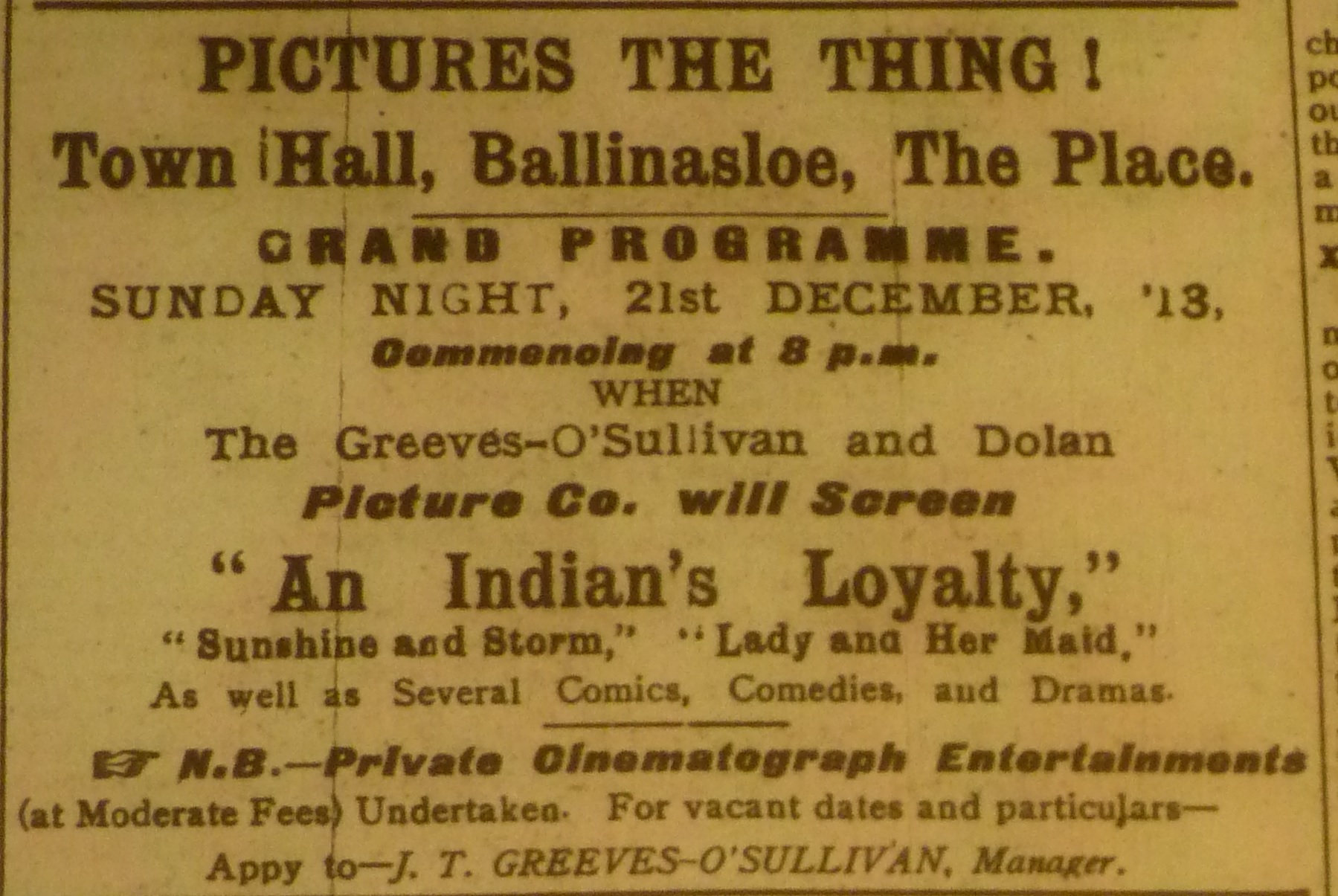
Dec 20 1913 EastGalway Democrat

East Galway Democrat 20 Dec. 1913: 4.

The company advertised regularly in the press and were acknowledged with notices, including one on 6 December that appears to bear out their claim that they changed films nightly: “to-night (Friday) a grand feature film, ‘Heartt [sic] of the First Empire or The Days of Napoleon,’ a splendid Military Drama; Sunday 7th Dec., ‘The Kerry Gow,’ a three-reel Irish Drama, Monday, 8th Dec., ‘Woman’s Heart,’ and on Friday, 12th Dec., ‘District Attorney’s Conscience,’ a splendid emotional drama” (“Living Pictures”). Despite the use of “variety” in their name, the company appears primarily to have shown pictures and their variety seems to have been limited to selections from the orchestra between films, with the piano selections of Eddie Kelly being particularly singled out in one notice.

The use of such local resources as the orchestra for commercial gain was the main criticism of the company expressed in the press. In an exchange of letters with Greeves-O’Sullivan, the orchestra’s conductor James Roche refused to participate in the venture, explaining that although he had been working with orchestra for a year without remuneration, he was not prepared to continue unpaid “where the band was being used for a private commercial speculation” (“Correspondence”). Greeves-O’Sullivan replaced Roche with local hairdresser Patrick Burke and seems to have gone on using the orchestra, but the exploitation by local businessmen of such community resources as orchestras and town halls for their own profit did cause conflict elsewhere during this period in the development of cinema.

References

Barton, Ruth. Irish National Cinema. London: Routledge, 2004.

“Correspondence.” East Galway Democrat 13 Dec. 1913: 5.

“Lady Suffragettes in Ballina.” Ballina Herald 21 Aug. 1913: 3.

“Living Pictures.” East Galway Democrat 6 Dec. 1913: 5.

“Local Topics: Deservedly Popular Show.” East Galway Democrat 18 Oct. 1913: 4.

“Local Topics: Picture and Variety Co. For Ballinasloe.” East Galway Democrat 15 Nov. 1913: 5.

Paddy. “Pictures in Ireland.” Bioscope 2 Oct. 1913: 31.

Phelan, Martin. “Emigration.” East Galway Democrat 15 Nov. 1913: 7.

“A Suffrage Meeting.” Western People 6 Sep. 1913: 6.
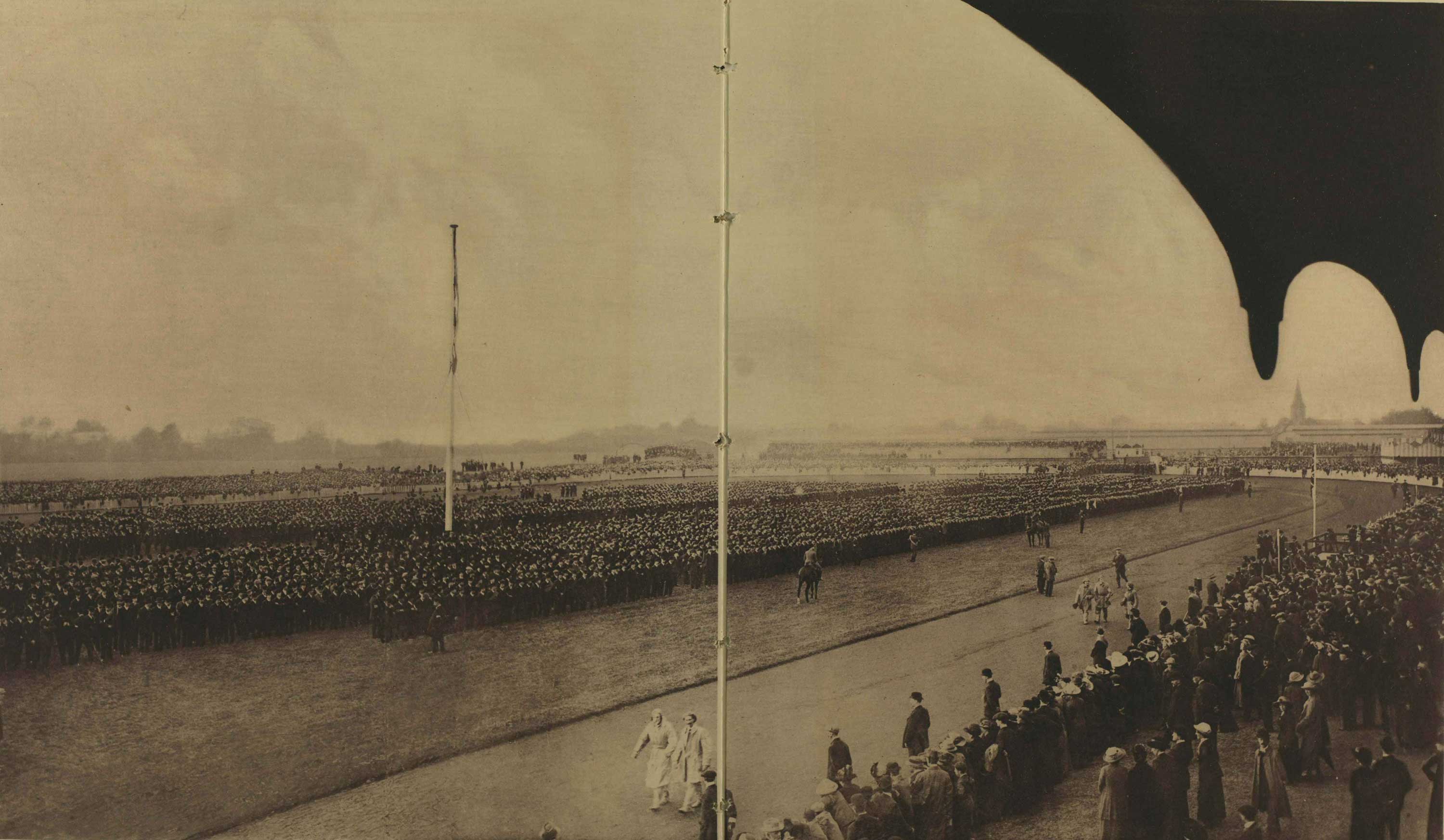
Projecting Ulster Resistance, September 1913

Image

“A view of the scene today, 27th September 1913, at the Agricultural Show Grounds in Balmoral, where Sir Edward Carson reviewed a massive parade of Ulster Volunteers.” Illustrated London News, 4 Oct. 1913. Reproduced here from Century Ireland.

The organizers of Edward Carson’s  inspection of the Ulster Volunteer Force in Belfast on Saturday, 27 September 1913, made careful plans that this show of strength would leave nobody in Ireland, Britain or beyond in any doubt of Unionist opposition to Home Rule. Carson had been appointed head of the provisional Ulster government established at a meeting earlier that week, and the inspection was to give evidence of the growing army he could call on to resist attempts to impose a Dublin-based Home Rule parliament dominated by Ireland’s nationalist majority. These events were carefully stage-managed to ensure maximum publicity, with special accommodation made for the media. Under an elaborate headline decorated with unionist flags and emblems, the Belfast Newsletter’s lengthy report revealed that the “Pressmen were even more numerous on Saturday than at the demonstration held at Balmoral on Easter Tuesday, 1912, when Mr. Bonar Law, M.P., made an important speech; and the photographers were ubiquitous” (“Ulster Volunteer Force”). As well as in word and photograph, the proceedings would be recorded on film: “the cinematograph operators were also kept busy, but they were not properly tested until the troops came in sight. Then the machines began to work, and this week in nearly all the picture theatres in the United Kingdom views of the parade will be exhibited, and the electors of Great Britain, will have the opportunity of seeing for themselves what the Ulster Volunteers are doing in preparation for a great emergency” (“Ulster Volunteer Force”).

Panopticon Reopens Sep 1913

Advertisement for the reopening of the Panopticon. Belfast Newsletter 12 Sep. 1913: 4.

Although the local press was clear that this spectacle was not just for local consumption, prominent among the cinematographers were those engaged by Frederick Stewart, proprietor of the Panopticon Picture Theatre in Belfast’s High Street, and his primary audience was in the city. “Mr. Fred Stewart, of the Belfast Panopticon,” the Bioscope reported, “is supplying local topicals, and each day finds the seating capacity of his hall taxed to its utmost – despite the fact that he has only recently doubled the accommodation. Last Saturday he scored again by screening a film record of the review of the Ulster Volunteers. The picture, which was about 200 ft. long, was shown by Mr. Stewart within four hours after the event took place, a piece of work which for smartness and expedition has not been eclipsed locally” (“Jottings from Ulster”). The Newsletter offered some more precise details, claiming that Stewart was “entitled to great credit for being the first to exhibit pictures of the Review of the Belfast Division of Ulster’s Volunteer Force on Saturday, the films being in use at 8.40 p.m., about a couple of hours after the proceedings at Balmoral had come to a termination. It was gratifying to all patrons of yesterday’s entertainment to see those delightful views, which convey a very fine impression as to the strength and general effect of the display by one section of the loyalist army (“The Panopticon,” Newsletter).

Although this suggests that the Panopticon’s clientele was as unionist as the readership of the Newsletter; the account of the exhibition of the film by Belfast’s main nationalist daily, the Irish News, indicates that the showing was sufficiently low key to be treated as news rather than celebratory spectacle. “Whatever one may think of that demonstration as a political incident,” it observed, “it was undoubtedly a news item of some interest, and credit is due to Mr. Stewart, the popular manager of the Panopticon, for his enterprise in arranging to have the affair filmed and shown on the screen as early as nine o’clock on Saturday night” (“The Panopticon,” Irish News). However, after this praise of a local exhibitor, the reviewer devoted more attention to Florence Lawrence’s role in The One Good Turn, pointing out that the actress was no longer with the Vitagraph Company and was rumoured to be considering a series of films in Ireland in 1914.

Grosvenor Drink

Advertisements for cinematograph shows at many of Belfast’s Protestant halls, including the City YMCA (at which the film of Carson’s review of the UVF would be shown on 27 Sep.) and the Grosvenor Hall, which is . Belfast Newsletter 13 Sep. 1913: 6.

The militant Ulster unionism on display at Balmoral was also Protestant, and the Protestant churches’ attitude to the cinema helps to explain the prominence of the cinematograph in the mediation of this event. Unlike a commercial picture house that might aim to appeal across both Catholic nationalist and Protestant unionist communities in order to maximize its audience, church halls only appealed to one side of the politico-sectarian divide. By 1913, many of Belfast’s Protestant church halls added the exhibition of moving pictures to their Saturday social activities. Although some Irish Catholic halls – such as the Gillooly Memorial Temperance Hall in Sligo – showed films (Condon), Protestant organizations embraced film exhibition far more wholeheartedly. The second venue that showed Stewart’s film of Carson’s review at Balmoral was the City YMCA Hall, where the audience would have broadly shared religious and political views. The Newsletter‘s review of this exhibition noted that “the great audience in the Y.M.C.A. Hall were surprised and delighted to witness a splendid series of moving pictures of Sir Edward Carson and the march past of the volunteers,” which they greeted “with loud cheers, again and again renewed” (“Smart Cinematograph Work”).

Despite the historical interest of the Carson film, cinema culture in Belfast was not dominated by films of current events. Preachers at the halls sometimes used films to highlight religious subjects, as the Methodist minister Robert Ker did when he explained “the lessons of the great picture, ‘The Curse of Drink’” before it was screened at Belfast’s Grosvenor Hall on 13 September 1913 (“Grosvenor Hall”). An understanding that Belfast audiences would appreciate a film with a temperance theme may have contributed to the Panopticon’s showing of The Temptation of Drink beginning on 22 September.  A strong additional – if it was not primary – reason was that this film featured Danish star Asta Nielsen; Stewart had also chosen Nielsen’s Spanish Blood to reopen the extensively refurbished Panopticon on 12 September. If nationalist and unionist journalists and their readers inevitably disagreed on the value of political films, they agreed on the drawing power of such star actresses as Asta Nielsen and Florence Lawrence.

References

Condon, Denis. “’Brightening the Dreary Existence of the Irish Peasant’: Cinema Transforms Leisure in Provincial Ireland.” Early Popular Visual Culture 11.2 (2013): 126-39.

“Grosvenor Hall.” Ad. Belfast Newsletter 13 Sep. 1913: 6.

“Jottings from Ulster.” Bioscope 9 Oct. 1913: 143.

“The Panopticon.” Belfast Newsletter 30 Sep. 1913: 11.

“The Panopticon.” Irish News 30 Sep. 1913: 8.

“Smart Cinematograph Work.” Belfast Newsletter 29 Sep. 1913: 7.

“Ulster Volunteer Force.” Belfast Newsletter 29 Sep. 1913: 8.

Watching Gaelic Games on Screen in 1913

With a large degree of continuity with a century ago, many more people will watch today’s GAA All-Ireland football final at Croke Park between Dublin and Mayo live on television than will attend the game. Despite the Cork’s Evening Echo’s comment in February 1913 (citing an article in Popular Mechanics Magazine) that a “prediction may safely be made that in the near future provision will be made for moving pictures in the home,” live coverage and a kind of domestic moving pictures that suited the event-based nature of sport would still be some 50 years off (“Films for Families”). Nevertheless, Gaelic games’ fans around the country did watch moving pictures of matches in their local picture house days or weeks after they were played.

Image

A film of the 1912 Munster Hurling Final between Cork and Tipperary, held at Dungarvan on Sunday, 27 October 1912, was shown at the Assembly Rooms Picturedrome the following Wednesday and then moved on to Limerick and Wexford. Evening Echo 28 Oct. 1912: 2.

Unlike today’s game, however, Gaelic games were highly politicized in the 1910s, and the GAA, with branches in every parish in the country was the strongest and most popular nationalist cultural organization. So the gathering of a local audience to watch the film of a game prolonged the demonstration of popular nationalist sentiment that the match itself represented. With such a potential audience, GAA matches drew the attention of several local picture house owners, most prominently James T. Jameson – who ran the Rotunda and a circuit of provincial venues – and Alex McEwan, a Cork-based impresario, who operated from the Assembly Rooms Picturedrome.  When Cork beat Tipperary at the Munster hurling final in July 1912, McEwan arranged to have it filmed, and the Evening Echo recorded the local interest when he exhibited it beginning the following Wednesday: “[v]iews of every passage of the exciting and scientific contest are shown, and the loud and frequent applause which was heard at intervals during Wednesday night’s performance testified to the great enjoyment that was derived by all present” (“Assembly Rooms, Cork ”). It would travel on to McEwan’s picture house in Limerick and other venues.

Cork v Tipp CE 22 Sep 1913

The 1913 film of the Munster hurling final between Cork and Tipperary at the Assembly Rooms Picturedrome had to compete with more moving-picture competition. Cork Examiner 22 Sep. 1913: 4.

This week in 1913 saw not the All-Ireland football final, but the Munster hurling final, which again featured Cork and Tipperary and was played at Dungarvan on Sunday, 21 September. Cork fans would have known from word of mouth and newspaper reports that the Cork team did not repeat its success against Tipperary, but they did not have as long to wait for the film to appear on local screens. Given Cork’s involvement and the success of these films seemingly regardless of result, McEwan had arranged to film the match for his local audience and first exhibited it at the Picturedrome beginning at 3pm on the Monday of the week, the afternoon after the match. He also needed a spectacle to compete against the five picture houses that had opened since last he had shown the Munster final, not least the newly opened Coliseum, which was heavily advertising its first exclusive feature, The Battle of Waterloo.

Gaelic football films in 1913 were a Kerry story, as is so often the case with Gaelic football itself. In early 1913, the GAA held a special tournament, the Croke Memorial, to fund the purchase of the land at Jones’ Road, Dublin, for their headquarters. In a thrilling replay, Kerry beat the All-Ireland champions Louth, and this match was filmed by James T. Jameson. In Tralee, Kerry’s largest town, Jameson exhibited at the Theatre Royal, which he held on a long lease. Although he showed the film in Dublin and Cork first, particular celebration greeted its exhibition in Tralee:

On Wednesday evening the members of the Killarney and East Kerry section of the famous Kerry team motored to Tralee to see the moving pictures of the famous match at the Theatre Royal. The motors were kindly lent by Messrs. Green and Casey, whose cars were always at the disposal of the team.

The leading followers of the team in Tralee took the opportunity of the visit of the Killarney men to give them a hearty reception after their glorious victory. There was a large and representative gathering, and songs, recitations and toasts were given. As the motors passed through the town they received a tremendous ovation (”The Team at Theatre Royal”).

References

“Assembly Rooms, Cork: Munster Hurling Final.” Evening Echo 34 Oct. 1912: 2.

“Films for Families.” Evening Echo 28 Feb. 1913: 2.

“The Team at Theatre Royal, Tralee.” Kerryman 5 July 1913: 1.

The Flictoflicker Girl

Irish Worker

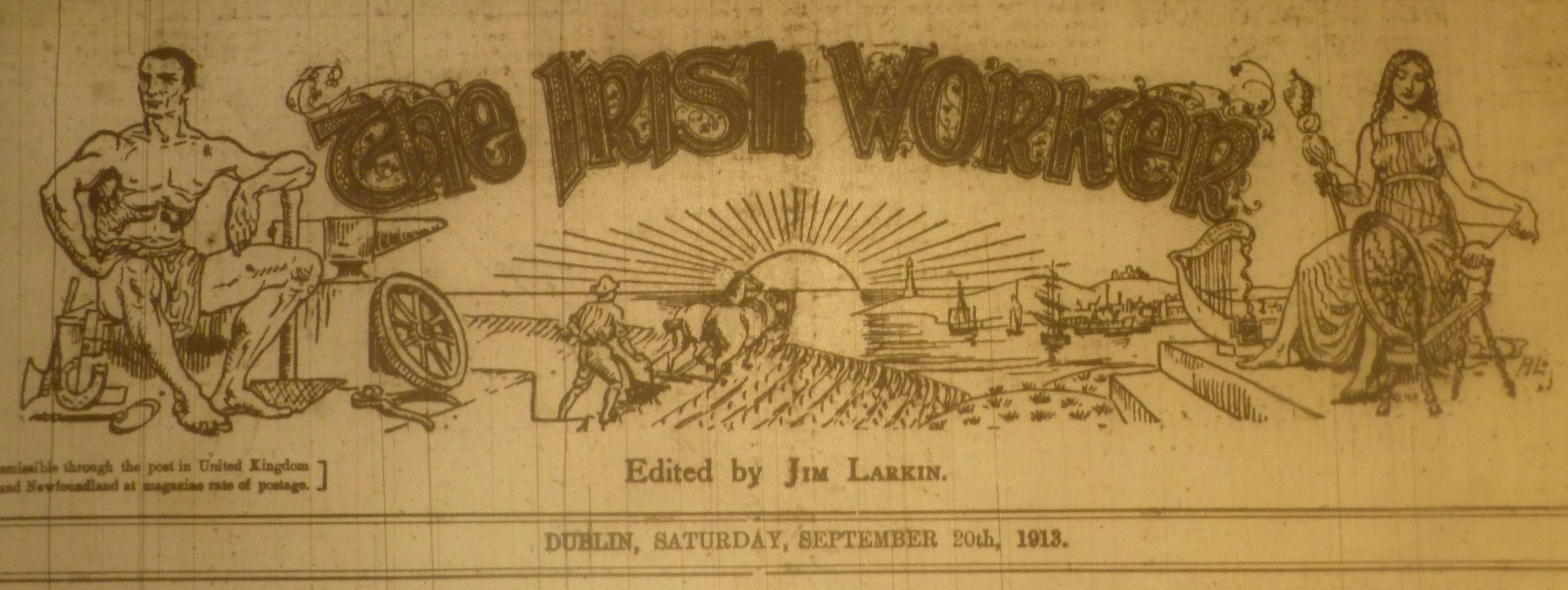
he masthead of the Irish Worker incorporated idealized depictions of Irish men and women at their labours.

We are often told that labour leader Jim Larkin was against drinking, one of the main leisure pursuits of working-class Irish people, but little is said about his attitude or that of the wider labour movement to cinema. At least in terms of sheer chronology, the rise of the Irish labour movement paralleled the rise of cinema, with a burst of activity in the late 1890s, followed by a major resurgence in the early 1910s. What did labour leaders think about the cinema, this developing cultural institution that seemed so attractive to workers?

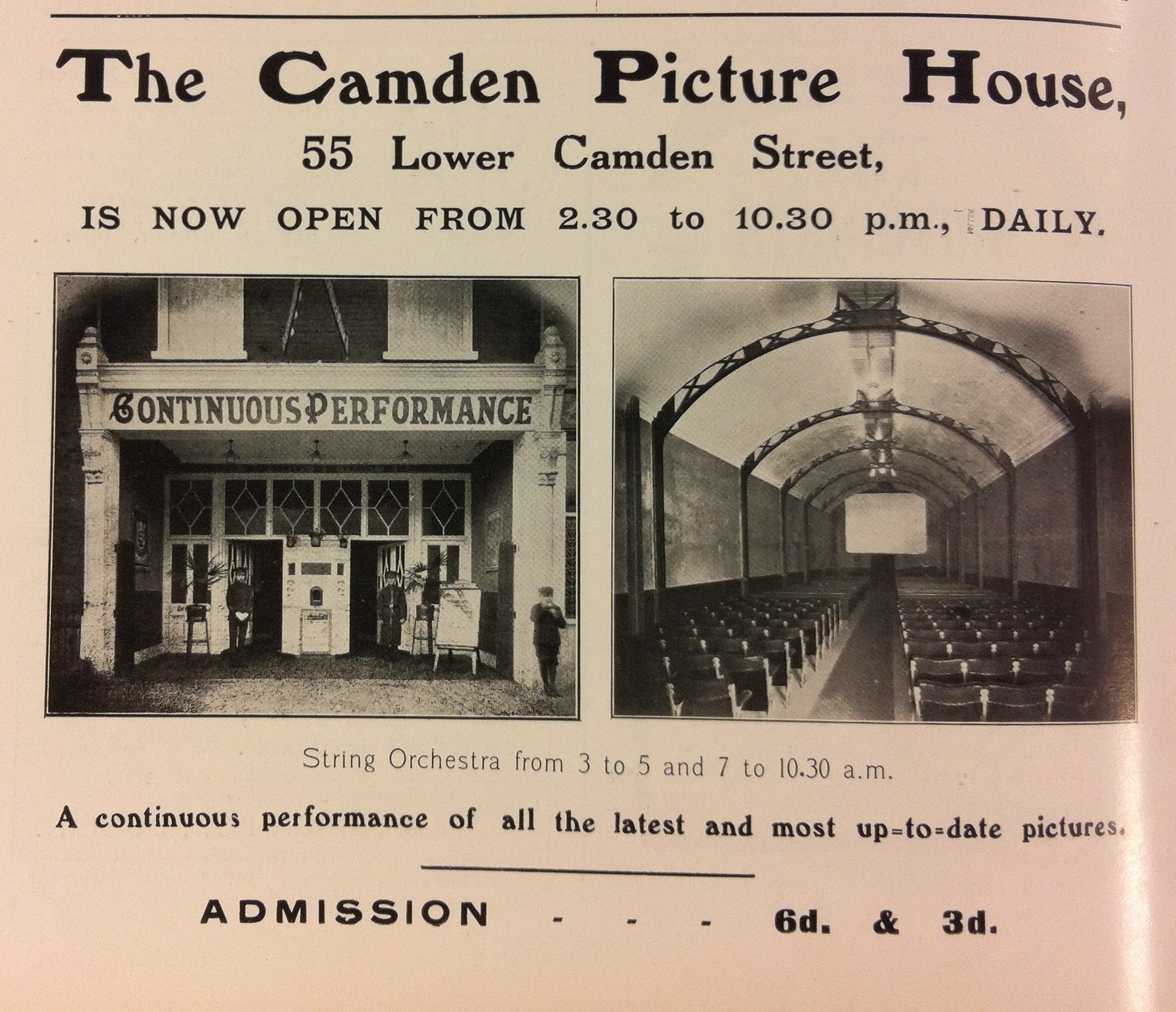
During the 1913 Lockout, labour leaders did not see cinema as a medium of agitation, an accessible way of disseminating their ideas. They did, of course, use popular media to agitate, educate and organize, but the popular agitational medium of choice was the press. Nevertheless, the references to cinema in the Irish Worker, the newspaper edited by Larkin from 1911 to early 1914, indicate that people in the labour movement were thinking about the new visual medium. Most of these references suggest that they thought about cinema in fairly straightforward ways. It was a source of income in the guise of the advertisements for the Irish Cinema in Dublin’s Capel Street, the only ads for an entertainment venue that appeared in the paper on a regular basis. It was the occasion of a parody of prominent opponents of radical labour – including Independent newspaper proprietor William Martin Murphy and picture-house owners who were also members of Dublin Corporation, J. J. Farrell and Lorcan Sherlock, the then Lord Mayor – who were said to have attended a special screening of Dante’s Inferno at the Camden Picture House on 10 February 1913 (“Farrell’s Inferno”). Beginning on 22 September, the film would have another week’s run at the Camden, accompanied by a special orchestra. And it was a new type of workplace where the more equitable worker-employer relations being demanded elsewhere also had to be fought for, as they would be when the Theatre de Luxe – another Camden Street picture house – was picketed in late September 1913 following a worker’s dismissal for union activity.

Camden PH Irish Life Dec 1912

An ad for the Camden Picture House in December 1912, showing both its streetfront – with doormen, plants, and cashbox – and auditorium.

The purpose of “The Flictoflicker Girl,” however, is much less straightforward. This short story was written by “Mac,” a pseudonym of Andrew Patrick Wilson, who also frequently contributed to the Irish Worker as “Euchan.” Scottish-born Wilson was active in Delia Larkin’s Irish Workers’ Dramatic Group, and he later managed the Abbey before returning to make significant contributions to Scottish theatre and film (“Who Fears to Wear the Blood Red Badge?”). “The Flictoflicker Girl” appeared on page one of the Worker on 23 August, just a few days before the tram strike that precipitated the Lockout, sharing the front page with articles reviewing George Edwardes’ Gipsy Love, a musical comedy playing at the Gaiety Theatre (Euchan), and analyzing the use of the term “respectability” as a way denigrating trade unionists (Shellback). Both of these articles drew out the immediate political implications of popular culture and language for Dublin workers. The extraordinary focus on culture in this issue suggests that the union was offering workers a Horse Show Week special in all but name. 

“The Flictoflicker Girl” was more oblique in its cultural critique than the accompanying articles. It tells the story of Charlie Payne, who falls in love with the screen image of Daphne Wildrew, the (fictional) Flictoflicker company’s leading lady. When he sees a film in which she gets married and is then abused by her husband, he is first consumed by jealousy and then so overcome by a range of emotions that he has to leave the picture house before the film is over and catch an early tram home. He is flabbergasted to find that the only other occupant of the carriage is Daphne who is “over for local scenes,” but he s traumatized again when she takes his declaration of love as a joke and is met at her stop with a kiss by the dastard from the film.

The story is fascinating for many reasons, but it is particularly intriguing as a unique source of information about the reception of cinema in Ireland at this early point in its institutional development. It addresses its readers – working-class trade unionists – as more sophisticated picture-house patrons than Charlie Payne, whose flight from the city-centre picture house to the suburbs marks him out as middle class and whose foolish fascination with the screen is not excused by youth; an opening paragraph carefully ages him to “that hazy period when men cease to be regarded as eligible and have not yet secured the comfort and dignity of being described as old bachelors.” However, like Charlie, who “never went to theatres, and music halls were places he detested,” readers are assumed to share his “distinct liking for picture palaces,” at least to the extent that they must have a good knowledge of what goes on there to understand the story. Perhaps his connoisseurship, his love of Westerns produced by the Flictoflicker Company, is laughable, yet it was doubtless more so for readers who know that films were already highly codified into genres – of which the Western was the most popular; “no picture programme nowadays is considered complete if it does not include a cowboy film,” as a reviewer in the Dublin Evening Mail commented (“Rotunda Pictures” 9 Sep. 1913) – and that branding by production companies was well established.

Similarly, Charlie’s infatuation with the Flictoflicker Girl would have been topical for readers familiar with the crazes for the Biograph Girl and the Vitagraph Girl, actresses only later famous under their own names Florence Lawrence and Florence Turner, respectively. Indeed, a month after “The Flictoflicker Girl” was published, the Rotunda Pictures broke “new ground as far as Dublin picture houses are concerned” by beginning to show the city’s first film serial, the 12-part Edison serial What Happened to Mary, starring Mary Fuller (“Rotunda Pictures” 23 Sep. 1913). “[A]ll who have seen the opening scenes of Mary’s adventures,” the Dublin Evening Mail reviewer commented, “will be eager to know more about this fascinating actress” (“Rotunda Pictures” 27 Sep. 1913). It is likely, however, that many of the workers who had read Mac’s story in August would have been unable to afford to sit fascinated by Mary Fuller at the Rotunda screen in late September 1913.

References

Euchan. “The Love of Ronance.” Irish Worker 23 Aug. 1913: 1.

“Farrell’s Inferno.” Irish Worker 15 Feb. 1913: 3.

Mac. “The Flictoflicker Girl.” Irish Worker 23 Aug. 1913: 1.

“Rotunda Pictures.” Dublin Evening Mail 9 Sep. 1913: 5.

“Rotunda Pictures.” Dublin Evening Mail 27 Sep. 1913: 3.

Shellback. “The Value of Respectability.” Irish Worker 23 Aug. 1913: 1.

“Who Fears to Wear the Blood Red Badge?” Irish Times 11 Sep. 2013.

The Phoenix and the Rubble of Church Street

Image

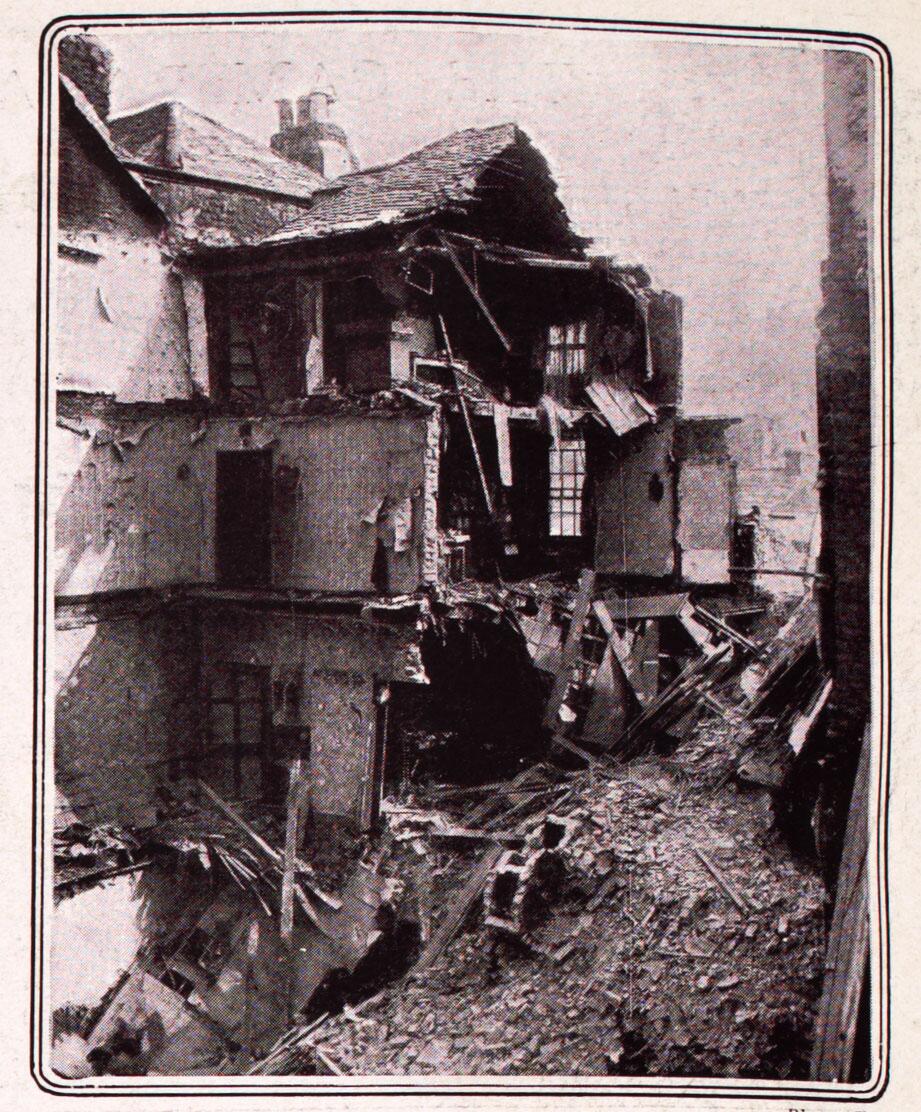
Illustrated London News, 13 September 1913. Tweeted by National Library of Ireland, 2 Sep. 2013 (pic.twitter.com/s2DtgIYSwQ).

The decision of Dublin picture houses at the end of August 1913 to screen such social events as the Horse Show and the Neptune Rowing Club’s At-Home rather than the iconic opening sorties of the Lockout is indicative of the place that cinema as a cultural institution was coming to occupy in the Irish mediascape. Although not universally true for all picture houses – and as places of employment, some became sites of the ongoing labour disputes – picture houses were businesses owned and managed by men (almost exclusively men) who either already belonged to or who had ambitions to belong to the “respectable” classes. The Phoenix Picture Palace’s activities in relation to the Church Street Disaster in the first week of September 1913 gives some evidence of this.

Few events early in the Dublin Lockout better underscore the dire conditions in which many of the city’s workers lived than the Church Street Disaster. These events have been widely written about and will be commemorated this weekend, 6-7 September 2013 by the Stoneybatter and Smithfield People History Project. In brief, at about 8:30 on the evening of 2 September 1913, two tenement houses in Church Street collapsed, killing seven people. The most affecting story to circulate in the aftermath of the collapse was that of 17-year-old Eugene Salmon who saved several members of his family from one of the collapsing buildings but died while attempted to save his sister, Elizabeth. The newspapers were happy to make Salmon the tragic victim of the slums, and Dublin Corporation eventually felt pressured into setting up a Local Government Board inquiry (Nov 1912-Feb 1913) into the housing of the working class (extracts here). Neither the newspapers nor Jim Larkin as the representative of the striking workers made much of the fact that Salmon was a locked-out worker from Jacob’s biscuit factory. This allowed employers, led by newspaper owner William Martin Murphy, to claim solidarity with slum dwellers by condemning living conditions in the tenements, supporting an inquiry and initiating a relief fund for the survivors of the collapse (Corlett).

Among the many contributions to the relief fund established by the Freeman’s Journal/Evening Telegraph newspaper group were the proceeds from a benefit night on Tuesday, 9 September at the Phoenix Picture Palace. The Phoenix was located well out of the city centre, on Ellis’s Quay, about 10-minutes walk from Church Street. It was owned by the Phoenix Picture Palace, Limited, who directors were David Frame, Henry Grandy, John MacKay and Andrew Wright (“World of Finance”). When these proprietors reported on the progress of the Phoenix’s construction in July 1912, they projected that its 1,500 seats would mainly be occupied by the working-class residents of the surrounding district (Paddy, 4 July). The rising popularity of cinema would allow such large entertainment venues to operate in residential areas of the city and its suburbs. The proprietors also clearly assumed that as the Phoenix was located on a tramline just minutes from one of the city’s main railway stations, Kingsbridge, they could rely on significant passing trade from travellers using the Great Southern and Western Railway’s lines to and from towns and cities in the south and west. For the benefit night on 9 September, the Phoenix added live acts to the previously booked films, including singers (the “distinguished artistes” Maude Harrington Clancy – a recent Feis Ceoil medal-winner – contralto Madame Gill-Gorevan and baritone Albert Vine Sanderson), humorist Chris Bruton and the “manager of the Phoenix, Mr. Cathal MacGarvey, [who] will also make a re-appearance on the concert platform for this deserving charity” (Church St. Disaster”). The nature of the event and the tone of the newspaper coverage – which made no mention of the films – suggest that this was not designed to bring together the tenement dwellers but rather represented an occasion for a middle-class audience to display their charity. As such, it was successful. A “large audience was present, including several clergymen” (“Dublin and District”), and 353 shillings and sevenpence was donated in the Phoenix’s name to the relief fund (“Freeman-Telegraph Fund”).

Coliseum Opening 1913

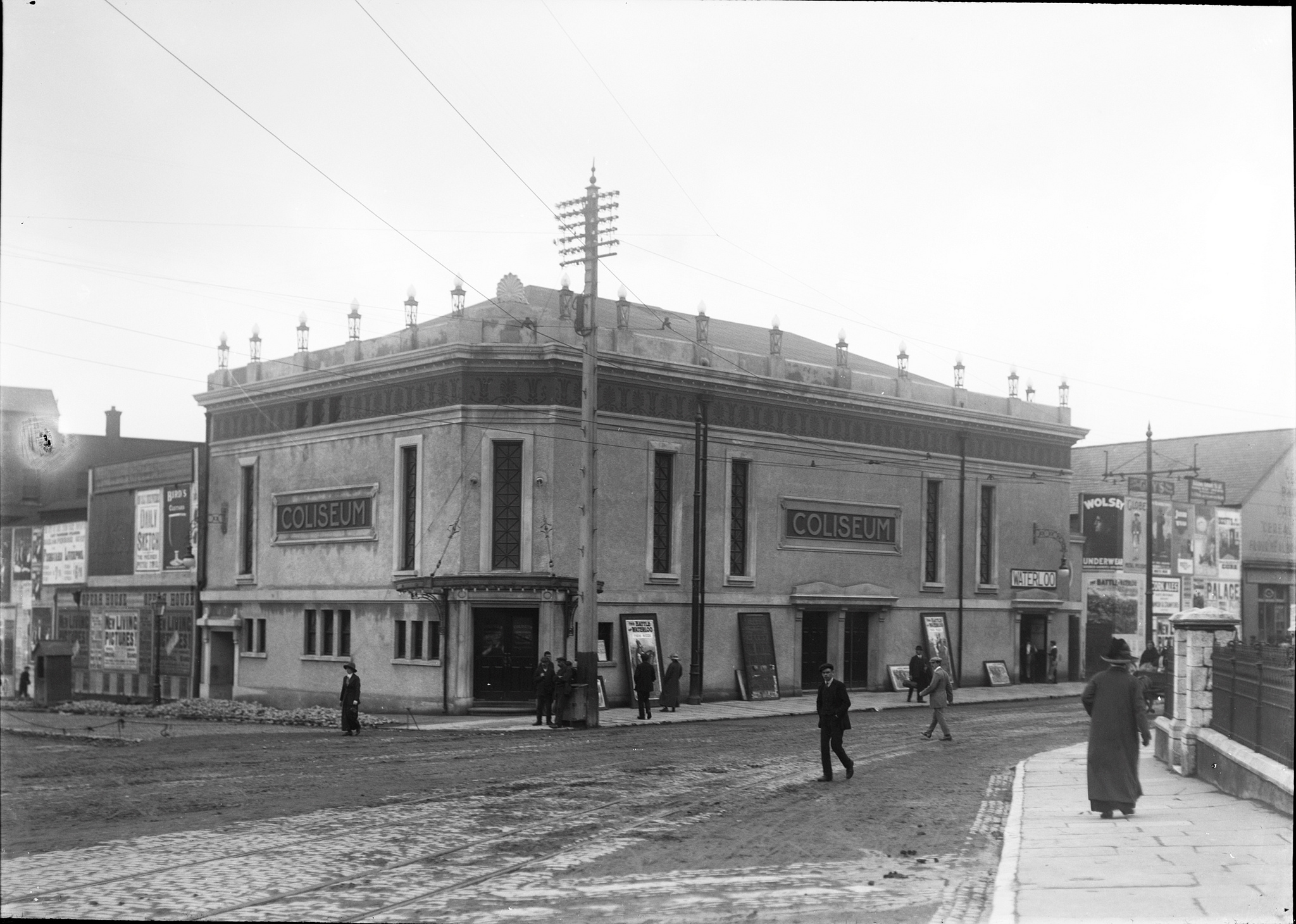
The Coliseum Cinema, King (now MacCurtain) Street, Cork. National Library of Ireland  on Flickr Commons.

There was nothing particularly unusual in this; it was how successful business men drew positive attention to the social good their companies represented. In May 1912, the Electric Theatre in Talbot Street – a picture house in which David Frame shared an interest with then-Lord Mayor of Dublin John J. Farrell – had gained publicity by holding a benefit for the Titanic relief fund (Paddy, 30 May). For Frame and his partners in the Phoenix, the social respectability that came from the benefit for the Church Street victims was timely. Indeed, the 9 September was a big day for this group of businessmen, whose newest venture, the Coliseum in Cork, also opened on that day.

References

“Church St. Disaster.” Evening Herald 5 Sep 1913: 5.

Corlett, Chris. “The Church Street Disaster, September 1913.” History Ireland 17:2 (Mar-Apr 2009).

“Dublin and District: Aid for the Church Street Sufferers.” Irish Independent 10 Sep. 1913: 5.

“Freeman-Telegraph Fund.” Freeman’s Journal 12 Sep. 1913: 7.

Paddy. “Pictures in Ireland.” Bioscope 30 May 1912: 639; 4 July 1912: 25.

“World of Finance.” Bioscope 18 Sep. 1913: 933.

Screening the Lockout (?)

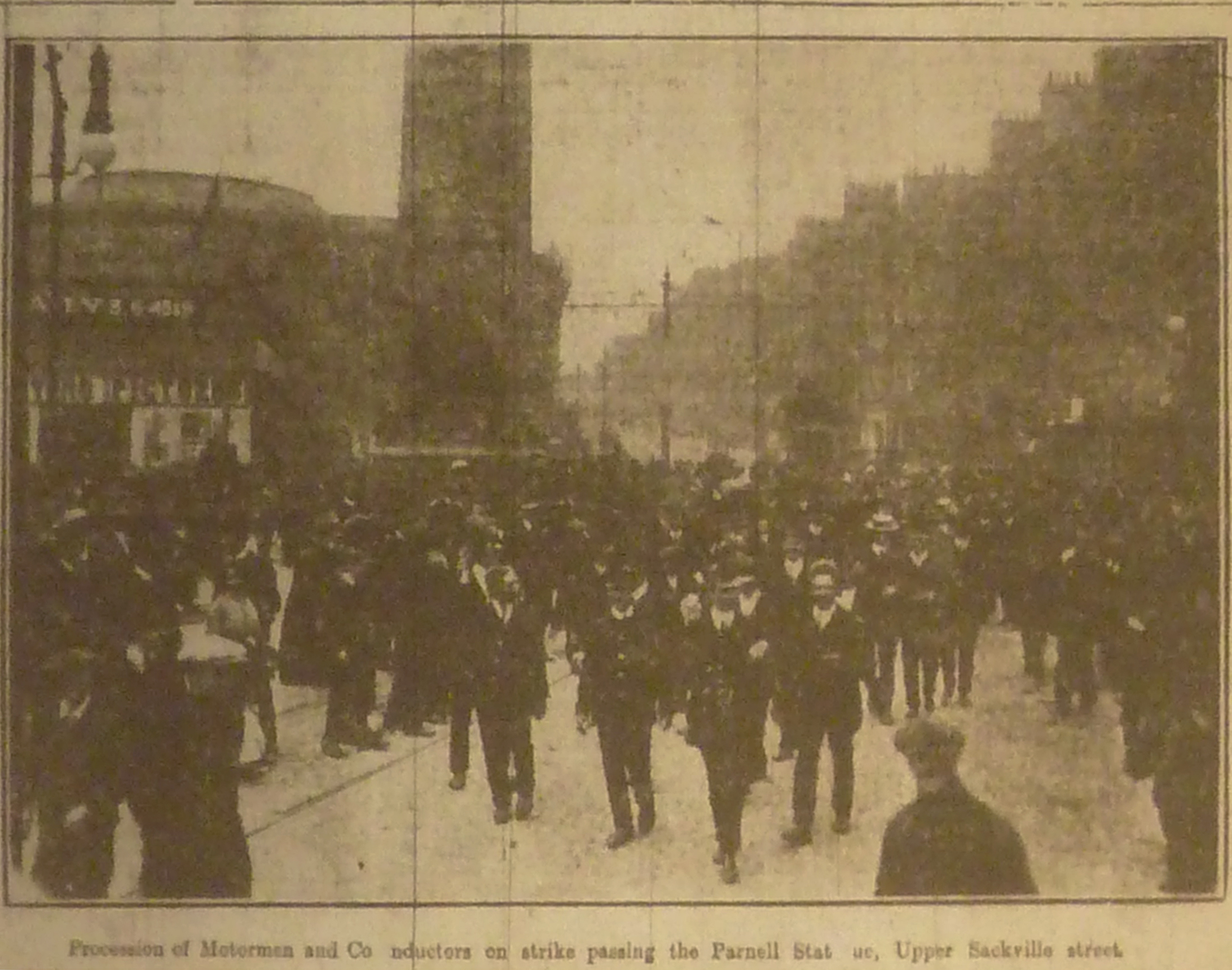
Dublin tramway workers pass the Rotunda, one of the city’s most important picture houses. (“Dublin Tramwaymen’s Strike.” Dublin Evening Mail 27 Aug. 1913: 2.) A different view of this picture house can be found here.

A hundred years ago, on Tuesday, 26 August 1913, the labour dispute known as the Dublin Lockout began when just before 10am, some 200 motormen and conductors of the Dublin United Tramway Company abandoned their trams in the city centre. The tram strike would prompt the Dublin Employers’ Federation – led by the tram company’s chairman and owner of the Irish Independent and Evening Herald newspapers William Martin Murphy – to lock out workers affiliated with Jim Larkin’s Irish Transport and General Workers’ Union. Riots, the arrests of union leaders, demonstrations and vicious police baton charges followed. Newspapers played an important part in this dispute – and in how we remember it a century later; see Century Ireland – but what about cinema?

As early as 1907, cinema was being called the art form of the working class (Patterson), an accessible and relatively cheap form of not just entertainment but also information about the world in moving pictures that did not require a high level of literacy. Although Dublin had just a few film venues before 1910, the new medium of cinema very quickly came to have a significant place in Irish society in the early 1910s. By August 1913, Dublin had three times more picture houses than it did theatres, and half of the theatres also showed fiction films and newsreels on a regular basis as part of their variety programmes. Picture houses were not only located in the city’s business core like the theatres but also in residential areas and in the suburbs and townships adjacent to the city. They often therefore relied to a greater extent than the theatres on the patronage of local audiences. However, these picture houses were also businesses, in which a dichotomy between worker and employer also existed.

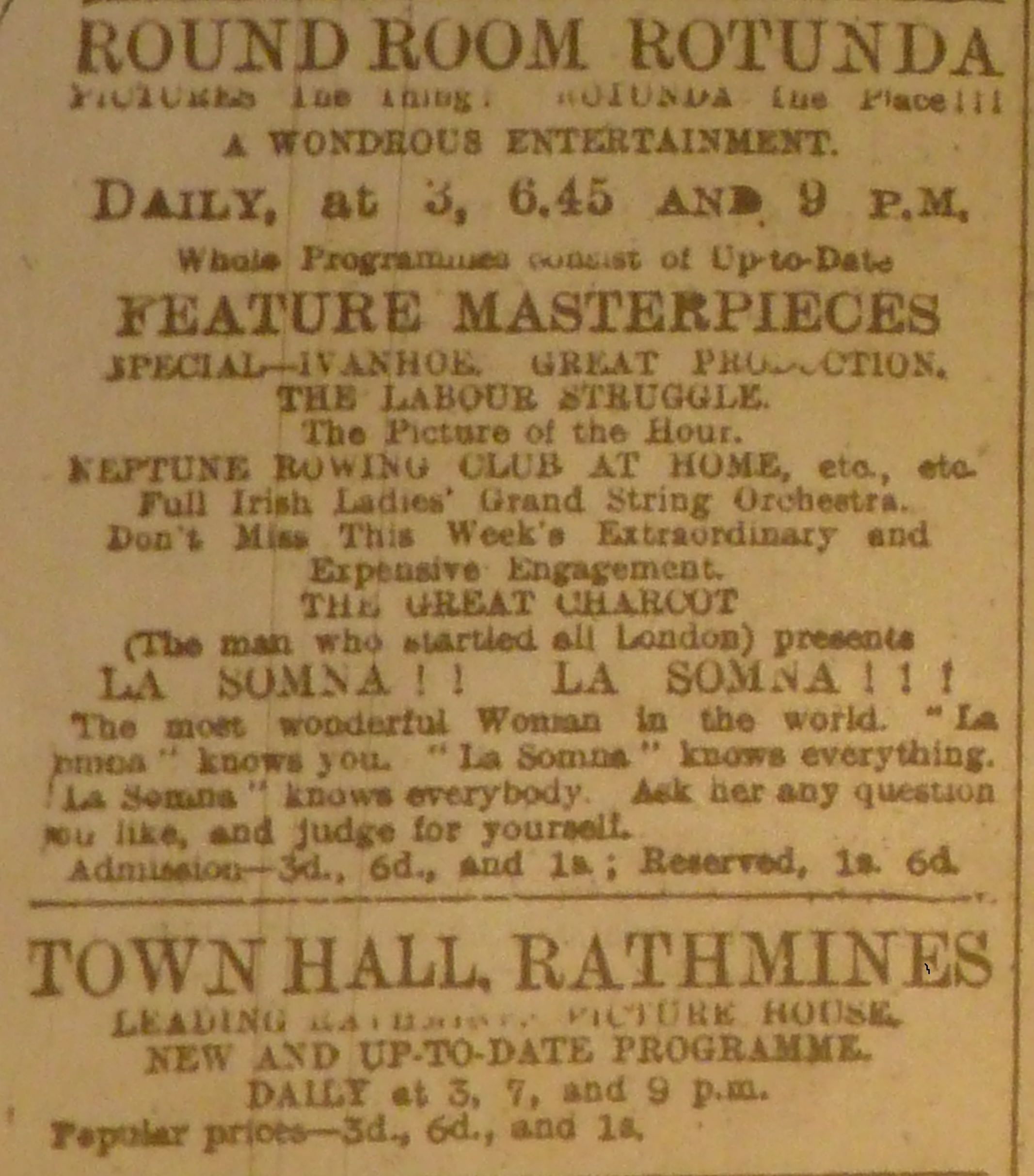
As such, activity in Dublin’s picture houses during the last week of August into September 1913 demonstrates something of how the new cultural institution of cinema would mediate the momentous Irish events of the 1910s, and how the institution would be shaped by these events in turn. As regards programming, only the Rotunda in O’Connell/Sackville Street (both names were used at the time, with the preference usually based on whether ones politics were nationalist or unionist) appears to have allowed unfolding events to influence its choice of films. For the three days (the usual length of a cinema programme) from 1-3 September, the Rotunda showed the American film The Labour Struggle (1913), made by Kalem, a film production company particularly well known in Ireland because of the many films they had shot in the country. However, The Labour Struggle had nothing to do with Ireland. Although a reviewer of another timely choice of production that week, the play The Labour Leader at the Queen’s Theatre, commented that “visitors will not see much resemblance between the hero of the play and the local product” (“The Queen’s Theatre”), another writer took allegorical meaning from the conclusion of The Labour Struggle:

If its conclusion were to be interpreted in one sense the raging fire against which by mutual help the employer and employes in the end fought successfully may be taken to picture anarchy. When both sides to the struggle came to recognise the peril which threatened them, they ceased to quarrel, and, turning their strength against the common foe, they subdued it, and then taking a juster measure of one another it looked from the last film as if they were likely “to live happily together ever after” (“The Rotunda”).

How Dublin workers and employers might – Metropolis-like – identify a common foe, the writer does not speculate, and a happy ending to the dispute must have seemed remote to anyone walking the city’s streets. In any case, the film’s engagement with radical labour politics would likely have been diluted not just by its conclusion but also by its appearance on a bill with the live telephatic performer La Somna, a screen adaptation of Ivanhoe (IMP, 1913), and two film comedies featuring Vitagraph star John Bunny.

Sep 1 1913 DEM Rotunda Labour Struggle

Advertisement for the Round Room Rotunda showing Kalem’s The [Great] Labour Struggle and a local film of the Neptune Rowing Club. Dublin Evening Mail 1 Sep. 1913: 4.

Apart from fictional representations produced elsewhere, local film producers could have filmed the demonstration themselves to produce a local news film. Norman Whitten had set up a company in May – with an office at 76 Talbot Street (“Irish Enterprise”) – to take such films. James T. Jameson and his sons, including Ernest who managed the Rotunda – but Ernest had got married on Thursday 28 August, so perhaps he deserves congratulations and the benefit of the doubt – had been shooting such films for a decade. Tellingly perhaps, neither Whitten nor Jameson caught on film Jim Larkin’s famous address to the proclaimed demonstration of workers in O’Connell Street on 31 August or the notorious baton charge that followed it, despite the fact that both had business addresses on or just off that street. The bills at Jameson’s picture houses had long been known for their local films. During the week of 25-30 September, both the Rotunda and the Jameson-run Town Hall Rathmines had shown films of each day of the prestigious Dublin Horse Show. And in lieu of a local strike film, The Labour Struggle was accompanied at the Rotunda by a film of a social event at the Neptune Rowing Club, “a local event of direct personal interest to numbers of the citizens” (“The Rotunda”), but those citizens were likely to have been the middle-class audience Jameson had long courted.

Quo Vadis Phoenix ET 9 Aug 1913

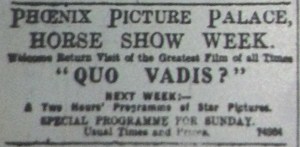
For Horse Show Week 1913, Dublin’s Phoenix Picture Palace revived Quo Vadis? Evening Telegraph 9 Aug. 1913: 2.

Other exhibitors more reliant on a working-class audience do not seem to have modified their bills in response to the strikes even to the extent that Jameson did. The Phoenix Picture Palace on Ellis Quay widely advertised the fact that it was showing Quo Vadis? (Cines, 1912) for the whole of Horse Show Week; in April, the Phoenix had been the first Dublin picture house to show the Italian spectacular. A similar taste for a full week of spectacle to attract well-heeled Horse Show visitors inspired the Dame Street Picture House to book The Life and Works of Richard Wagner (Messter, 1913), which allowed the house orchestra to accompany the silent film with a different Wagner selection at each performance. Other programmes from picture houses that advertised in the newspapers at this time – the Town Hall, Rathmines, the World’s Fair Varieties, the Mary Street Picture House, the Picture House, Sackville Street (called the “O’Connell Picture House” by the nationalist press), the Grand, the Volta, the Theatre de Luxe, the Camden Picture House, the Clontarf Electric Theatre and the Assembly Picture Hall, Serpentine Avenue – show no immediate impact of the Lockout.

Although the picture houses largely failed to represent the early days of the Lockout on screen, the impact of the struggle for workers’ representation that was being fought out in the streets was also felt in the auditorium, projection booth and cash box. Dublin projectionists had organized themselves into the Irish Cinematograph Operators’ Association and initially affiliated themselves with the National Association of Cinematograph Operators (“N.A.C.O. Dublin Branch”). However, in order to represent themselves in solidarity with other picture house workers, the projectionists later affiliated instead with the National Association of Theatrical Employees (NATE). As a result, even the unskilled cinema workers were able to make strong demands for fixed wages to the cinema owners at a special meeting of the Irish Cinematograph Exhibitors’ Association in early September: “In the case of the doormen this should be 26s. for the first doorman, 20s. for the second, and 18s. for the third. It was also proposed to give the inside attendants 12s. per week, the cash-box girl getting 15s” (“Pictures in Ireland”). The cinema owners were not altogether happy with these proposals, and by mid-September, NATE members would be picketing the Theatre de Luxe in Camden Street (Rockett 43). But that is a story for another day.

References

“Irish Enterprise.” Bioscope 12 June 1913: 781.

“N.A.C.O. Dublin Branch.” Bioscope 29 May 1913: 623.

Patterson, Joseph Medill. “The Nickelodeons: The Poor Man’s Elementary Course in the Drama.” Saturday Evening Post 23 November 1907: 10+.

“Pictures in Ireland.” Bioscope 4 September 1913:

“The Queen’s Theatre.” Evening Telegraph 2 Sep. 1913: 2.

Rockett, Kevin and Emer. Film Exhibition and Distribution in Ireland, 1909-2011. Dublin: Four Courts, 2011.

“The Rotunda.” Evening Telegraph 2 Sep. 1913: 2.