“Would We Ever Have It in Reality?” Ireland a Nation “For Two Days Only” in January 1917

Joseph Holloway spent the last evening of 1916 wandering around Dublin, celebrating the end of a momentous year in Ireland, when he came across a poster for Ireland a Nation (US: Macnamara, 1914). “For a week or more,” the architect and theatre buff observed, “I’ve been reading on the hoardings on a large 15 feet by 9 feet poster bordered with shamrocks – with large ones at angles & printed on green which tells me of the finest picture film ever produced / Ireland a Nation / Nothing like it has been seen before!” (Holloway, 31 Dec. 1916: 1608).
Ad for Ireland a Nation in New York and Chicago-based Motography 26 Dec. 1914: 22.

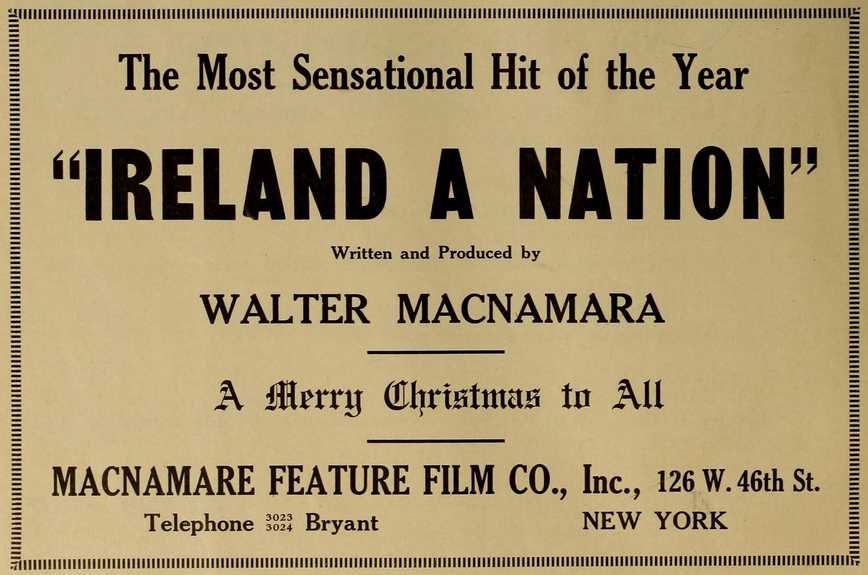
Ad for Ireland a Nation in New York and Chicago-based Motography 26 Dec. 1914: 22.

When Waterford-born but New York-based scriptwriter and producer Walter Macnamara had made Ireland a Nation in 1914, the film reflected a very different political situation. Macnamara conceived a film that would trace the history of Irish struggles against British rule from the passing of the Act of Union by the Irish Parliament in 1800 to the passing of the Home Rule bill by Westminster in 1914. He had shot historical scenes – among them the Irish parliament, Robert Emmet’s 1803 rebellion and Daniel O’Connell’s duel with political rival D’Esterre – on location in Ireland and at studios in London, but the film had ended with actuality footage of crowds of Irish nationalists jubilantly welcoming what they thought was the achievement of Home Rule.

The film had been shown in US cities, debuting at New York’s Forty-Fourth Street Theatre on 22 September 1914, but it had not been seen in Ireland (McElravy). The outbreak of World War I had not only caused the suspension of Home Rule, it had also delayed the Irish exhibition of Ireland a Nation. “When Dame Fortune refuses to smile upon a venture,  things will somehow manage to go wrong if only out of sheer cussedness,” commented an article in the second issue of Ireland’s first film journal Irish Limelight on the sequence of events that prevented Ireland a Nation reaching the country to date. Two prints of the film sent to Ireland had been lost en route: “[I]t is understood that the first copy dispatched by [the Macnamara Co. of New York] was lost with the ill-fated Lusitania; a duplicate copy was substituted, but as this also failed to successfully run the submarine ‘blockade,’ it became necessary to forward a third” (“Between the Spools”).
Masthead of the Irish Limelight, Feb. 1918. Courtesy of the National Library.

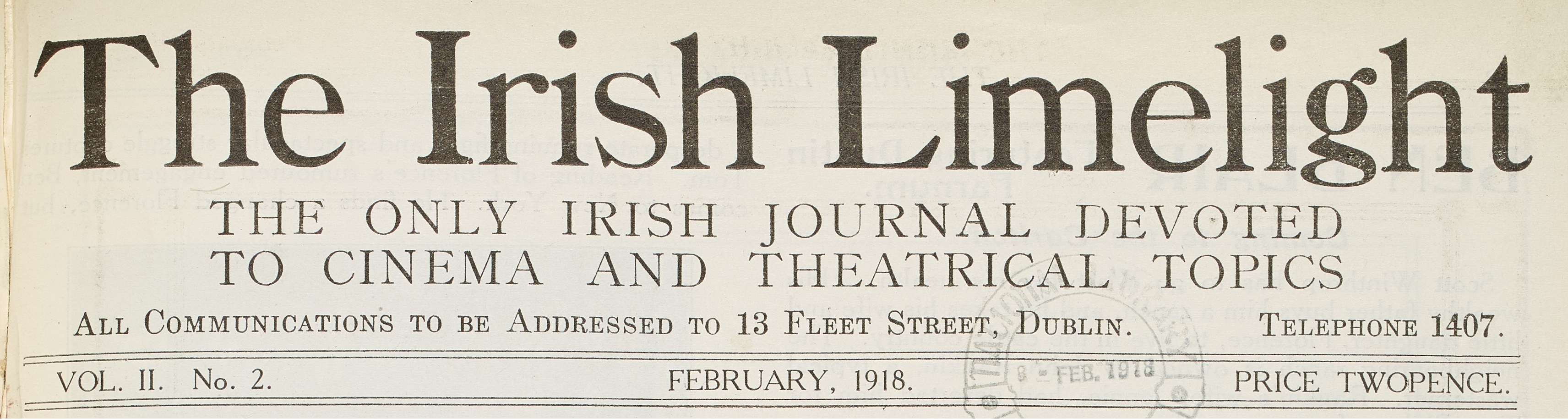
Masthead of the Irish Limelight, Feb. 1918. Courtesy of the National Library.

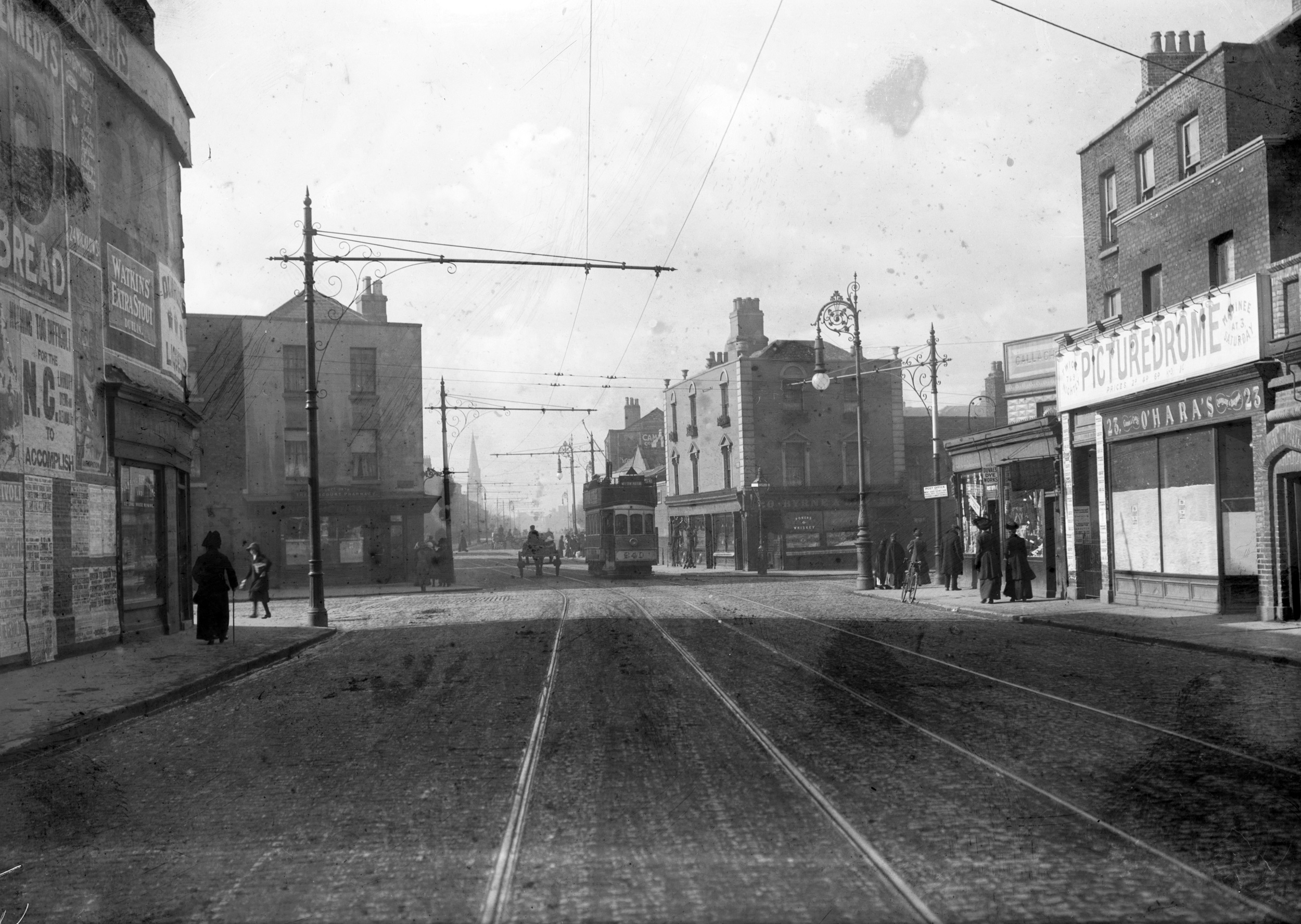
These delays meant that it was to a Dublin with many new hoardings erected around buildings destroyed during the Easter Rising that the film returned in late 1916. A large green poster with the slogan “Ireland a Nation” emblazoned on it meant something different in this context. “You read it & wonder when it is to be shown & what is to be the nature of it!” Holloway marvelled. “I have heard it whispered that it is a fake – there’s no such film at all, but those who love Ireland thought that a good way to keep ‘Ireland a Nation’ in the public eye. And the wideawake authorities haven’t tumbled to its purpose!”

A week later, however, a new poster near Holloway’s home on Haddington Road confirmed that this was, in fact, a film by providing more details of the coming exhibition. “I saw on hoarding near Baggot St end of Haddington Rd. that – ‘Ireland a Nation’ for ‘one week only’ was announced for Rotunda commencing Monday next & week,” he noted, “& I thought would we ever have it in reality – for ‘one week only’ even.” (Holloway, 5 Jan. 1917). Holloway’s melancholy reflection related to the distant possibilities for a self-governing Irish nation beyond filmic representation, but even a film of Ireland achieving nationhood would prove impossible to show in January 1917.
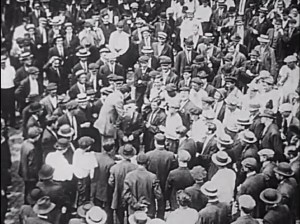
ireland-a-nation-home-rule

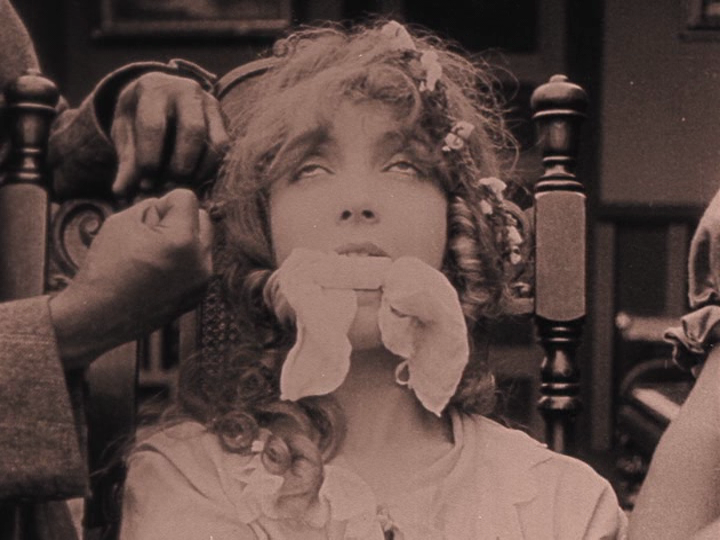
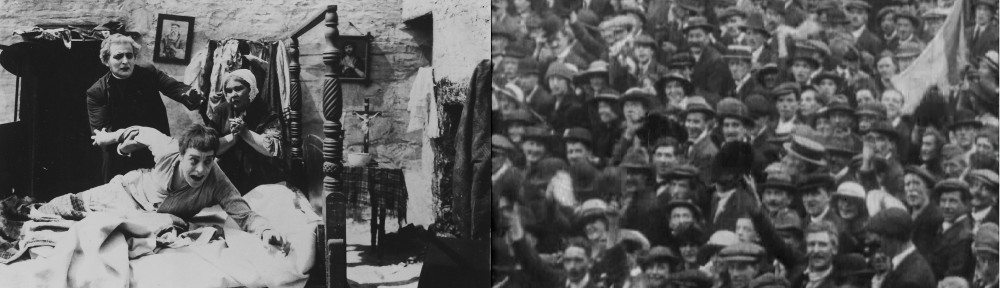
Framegrab from Ireland a Nation, preceded by the intertitle: “A New Hope 1914. / A Home Rule Meeting.”

Frederick Sparling was responsible for this poster campaign, after he secured the British and Irish distribution rights to the film in March 1916. The imposition of martial law in the aftermath of the Rising in April made it impossible to screen the film until late in 1916, when Sparling submitted the film to the military press censor (“Irish Film Suppressed”). The censor wrote back to Sparling on 1 December 1916, allowing exhibition if six cuts were made:

  1. Scene showing interruption of a hillside Mass by soldiers.

  2. Scene showing Sarah Curran roughly handled by soldiers.

  3. Scene of execution of Robert Emmet – from entry of soldiers into Emmet’s cell to lead him away.

  4. Scene of Home Rule Meeting in 1914.

  5. Telegram from Mr. Redmond.

  6. Irish Flag displayed at end of the performance.

The following should also be omitted:—from the titles of scenes shown, (in addition to all titles referring to portions of the film which have been censored as above,) “A price of £100 dead or alive on the head of every priest.” (CSORP.)

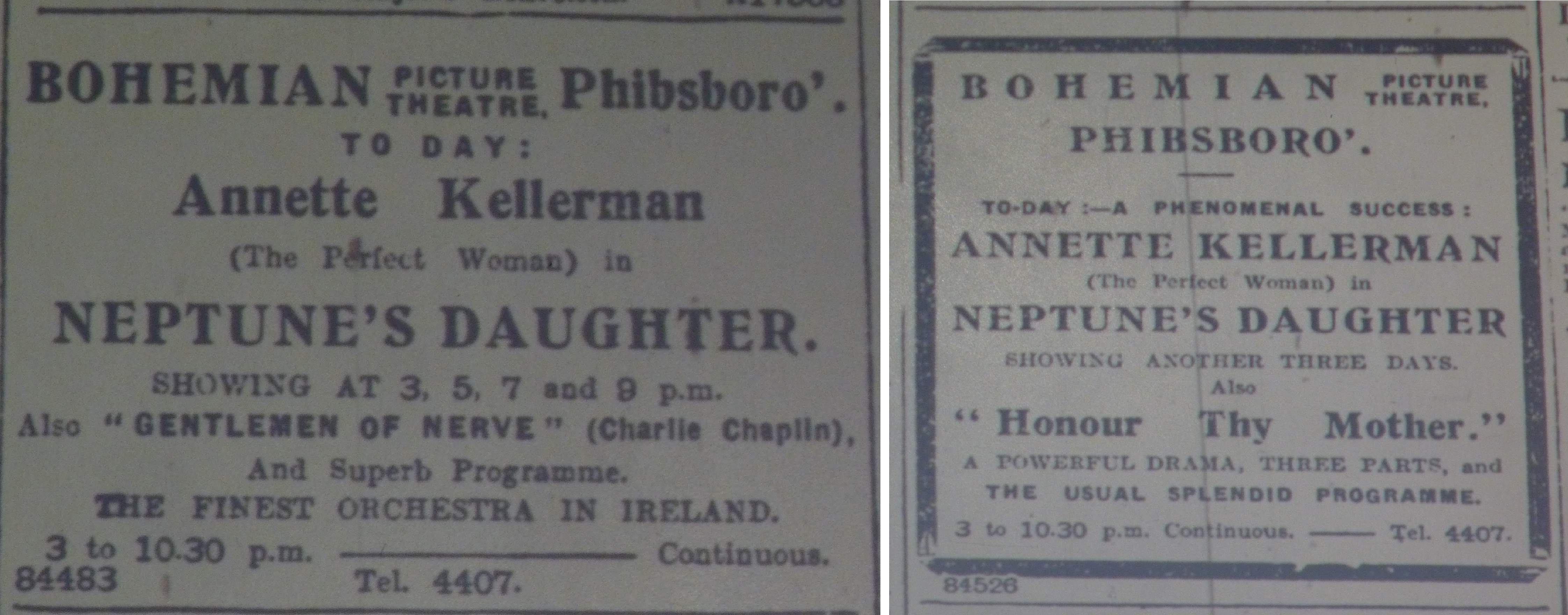
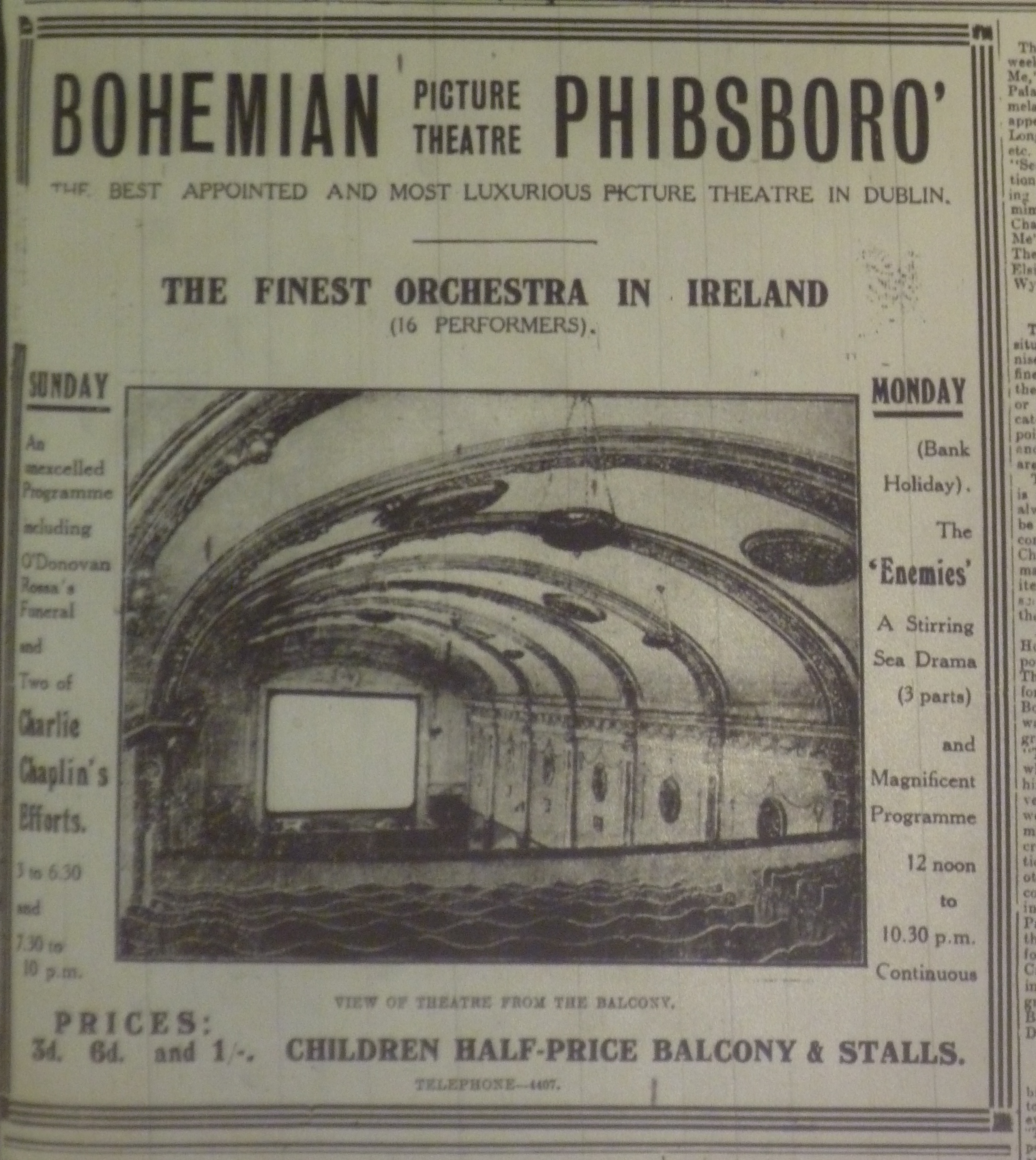
This constituted much of the contentious political material, including the actualities of the Home Rule meeting, but Sparling had no choice but to make the cuts. And although he was the proprietor of the suburban Bohemian Picture Theatre, he hired Dublin’s largest picture house, the city-centre Rotunda, which had a capacity of 1,500 people, a third more than the Bohemian (“Irish Film Suppressed”).
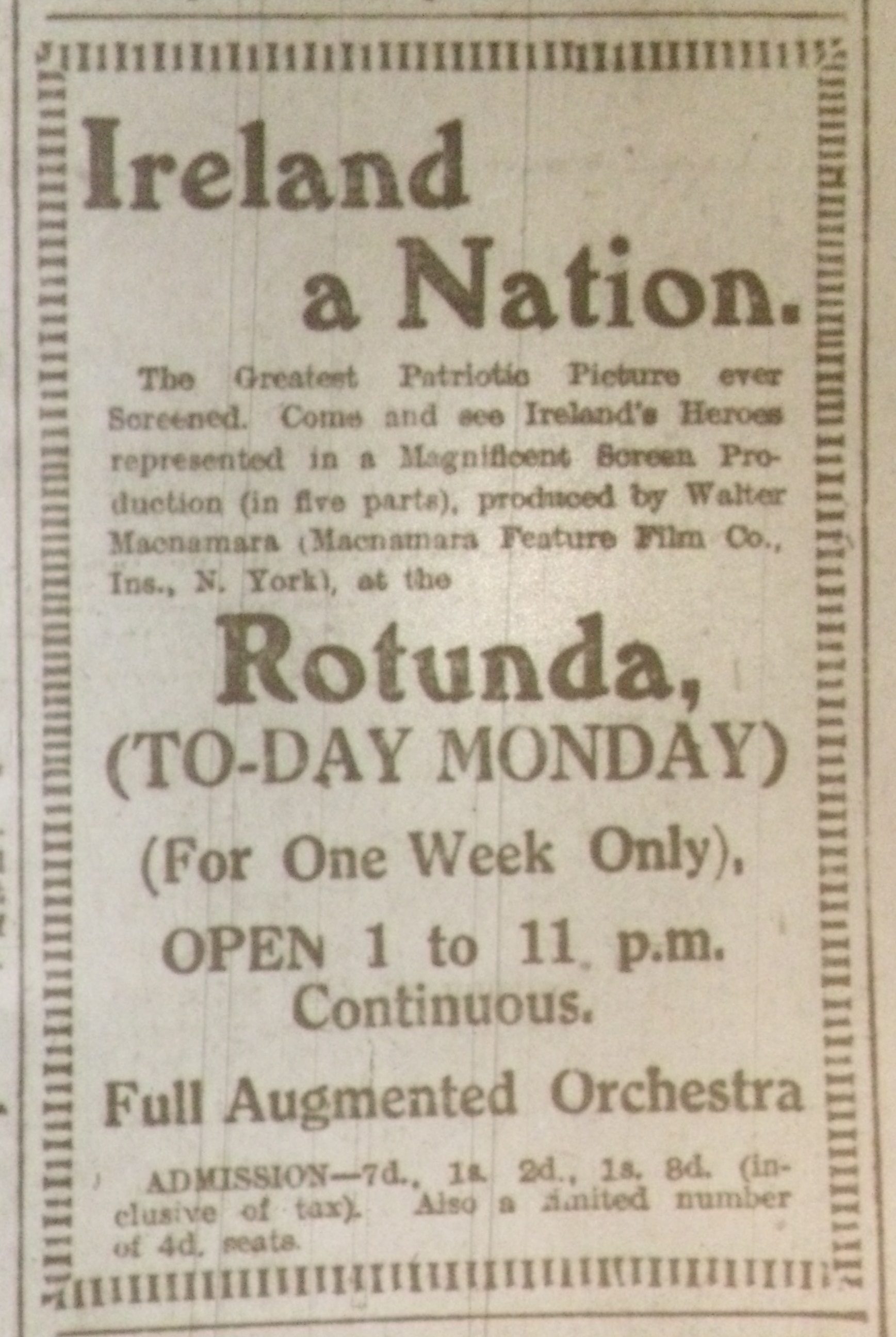
Ad for Ireland a Nation; Dublin Evening Mail, 8 Jan. 1917: 2.

Ad for Ireland a Nation; Dublin Evening Mail, 8 Jan. 1917: 2.

Prominent press ads that followed the poster campaign ensured that potential patrons far and near were well informed of the coming shows. Although the Dublin Evening Mail published these ads, this did not stop a Mr Whitehead from the Daily Express office, which published the Mail, writing to the Chief Secretary’s office, enclosing a copy of the ad and warning that “[i]t is an American Cos film & is of a bad type, indeed, the man in charge of it expresses astonishment that it has passed the British Censor” (CSORP). Inspector George Love of the Dublin Metropolitan Police attended the 2-3pm show on the opening afternoon, Monday, 8 January 1917. Love reported that Sparling had adhered to the censor’s stipulations, but his most interesting comments were those about the effect on the audience:

About 100 persons were present at the opening production and the Picture was received with applause throughout, except some slight hissing, when Lord Castlereagh and Major Sirr were exhibited.

The Films deals mainly with Rebel Leaders and their followers being hunted down by the Forces of the Crown and Informers, and has a tendency to revive and perpetuate, incidents of a character, which I think at the present time are most undesirable and should not be permitted.

While Chief Secretary Edward O’Farrell considered Love’s suggestion that the film be banned by the authorities – and a military observer reported on the opening night to Bryan Mahon, the General Officer Commanding British forces in Ireland – Holloway went to another afternoon screening that had a far larger attendance than the sparse 100 that Love reported at the 2pm show. Indeed, because of the queue at the box office of the ground-floor “area,” Holloway ended up on the balcony. However, the film did not impress him. It reminded him of the increasing repertoire of Irish nationalist history plays by Dion Boucicault, J. W. Whitbread, and P. J. Bourke that had been staples of Dublin’s Queen’s Theatre for decades. Holloway had long been a regular at the Queen’s, but he favoured the kind of restrained acting introduced by the Abbey Theatre. The gestural melodramatic style used by Queen’s actors in the film also contrasted with evolving screen-acting practices. Nevertheless, the film uniquely preserves Irish melodramatic performance of the period.

Other commentators provided more positive reviews than Holloway’s. Perhaps not surprisingly for a nationalist newspaper whose slogan was “Ireland a Nation,” the reviewer in the Freeman’s Journal was enthusiastic, calling the film “[f]rom a historical standpoint, and indeed, from the standpoint of realism, […] undoubtedly excellent” and bound to “attract numerous visitors to the Rotunda during the week” (“Irish History Films”). Although not so wholeheartedly appreciative, the reviewer at the unionist Irish Times confirmed its popularity, noting that “[t]he film, which treated the rebel cause with sympathy, and the music, which included a number of Irish patriotic tunes, were received with loud and frequent applause by the audiences” (“Rotunda Pictures”).
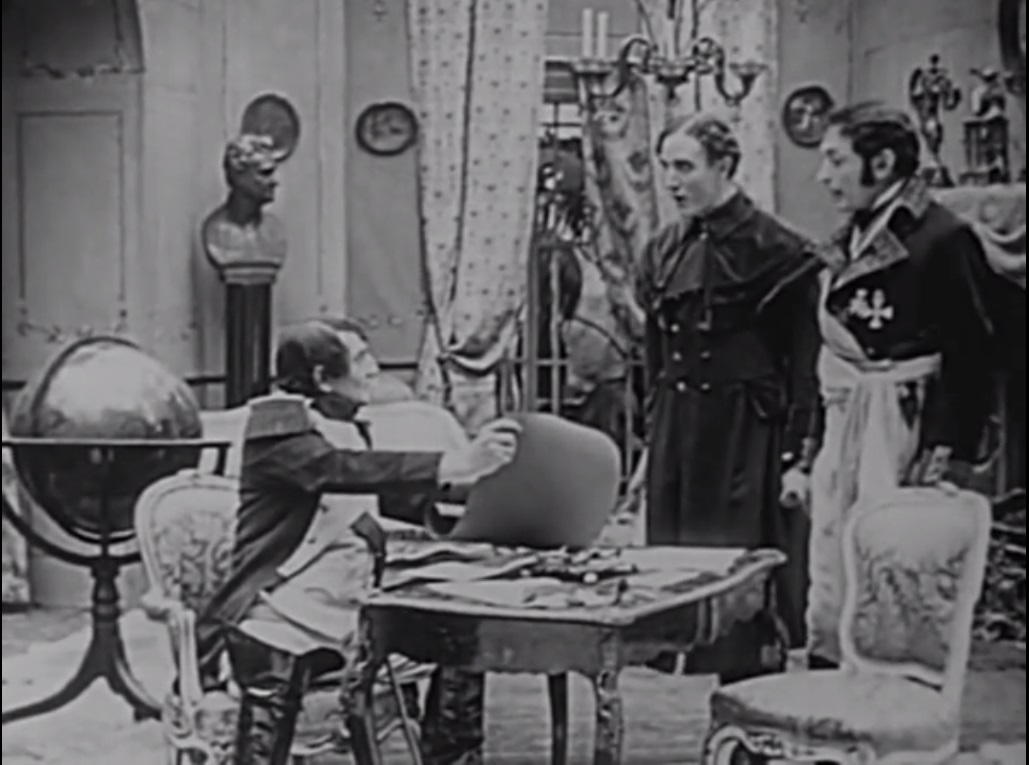
Framegrab from Ireland a Nation, in which Irish revolutionary Robert Emmet (Barry O’Brien) is astonished by the help Napoleon agrees to send for an uprising in Ireland.

Framegrab from Ireland a Nation, in which Irish revolutionary Robert Emmet (Barry O’Brien) is astonished by the help Napoleon agrees to send for an uprising in Ireland.

Holloway suggested that although the audience was aware of the film’s limitations, it was determined to make the most of this opportunity to celebrate a still imagined Irish nation. “The audience was willing to applaud national sentiments,” he noted, “but was far more impressed by the words card on the screen than by the way the various characters played their parts before the camera.” Indeed, he believed that the film’s title and intertitles carried particular importance. “Truly the man who thought of the title ‘Ireland a Nation’ was worth his weight in gold to the Film Co that produced it,” he argued. “It is the title and not the film drama will attract all patriotic Dublin to the Rotunda during the week.”

Indeed, he was in no doubt that the film did draw unprecedented crowds to the Rotunda. Passing the picture house again later on Monday evening, he recorded:

I rarely saw anything like the crowds that stormed the Rotunda about eight oclock seeking admission. I am sure several thousands were wedged up against the building […].  The night was piercingly cold but the patient waiters kept themselves warm and in good humour by cheering all who left the building & made room for others behind.  On the other side of the streets around the Rotunda crowds of people stood looking at the dense black masses clinging on to the walls of the Rotunda like barnacles to the bottom of a ship.

When these later audiences got inside, they were more rowdy than those earlier in the day had been. Love reported that “the Picture was received with applause throughout, except some slight hissing, when Lord Castlereagh and Major Sirr were exhibited” and Holloway that the Irish airs played by the augmented orchestra “were taken up by the audience & sung.” As the evening wore on, audience behaviour grew more explicitly political. “At the last performance of the film on Monday night,” the Bioscope reported, “a large section of the audience sang the song, ‘A Nation Once Again’” (“Irish Film Suppressed”). The military observer advised Bryan Mahon that “the film in question was likely to cause disaffection, owing to the cheering of the crowd at portions of the Film, the hissing of soldiers who appeared in the Film and the cries made by the audience” (CSORP).

As a result, Mahon decided to ban the screenings, but on finding that Sparling had sought and got permission from the military censor, he agreed to try cutting the film further and observe how the Tuesday night screening would be received. “The result of the reports of Tuesday night were more adverse than those of Monday night,” O’Farrell noted, “and in consequence Sir B. Mahon issued an order prohibiting the performance of the Film throughout Ireland, which was served on Mr. Sparling at about 1 o/c on Wed. Afternoon” (CSORP).

The order served to Sparling made clear that the audience’s behaviour caused the prohibition:

The reports received from witnesses, of the affect produced on the audience at the display of the above Film last night, the 9th inst., and the seditious and disloyal conduct apparently caused thereby, make it clear that the further exhibition of the Film in Ireland is likely to cause disaffection to His Majesty, and to prejudice the recruiting of His Majesty’s forces.

I therefore forbid any further exhibition of the said Film in Ireland, and hereby warn you that any further such exhibition will be dealt with under the Defence of the Realm Consolidated Regulations, 1914.

“The Military only allowed Ireland a Nation ‘for two days only,’ at Rotunda,” Holloway lamented. He also pointed out that even the posters did not escape the general prohibition: “In O’Connell Street a man was pasting green sheets of paper on the announcement on the hoarding of IRELAND A NATION.  Only a field of green would soon show where Ireland a nation once proclaimed itself.”


Despite the authorities’ efforts to cover over all traces of the film, it continued to be discussed in the following weeks and years. Indeed, Ireland a Nation was and is one of the most significant films of the 1910s in Ireland. In part, this was because its title made it a particular attraction for nationalists at this historical moment, as Holloway suggested, but there are other reasons. Its fascination for nationalists in the aftermath of the Rising made it also of interest to the police and military, who rarely gave much attention to films. As a result, the nature and extent of the surviving sources on the film – particularly Holloway’s diary entries and the official police and military documents – are unusually varied and comprehensive. They allows us to say something about individual screenings of the film in Dublin on 8 January 1917, especially in relation to audience response, which is often the least documented element of an individual film showing.

Ireland a Nation also appeared in Ireland at a significant moment in the press engagement with cinema. The Freeman’s Journal, one of the country’s main daily papers, published an editorial on cinema on 6 January, the Saturday before the film opened. This was not, however, focused on the film, but on the fact that since cinema had taken the place of live theatre, it was “imperative that we should consider how the new theatre can be made subservient to the public utility” (“Cinema”). Nevertheless, with the excitement caused by the release of Ireland a Nation and then its prohibition, cinema had unprecedented visibility on the editorial and news pages of Dublin’s and Ireland’s newspapers well into mid-January.

The debut of the Irish Limelight in January 1917 clearly represented an extremely significant development, not only in its contribution to cinema’s visibility that month but also in its promotion of a more extensive and sophisticated public discourse on cinema over the three years it remained in print. The Limelight was published by Jack Warren, the editor of the Constabulary Gazette, who “for a very long time has taken a serious interest in the cinema world” (Paddy). Because it was a monthly journal, however, the first issue was published before the Ireland a Nation controversy at the Rotunda. The February issue, however, included two significant items on the film: one on its historical inaccuracies and the other – already mentioned – on its ill-fated Irish exhibition. With Warren’s police contacts, the latter could no doubt have provided more insight into the banning than attributing it to the workings of “Dame Fortune.”

As was the case for most of the articles in the Limelight, no author was named for the historical inaccuracies piece, which was instead attributed to a “Student of Irish History” who had sent in a letter in the wake of the banning. Although this correspondent detailed the film’s historical mistakes, s/he nonetheless considered them “too patently ridiculous to call for serious criticisms.” Not that s/he thought the film irredeemably bad, arguing that “the theme was treated by both producer and players with every sympathy and respect, and with a clear eye to propagandism as well as simple picture setting.” Such errors as showing revolutionary priest Fr John Murphy reacting to the 1800 Act of Union when he had been executed in 1798 would have been obvious to any contemporary Irish person with an interest in history. Having pointed out such anachronisms, the writer accounted for them as arising from “a desire to get in prominent figures in the Ireland of the period and weave them into a complete story without any regard for chronological order or historical connection” (“Irish Film Suppressed”).
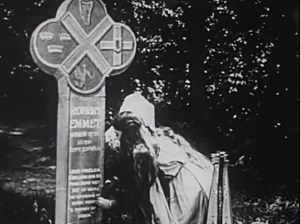
ireland-a-nation-erin-sculpts

Erin, the figure of Ireland, inscribes Emmet’s epitaph onto his headstone in Ireland a Nation.

Ireland a Nation argues that the telling of tales is a political act, and that was certainly the case in Ireland in 1917. But this was not the end of the film in Ireland or indeed in America. It was revived – indeed reinvented – first in America and then in Ireland. One of its most vivid storytelling motifs relates to Robert Emmet, who having being condemned to death, famously declared that his grave should be unmarked: “When my country takes her place among the nations of the earth,” he ordered in his famous speech from the dock, “then, and not till then, let my epitaph be written.” In the film, a woman representing Erin, the embodiment of Ireland, inscribes an epitaph onto Emmet’s gravestone because with Home Rule, Irish nationhood had seemingly been achieved. When Ireland a Nation was revived in America in 1920, this material was out of date, and Ireland had not been granted Home Rule. As a result, later newsreel footage of Sinn Féin leader Eamon De Valera’s visiting New York in 1919 to seek recognition of an independent Ireland was added as a further inscribing of the national story. Later again, newsreel of the Irish War of Independence and the funeral of republican hunger striker Terence McSwiney was included.

It was only with the establishment of the Irish Free State in 1922 that this film – an incomplete version of which still survives – could be shown in Ireland. The political situation had again changed dramatically in the aftermath of the debates on the Anglo-Irish Treaty by the Dáil (Irish parliament). At least part of Ireland was in some way independent, and one of Dublin’s largest cinemas celebrated by giving an uninterrupted run of Ireland a Nation.

References

“Between the Spools.” Irish Limelight 1:2 (Feb. 1917): 19.

“The Cinema.” Freeman’s Journal 6 Jan. 1917: 4.

CSORP/1919/11025. National Archives of Ireland.

Holloway, Joseph. Holloway Diaries. National Library of Ireland.

“The ‘Ireland a Nation’ Film: Criticisms of Historical Inaccuracies.” Irish Limelight 1:2 (Feb. 1917): 3.

“Irish Film Suppressed: ‘Ireland a Nation’: Military Stop Exhibition at Dublin.” Bioscope 18 Jan. 1917.

“Irish History Films: ‘Ireland a Nation’ at the Rotunda.” Freeman’s Journal 9 Jan. 1917: 3.

McElravy, Robert. “‘Ireland a Nation’: Five-Reel Production Giving Irish History in Picture Form.” Moving Picture World 3 Oct. 1914: 67.

“Rotunda Pictures.” Irish Times 9 Jan. 1917: 3.
Irish Cinema and Population Control in November 1916

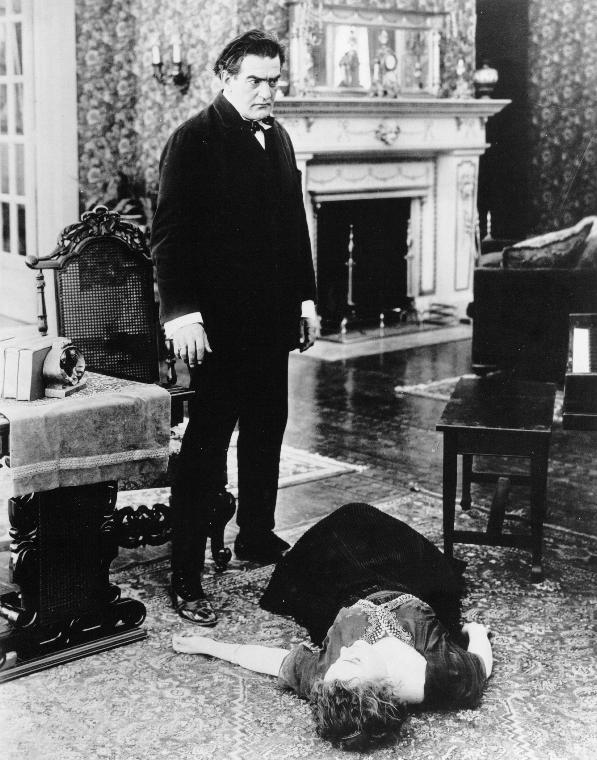
District Attorney Richard Walton (Tyrone Power) stands over the body of his wife (Helen Riaume), whom he has thrown to the ground after learning she has had multiple abortions in Where Are My Children? (US: Universal, 1916). Image from the Women Film Pioneers Project.

District Attorney Richard Walton (Tyrone Power) stands over the body of his wife (Helen Riaume), whom he has thrown to the ground after learning she has had multiple abortions in Where Are My Children? (US: Universal, 1916). Image from the Women Film Pioneers Project.

Cinema representations of birth control and abortion caused anxieties in Ireland a century ago, illustrating some of the class and gender questions the new medium brought to the fore in late 1916. “All thoughtful citizens look forward to the day when the cinematograph will be a great instrument of public education,” began a lead article in the Irish Times of 2 November 1916. “When it claims the right, however, to deal with moral and medical questions of the utmost gravity and delicacy we confess to misgivings” (“Morality Films”).

The occasion of these misgivings was the 8 November exhibition in London of Where Are My Children? (US: Universal, 1916). This film had been co-written and co-directed by Lois Weber, one of the most prominent of early women filmmakers, whose adaptation of the opera The Dumb Girl of Portici (US: Universal, 1916) was on release in Ireland at this time. That Where Are My Children? – or indeed The Dumb Girl of Portici – had been made by a woman writer-director was not the issue or even mentioned by the writer in the Times, who was probably not aware of the fact; even the British trade journal Bioscope misnamed her Louis Weber (“‘Where Are My Children?’”). The Times’ problem was that taboo subject matter was being treated by a popular media form and therefore risked being seen by the wrong sorts of people and in contexts in which it could not be properly controlled by the established authorities in the area, doctors and clerics.

An ad for a powder that relieves a

The cinema was the occasion for another medical intervention in late 1916, when this ad suggested that a cinemagoer take Daisy powder to relieve her “cinema headache.” Sunday Independent 10 Dec. 1916: 5.

However, the first exhibition that the Times referred to was to be to a “distinguished audience” that included “the Duchess of Marlborough, Lady Sydenham, the Bishop of Barking, the Chief Rabbi, the Rev. F. B. Meyer, Sir Home Gordon, Sir John Kirk, Mr. Joynston-Hicks, M.P., Dr Saleeby, Principal Garvie, and many others” (“The Birth-Limitation Picture”). Despite this litany of the thoroughly right people from the aristocracy, government and clergy, the Irish Times was not impressed that the film had been passed by the National Council of Public Morals, which

can furnish no guarantee that the public exhibitions of this film which illustrates “the wrecking of happiness and health,” will always be confined to spectators who are interested in “social uplifting.” There is a danger, it seems to us, that such exhibitions may tend, in the main, to give a stimulus to prurient curiosity.

where-are-my-children-bn-9-mar-1918p5

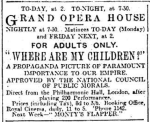
The first Irish screenings of Where Are My Children? appear to have been at Belfast’s Grand Opera House in early 1918; it seems not to have been shown in Dublin. Belfast News-Letter 9 Mar. 1918: 5.

To prevent such prurience even in its own readers, the Times was a little coy in describing what the film’s problematic subject matter actually was, merely quoting a synopsis that called it “a social photo-drama dealing with some of the causes and effects of the declining birthrate,” Apart from the concern to avoid crudity, this coyness was also no doubt due to the fact that the writer had not seen the film, and indeed probably never saw it because it seems never to have been publicly shown in Dublin. Even though s/he also had also not seen it at the time of writing, a writer at the cinema trade journal Bioscope was more explicit: “The plot, we understand, introduces the subject of illegal operations, and treats boldly of their physical and moral results.”

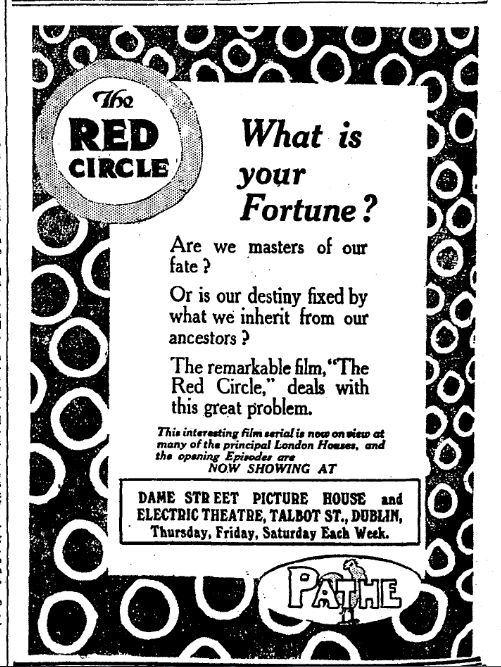
The Irish Times was not above joining in with the frivolity offered by cinema. The Weekly Irish Times printed episodes from the serial The Red Circle (US: Balboa, 1915) while it was showing at Dublin's Dame Street Picture House and Electric Theatre, Talbot Street. Ad for the Irish Times 4 Nov. 1916: 4.

The Irish Times was not above joining in with the frivolity offered by cinema. The Weekly Irish Times printed episodes from the serial The Red Circle (US: Balboa, 1915) while it was showing at Dublin’s Dame Street Picture House and Electric Theatre, Talbot Street. Ad for the Irish Times 4 Nov. 1916: 4.

Although the Times considered issues of sexual health and mores to be beyond the competence of a cinema whose “uses are still mainly frivolous,” the leader writer indicated several areas in which cinema was making progress as a public educator. The epitome of this role was “[t]he official films from the various battle fronts[, which] illustrate the methods of modern war for the stay-at-home taxpayer.” Certainly, The Battle of the Somme continued its triumphant progress among not only taxpayers in the cities but also those in towns across the country, with well-advertised runs in November at Mullingar’s National Picture Palace (9-11 Nov), Jameson’s Picture Palace in Queenstown (Nov. 27-29), Carlow’s Burrin Street Picture House (Nov 30-Dec 2), Kildare Picture Palace (Nov 30-Dec 2) and Omagh’s Picture House (Dec. 4-6).

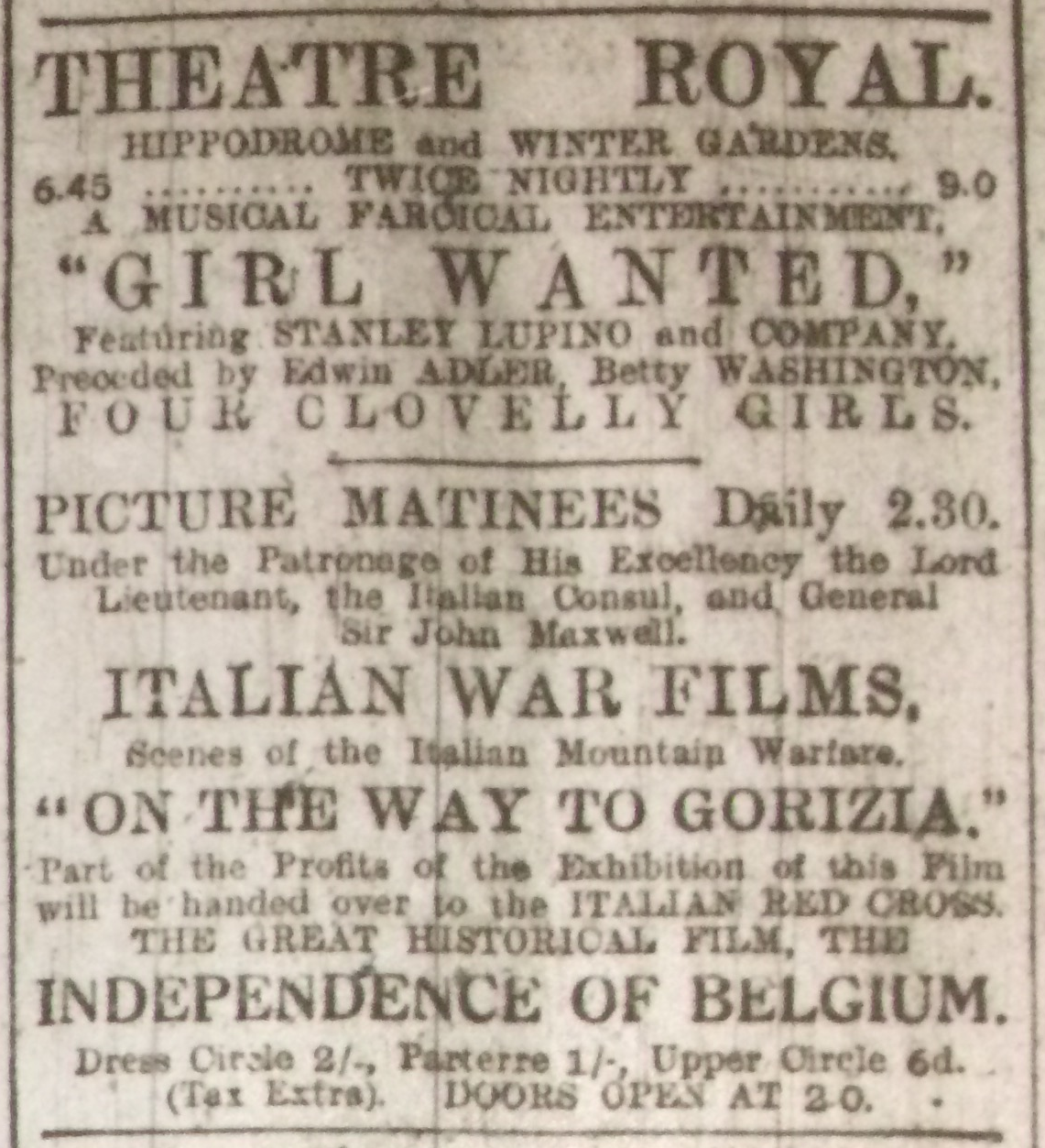
Dublin's Theatre Royal showing matinees of the official Italian war film On the Way to Gorizia; Dublin Evening Mail 6 Nov. 1916: 2.

Dublin’s Theatre Royal showing matinees of the official Italian war film On the Way to Gorizia; Dublin Evening Mail 6 Nov. 1916: 2.

Meanwhile, war films continued to premiere at special matinees at Dublin’s Theatre Royal. In November 1916, these including the official Italian war film On the Road to Gorizia (Nov. 6-11), which was exhibited under the patronage of the Lord Lieutenant and the Italian ambassador, and the French war film The Allies on the Eastern Front (Nov. 27-Dec. 2), which was shown with Tank Cartoons, about which the Dublin Evening Mail enthused – quoting the publicity material – the “[t]he man who invented the tanks, whoever he may be, is a genius, but the man who conceived this film is more – he is a genius, a humourist, and an artiste rolled into one” (“War Films at the Theatre Royal”).

For the Times writer, this kind of film – but perhaps not the at-least-somewhat-frivilous cartoons – provided a model for cinema’s wider role as the public educator of the near future. “When peace returns the State should be able, by the same means,” s/he argued, “to instruct the public in matters concerning trade policy, the opening of new markets, and the development of national industries.” As well as this, “the cinematograph may be in general use in the technical schools and universities for the teaching of mechanics and engineering.”

But the cinema had not yet attained this role of general usefulness to the state, and the picture houses remained too likely to be the refuge of shirkers and of idlers rather than of citizens informed about imperial economics and of scholar-technicians. In mid-November 1916, the Weekly Irish Times reprinted a report from the London Times on the halt in Irish recruiting: “[in Dublin,] a man of military age, even if he be a young man of the cap brigade, may loiter at street corners, saunter about the city, or seat himself in a Picture House or Music hall in the full confidence that no recruiting sergeant, official or self-appointed, will come along to trouble him” (“Recruiting in Ireland”). Not enough was, apparently, being done in Dublin to force young working-class men onto the battlefields, but with growing ubiquity of propaganda film, the picture houses were presumably not the refuge they once might have been.

The map shows the location of Asylum Yard (ringed) and the Brunswick Street Picture House (red block) that

This map shows the location of Asylum Yard (ringed) and the Brunswick Street Picture House (red block).

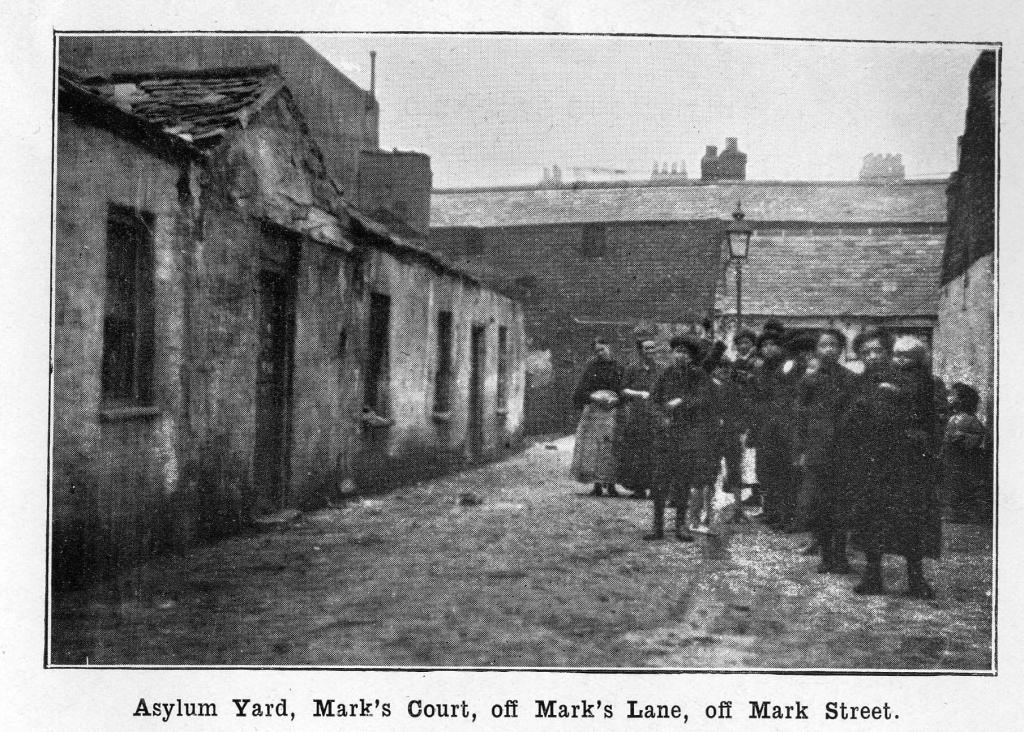
Nevertheless, four Dublin working-class teenage boys – William Byrne, Patrick Carey, Edward McDonnell and Myles Brady – seem to have enjoyed an evening at the end of October at a picture house, likely the one at 30 Great Brunswick (now Pearse) Street, which was the one nearest to where they lived. However, the reason that a record of their outing survives is that the events of their evening landed them in court and the case was reported in the newspapers. Arriving home late to their homes in the area between Townsend Street and Brunswick Street, Byrne, Carey, McDonnell and Brady found themselves locked out. They took shelter in 12 Asylum Yard, burning floorboards and window sashes to keep warm (“After the Pictures”). In a sense, the press accounts provide just one more of the numerous reports of the period that invoke the increasingly inevitable constellation of young working-class boys/men, picture houses and criminality (see here, here and here). Despite potential, cinema was still a juvenile, delinquent medium; it needed to mature and be disciplined.

Report of the Departmental committee appointed by the Local government board for Ireland to inquire into the housing conditions of the working classes in the City of Dublin

From the Report of the Departmental committee appointed by the Local government board for Ireland to inquire into the housing conditions of the working classes in the City of Dublin (Dublin, 1914). Available from Dublin City Libraries’ Derelict Dublin collection.

Some of the details of the case, however, point the finger of criminality in another direction. The name Asylum Yard was among those that became notorious in the aftermath of the 1913 collapse of tenements in Church Street. Asylum Yard housed more than a hundred people in 20 unsanitary dilapidated cottages, 15 of which – the highest number of any street in the city – had been condemned by Dublin Corporation in 1912 as unfit for human habitation and ordered to be demolished if not repaired within a given time (“Tenements Unfit for Habitation”). When on 1 November 1916, the four boys appeared in the city’s Southern Police Court charged with causing malicious harm to 12 Asylum Yard, it was also revealed that this cottage was owned by Arabella Mitchell of Tivoli Terrace, Kingstown (now Dun Laoghaire). The contrast in housing standards between Tivoli Terrace and Asylum Yard – and the inequalities of the people who lived in them – would have been difficult to exaggerate.

Cinema features strongly among the small ads in the Irish Independent, 2 Nov 1916: 2.

Cinema featured strongly among the small ads in the Irish Independent, 2 Nov 1916: 2.

If cinema played some part in relieving the misery of the lives of those forced to live Dublin’s slums, it was worth defending.

References

“After the Pictures: City Boys’ Night Out.” Dublin Evening Mail 1 Nov. 1916: 2.

“The Birth-Limitation Picture: Delicate Subject Discussed on the Screen.” Bioscope 9 Nov. 1916: 561.

“Cinema and Youths.” Evening Herald 1 Nov. 1916: 2.

“Morality Films.” Irish Times 2 Nov 1916: 4.

“Recruiting in Ireland.” Weekly Irish Times 18 Nov. 1916: 3.
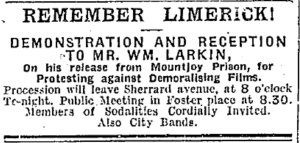
“Tenements Unfit for Habitation: Corporation Inaction: Instructive Figures on Death-Traps.” Irish Independent 11 Sep. 1913: 5.

“War Films at the Theatre Royal: The Allies on the Eastern Front.” Dublin Evening Mail 17 Nov. 1916: 5.

“‘Where Are My Children?’ Special Review of Remarkable Film Sermon.” Bioscope 16 Nov. 1916: 631.

“The Birth of a Nation” in Ireland, Autumn 1916

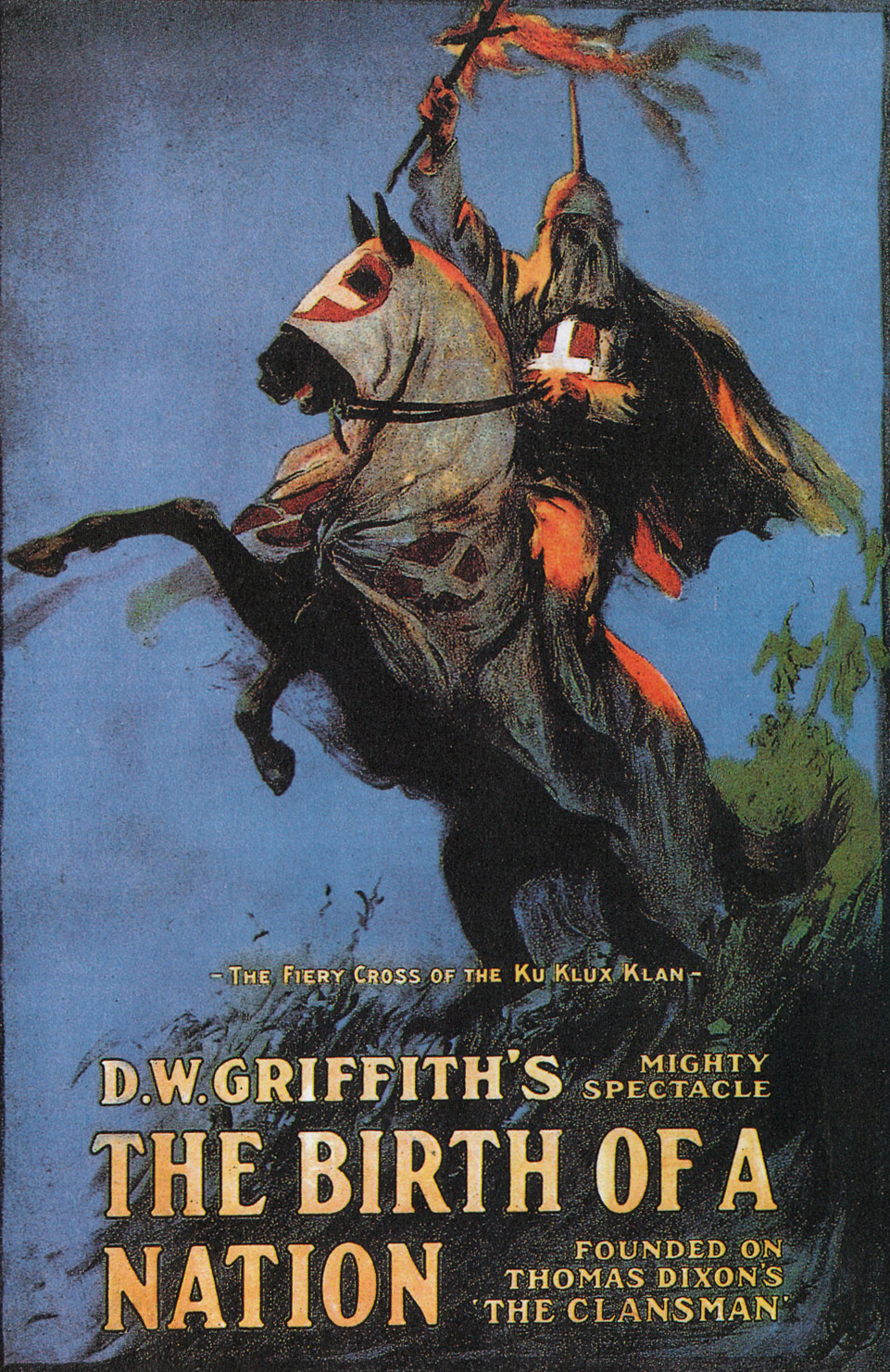
Theatrical poster; Wikipedia.

Theatrical poster; Wikipedia.

D. W. Griffith’s racist epic The Birth of a Nation (US: Epoch, 1915) caused a sensation when it finally reached Ireland in the autumn of 1916, more for its epic ambitions than for its racism. It played exclusively at just three venues: first, at Belfast’s Grand Opera House, for the three week from 7 to 26 August; next, at Cork’s Opera House for the week of 28 August-2 September; and finally, at Dublin’s Gaiety Theatre for a two-week run from 18 to 30 September. Clever marketing to middle-class tastes, a mastery of filmic spectacle and even its title in a country consumed by a struggle for or against the birth of a more-or-less autonomous nation propelled it into the Irish consciousness like few previous films.

“‘Ireland will never be fit to take its place among nationalities, big or small, until it is recast and remade. It is in the melting-pot now…. What picture of the process of remoulding will the historian of the future give his generation? ” This question from US senator Patrick J. Maguire appeared as “To-Day’s Thought” at the top of the Man About Town’s “Seen and Heard” column in the Evening Herald on 26 September 1916.  In the column’s “Afterthought,” the Man About Town answered: “Why a moving picture, of course – another ‘Birth of a Nation.’” As writers in the Bioscope and Dublin Evening Mail had earlier in the year, the Man About Town thought that the historiography of the near future would be written not on the page but on the screen, with the light of the film camera and projector. Unlike these previous writers who had discussed British propaganda films, the Man About Town was referring to the fictional Birth of a Nation, which was then starting the second of its two-week run at the Gaiety.

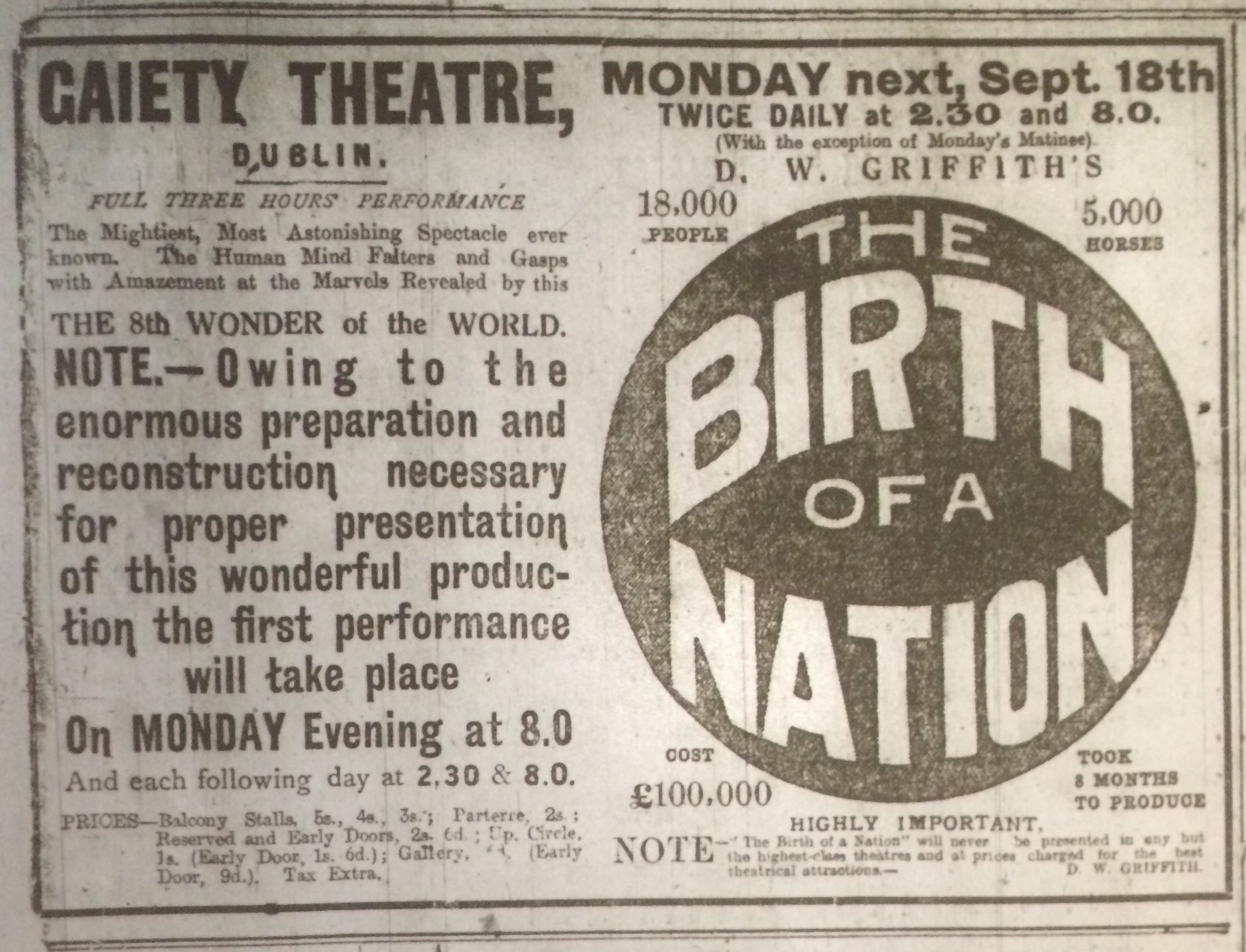
Dublin Evening Mail 16 September 1916: 2.

One of a series of large display ads for The Birth of a Nation in the Dublin Evening Mail, this one appeared on 16 September 1916: 2.

“By the way, have you seen it – the ‘Birth of a Nation’ at the Gaiety?” the Man About Town continued, clearly somewhat overwhelmed by this version of the American Civil War and period of Reconstruction that followed it. Focusing on the Northern Stoneman and Southern Cameron families, Griffith depicts the Civil War as a national tragedy, that was followed by the assassination of Abraham Lincoln which allowed such radical Republicans as Austin Stoneman (Ralph Lewis) – a fictional version of Thaddeus Stevens – to unleash on the defeated South a plague of carpetbaggers and state legislatures of freed blacks incapable of governing even their own behaviour never mind a state. Order could only be restored when Ben Cameron (Henry B. Walthall) founded the Ku Klux Klan (KKK), which restores order and rescues white women from the sexual depredations of black men. Awed by the film’s technical achievements, Irish journalists tended to treat it as a factual retelling of events. “If you fail to see it you are missing a part of your education,” the Man About Town warned. “I have sat out some kinema shows in my time, but nothing to come near this. It’s the greatest screened drama that ever came to Dublin.”

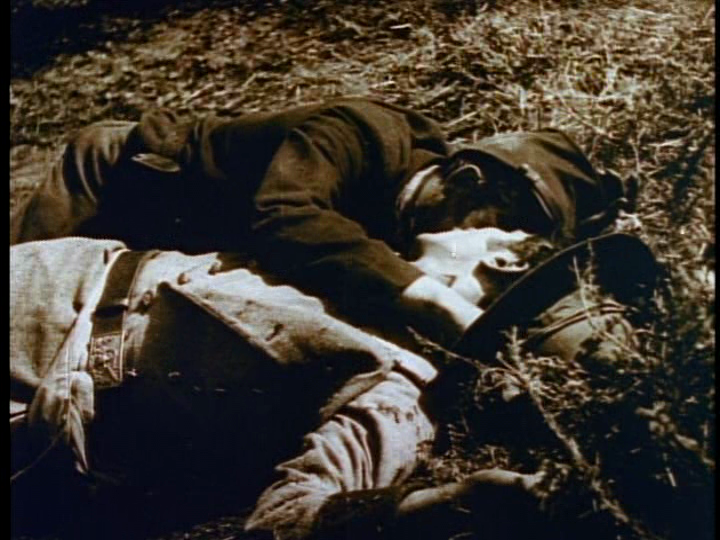
Childhood friends but belonging to opposing Union and Confederate armies, the youngest sons of the Cameron and Stoneman families meet on the battlefield and die in each other's arms.

Childhood friends but belonging to opposing Union and Confederate armies, the youngest sons of the Cameron and Stoneman families meet on the battlefield and die in each other’s arms in The Birth of a Nation.

Under the title “Absolutely It,” Jacques’ review at the Evening Herald concluded that it was “the most enthralling thing in film land ever presented to a Dublin audience” and declared the reviewer lost for words. “If you ask me to give a full and detailed account of all the characters, love stories, historical incidents and thrilling incidents that occurred during the two hours that ‘The Birth of a Nation” reel kept spinning at the Gaiety Theatre last night,” he confided, “I’m sorry to say I can’t do it.” He nevertheless usefully provided what he called “but the baldest outline”:

The film shows us with almost overwhelming detail life in America, both North and South, just previous to and during the course of the Civil War. Mixed up with the fighting we follow the fortunes of two families united by ties of friendship but on opposite sides in the struggle. Then, when the war is over, we see the rising of the blacks, who, thanks to the slushy policy of the North, get all the power into their own hands and become bestial tyrants in consequence.

Kindly before our eyes is pictured the inception of the biggest secret society the world has ever seen, for it embraced every white in the South and yet remained secret. Finally we see how this society – the Ku-Klux-Klan – by the employment of mailed glove methods and working on negroid superstition, was enabled to stamp out the black peril and permit the whites in the Southern States to live without the men carrying their lives (and their six-shooters) in their hands.

Jacques was somewhat unusual among Irish reviewers in focusing on the second, more audaciously racist part of the film, which deals with the Reconstruction, and his use of such terms as “bestial tyrants,” “negroid superstition” and “the black peril” leaves little doubt that he accepted the film’s racism.

The very picture of imperilled femininity, Elsie Stoneman (Lillian Gish) awaits her forced marriage to the mixed race Silas Lynch in The Birth of a Nation.

In just one climactic instance of racially imperilled femininity, Elsie Stoneman (Lillian Gish) awaits her forced marriage to the mixed race Silas Lynch (George Siegmann) in The Birth of a Nation.

The Man About Town largely avoided explicit white-supremacist phrasing but made clear that the film’s affective power – frequently evoked with images of imperilled femininity – was deployed to ensure that the audience identified with Southern whites:

It gives you every emotion in the human gamut. One time you marvel at the beauty of the sunny cottonfields, then you smile at the quaint costumes. You want to kiss and cuddle the sweet young person loved by heroic young men. You feel an all-overness when you see howling mobs surging in flaming towns; you grip yourself at the sight of men amuck smashing and tearing houses above the heads of cellared women; you feel the shock of battle. You laugh and cheer and cry. It’s better than a good play. It’s a marvel.

The reviewer at the Belfast News-Letter contended that the emotional charge was intensified over the film’s three-hour span in order to offer the audience a final release by cheering the KKK. “Historically of the greatest value,” s/he claimed,

“The Birth of a Nation” holds the audience enthralled for over three hours, and the enthusiasm of the spectators waxes stronger and stronger with each succeeding scene, until, towards the close, they seize the opportunity afforded by the thrilling exploits of the Ku Klux Kan [sic] to give vent to their long pent-up emotions in frequent and hearty outbursts of applause. (“Grand Opera House”  BN.)

Only the reviewer at Cork’s Evening Echo in any way questioned the film’s racial politics. “The southern cotton planters were persuaded nature intended the negroes to be bought and sold and to cultivate cotton,” s/he observed, commenting that the “outlook of these planters appears peculiar at the present day,” but undermining what may be a mild criticism by adding that “one can to some extent understand it” (“Opera House”). “Mr. Griffith, it is easy to see, has a strong Southern bias,” the Northern Whig reviewer pointed out, “but this would not matter if it did not lead him to overstate an excellent case.” This overstatement was particularly evident in the depiction of the KKK: “to represent [the KKK] as a new order of chivalry is simply fantastic.” However, the writer’s problem appears to have been historical accuracy – the fact that it “is tinged too deeply with melodrama” – and not racist ideology: “If the Ku-Klux-Klan cannot be adorned with a halo, Mr. Griffith uses it to produce some splendid sensational thrills and the final fight for Piedmont is as good a realistic spectacle as one has ever seen staged” (“Grand Opera House” NW 8 Aug.).

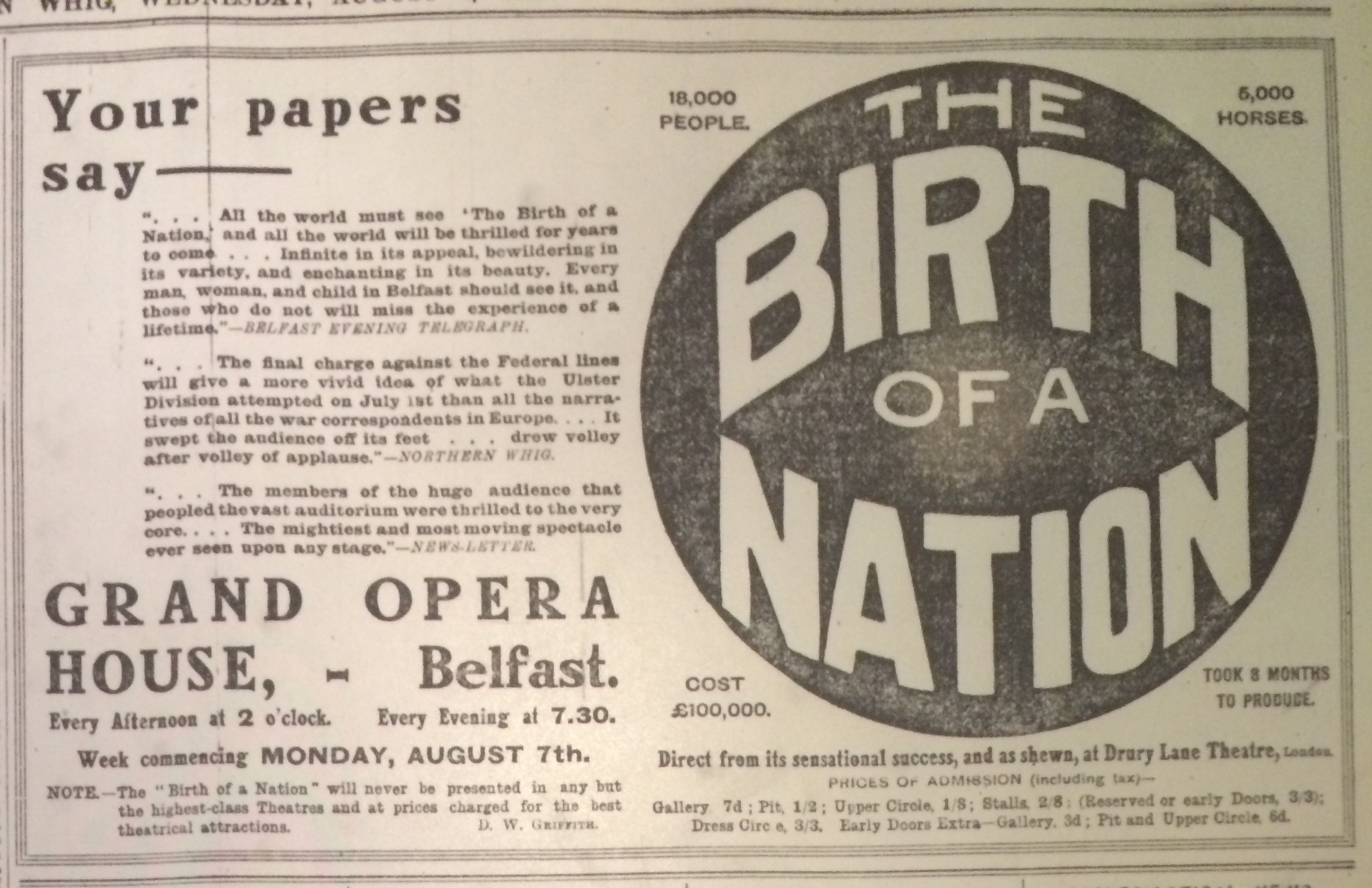
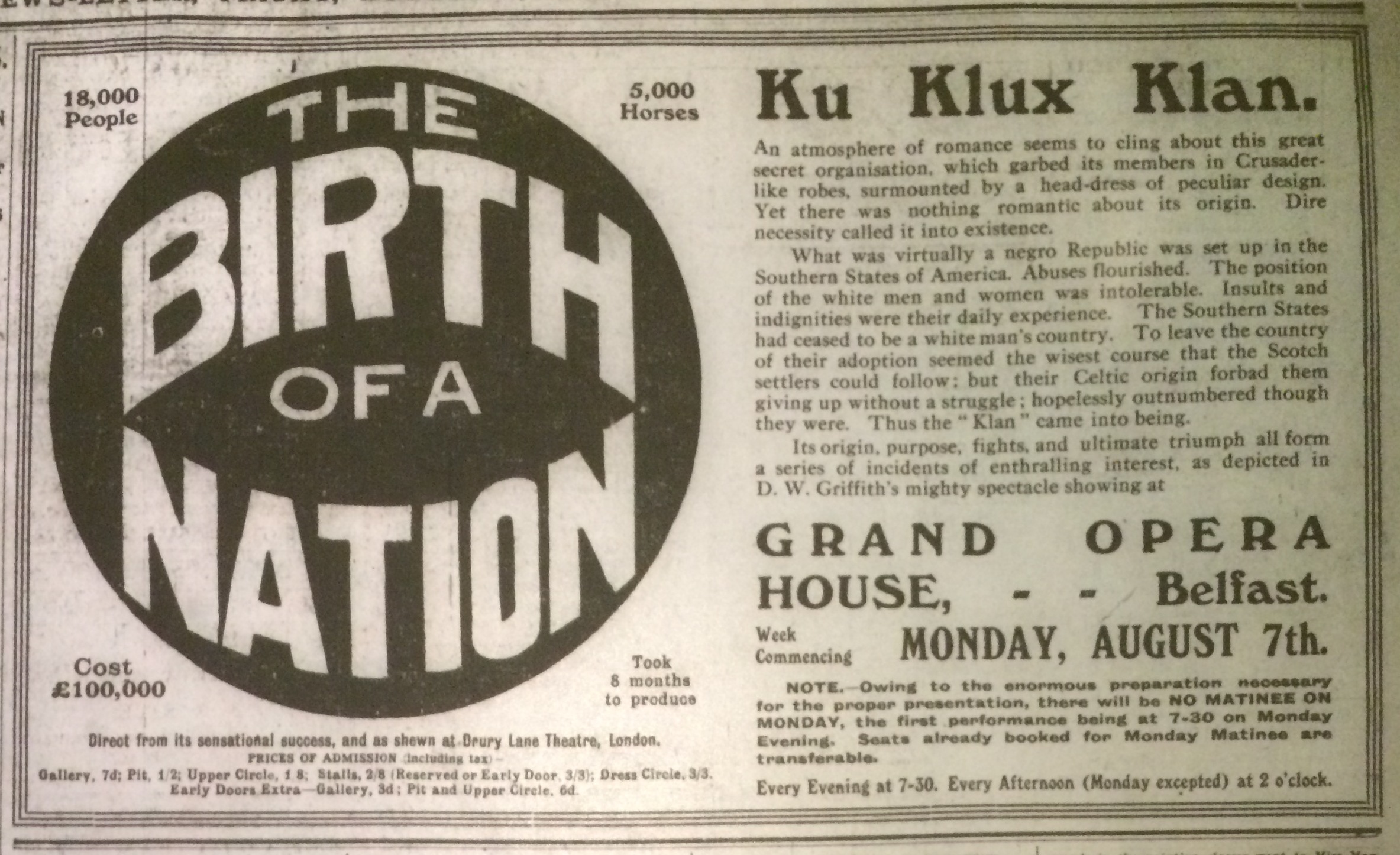
It is possible to track these difference in reception of The Birth of a Nation because it received so much newspaper coverage, and this in turn was because it played exclusively at three of Ireland’s most prestigious theatres rather than at Belfast’s, Cork’s and Dublin’s picture houses. This formed part of a deliberate international exhibition strategy designed to distinguish The Birth of a Nation as a cultural event unlike any previous film screening. Rather than be distributed through existing distribution companies, the film was exhibited in a “road show” format, brought to the cities in which it was to be shown by a travelling company of technical crew and musicians. The company’s arrival was heralded by an elaborate marketing campaign that included large newspaper display ads describing – or rather exaggerating – the film’s unprecedented scale (Stokes 121). The claim repeated most often in Irish newspaper ads related less to the film’s narrative than to the assertion that the extent of the production needed to be measured in the thousands:  18,000 people, 5,000 horses and £10,000 costs.

This ad quoted the overwhelmingly positive reviews in Belfast's papers; Northern Whig 9 Aug. 1916: 7.

This ad quoted the overwhelmingly positive reviews in Belfast’s papers. Notable missing is the nationalist daily Irish News, which did not advertise or review the film. Northern Whig 9 Aug. 1916: 7.

Every ad also carried a note from director D. W. Griffith guaranteeing that “‘The Birth of a Nation’ will never be presented in any but the highest-class theatres and at prices charged for the best theatrical attractions.” Theatrical prestige was financially lucrative. “At both houses yesterday large audiences attended,” the Irish Times’ reviewer noted in the course of a comparatively short review of the Gaiety shows, observing that luxury and expense were sometimes forced on “later comers at the evening performance [who were] unable to obtain admission, except to the dearer parts of the theatre” (“‘Birth of a Nation’” IT). The Irish exhibition of The Birth of a Nation awaited a British road-show company that came – according to the ads – “direct from its sensational success at Drury Lane, London.” As a result, the film had taken a year and half to reach Ireland.

Belfast News-Letter 15 Aug. 1916: 1.

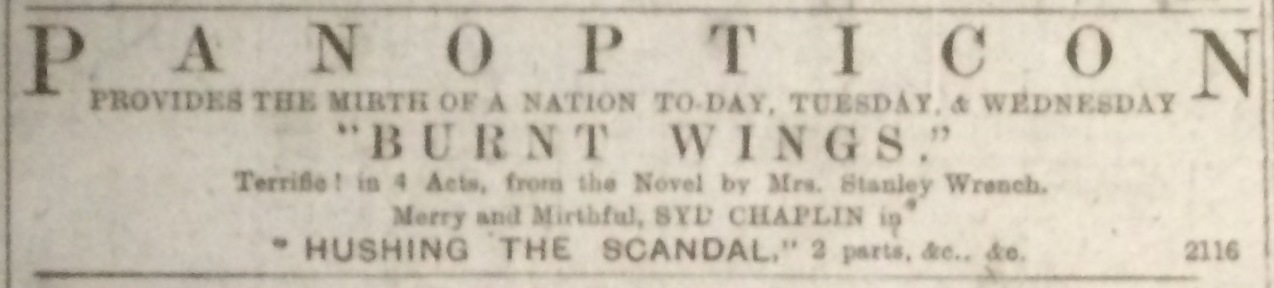
The Panopticon’s “mirth of a nation”; Belfast News-Letter 15 Aug. 1916: 1.

The attempt to suggest that the prestige theatres should be the exhibition spaces for prestige films was, not surprisingly, resisted by picture-house owners. During the Belfast run, the rival Panopticon advertised that if not “the birth of a nation,” it was providing “the mirth of a nation,” albeit that its main feature Burnt Wings (Britain: Broadwest, 1916) – in which a woman adopts her husband’s illegitimate child – does not seem altogether mirthful (“Panopticon”). For distributors of other high-profile films, the choice of picture house or theatre appears to have been more pragmatic. When the most ambitious of the British government’s propaganda films The Battle of the Somme finally opened on 11 September, it was first shown in Dublin at a theatre, the Theatre Royal, but in Belfast, it was shown at the luxurious Picture House, Royal Avenue. “[N]ever have the facts of war been more vividly brought home to people living far away from the scene of action,” the Belfast News-Letter commented. “For this latter feature we are indebted to the pictures which have from time to time been obtained by means of the cinematograph [… F]rom the moment of preparation, all through that deadly, but glorious, First of July, on to the crash of victory, the story is unfolded in all the strength and simplicity which such photography can give ” (“Battle of the Somme”).

Dublin Evening Mail 26 Aug. 1916: 2.

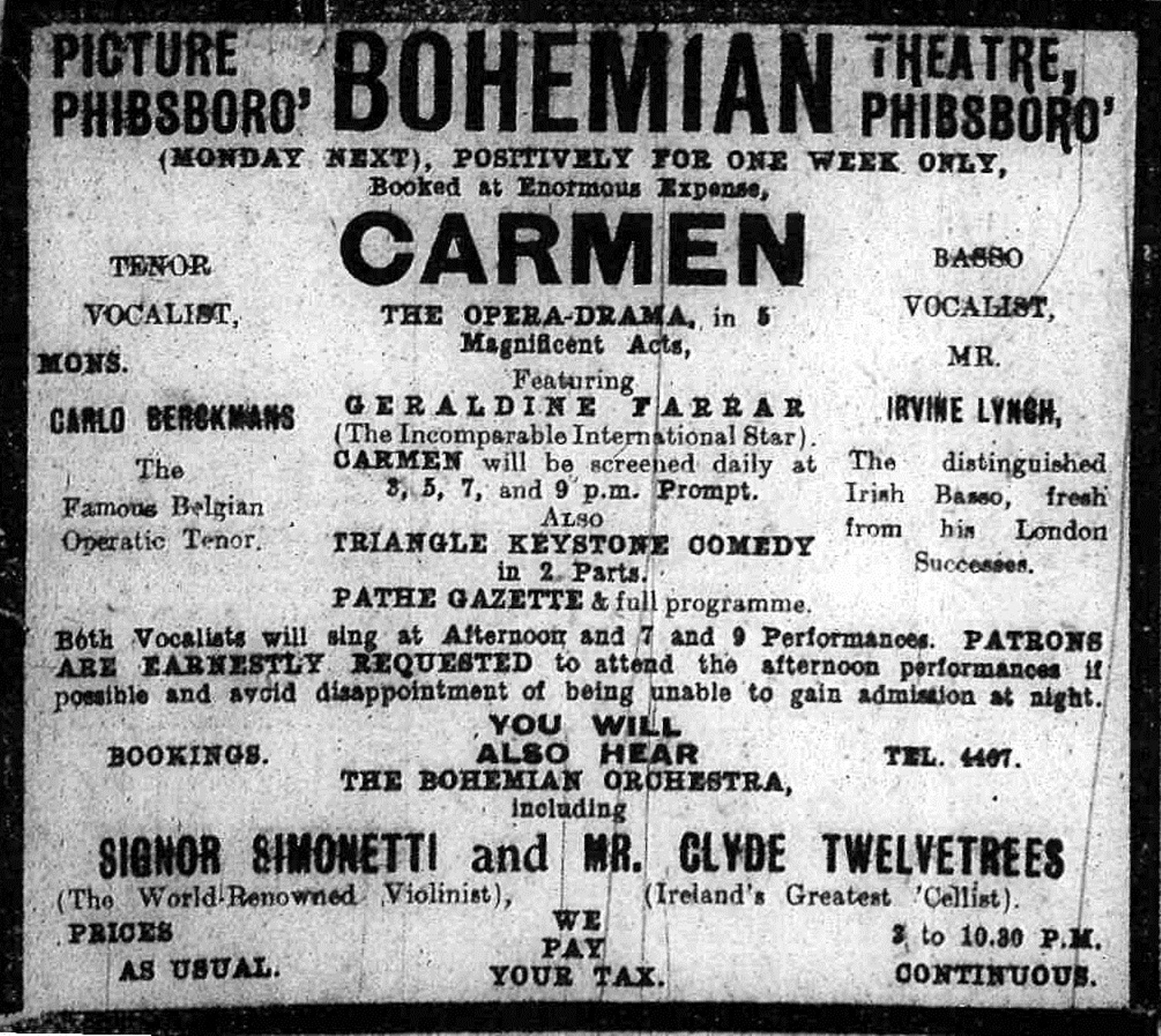
Carmen, a silent-screen opera; Dublin Evening Mail,  26 Aug. 1916: 2.

Undoubtedly, certain picture houses were capable of mounting productions that rivalled the theatres’ biggest spectacles. In the week beginning 28 August, Dublin’s Bohemian capitalized on its acknowledged superiority in musical attractions by exhibiting the opera film Carmen (US: Lasky, 1915), directed by Cecil B. DeMille and starring Metropolitan Opera diva Geraldine Farrar in her first film role. Farrar did not, of course, appear at the Bohemian to sing her part, but the live musical accompaniment by the Bohemian orchestra was supplemented by both concert instrumentalists Achille Simonetti and Clyde Twelvetrees and vocalists Belgian tenor Carlo Berckmans and Irish basso Irvine Lynch.

Although it did not have such vocal attractions, The Birth of a Nation outdid all of these in other ways. One of these was its exceeding length, running almost three times longer than either Carmen or The Battle of the Somme. Indeed, its running time of over three hours was 50-100% longer than most picture-house programmes, which usually consisted of several films. And however exaggerated the figures that appeared in its ads, local reviewers recognized it as an unusually lavish production. “The Grand Opera House was filled to overflowing last night,” the Belfast News-Letter‘s reviewer observed,

and collectively and individually, without exception, the members of the huge audience that peopled the vast auditorium were thrilled to the very core by the stupendous historical drama that was unfolded before their eyes. “The Birth of a Nation” is unquestionably the finest cinematograph production ever seen in this city, but it represents far more than that; it is one of the mightiest and most moving spectacles ever seen upon any stage, and its creation is an epochal event in the history of the art of cinematography. (“Grand Opera House” BN.)

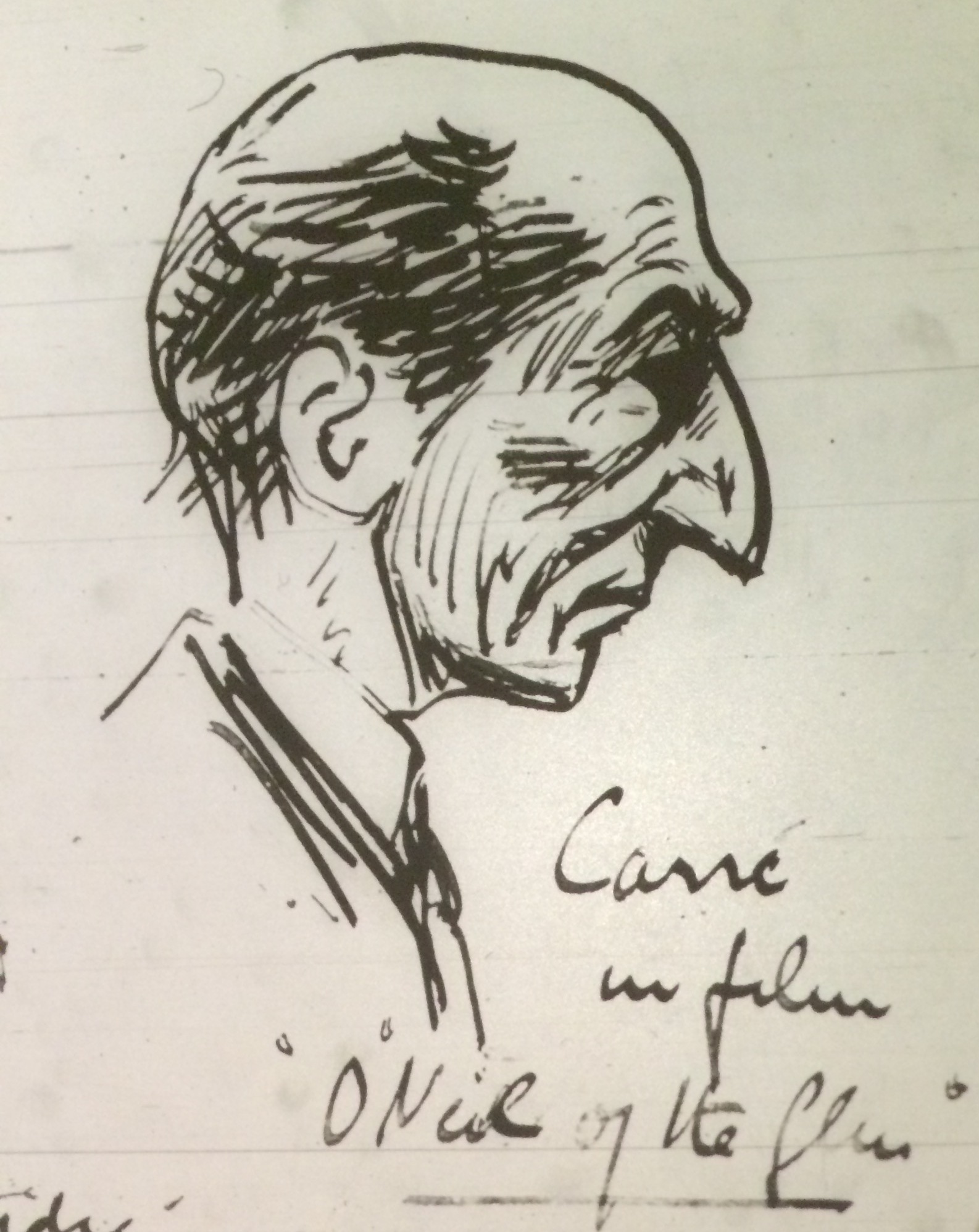
Joseph Holloway saw several films apart from The Birth of a Nation in September 1916, including a second viewing of the Film Company of Ireland’s O’Neil of the Glen, at which he sketched actor J. M. Carre.

Joseph Holloway saw several films apart from The Birth of a Nation in September 1916, including a second viewing of the Film Company of Ireland’s O’Neil of the Glen, at which he sketched actor J. M. Carre.

However, it seems that audiences in Dublin and those in Belfast interpreted the spectacle in different ways. Writing of Dublin, Nicholas Andrew Miller has pointed out that “[i]f the film produced a local political impact on the Irish audience, then, it is not because it narrated Irish historical experience, but because it created a discursive space in which local Irish references – and memories – could appear in the guise of spectacle” (115). Citing the diary of inveterate theatregoer Joseph Holloway, Miller shows that members of the Gaiety audience used the film to criticize post-Easter Rising Ireland. Holloway had attended the Gaiety on 20 September, when he thought the film “stupendous […] & to say that I was thrilled by visiting it is to state but downright fact. It is a story of the War between North & South & its after effect until the negroes were again put in their proper place.”  Holloway also reports that his neighbour Miss Conroy told him of shouts at one of the screenings concerning British Army commander John Maxwell, who had imposed harsh martial law on Dublin in the aftermath of the Rising and had executed 15 of the leaders. The comments came during a scene in the film in which

Lincoln refuses to deal harshly with the Southern Leaders, & says, “he’ll treat them as if nothing occurred at all!” – on a shout coming from one of the audience “where is Sir John Maxwell to hear that?” followed by great approval & the contrary, till she got quite frightened of there being a row.

(The barber’s assistant, who was present at opening show first night, said one on gallery called out after seeing the above incident – “For our second Cromwell!”). (Holloway.)

For Miller, the memories and local references the film evoked related to nationalist politics, in this case, the Easter Rising.

This film ad openly praised the Ku Klux Klan; Belfast News-Letter 3 Aug. 1916: 7.

This film ad openly praised the Ku Klux Klan; Belfast News-Letter 3 Aug. 1916: 7.

The Belfast context was quite different. As no equivalent of Holloway’s diary exists for Belfast and as the Irish News – the city’s main nationalist newspaper – did not advertise or review the Grand Opera House shows, the surviving responses to The Birth of a Nation come from the city’s unionist newspapers. As well as this, the film opened on 7 August, more than a month earlier than in Dublin, putting it in the high summer, when an exodus from the city to seaside resorts was being reported (“Holiday Scenes in Belfast”). “Even in such hot weather as we have been experiencing recently a visit to the Opera House to see the ‘Birth of a Nation’ will not be regretted, but on the other hand will long be remembered with much pleasure by all who pay it” (“Birth of a Nation” NW). Despite this, the film ran for three weeks, a week longer than in Dublin, and the papers reported that the enthusiasm of Belfast audiences had not waned even by its third week, “which finds the film in higher favour than ever. […] Not only is Mr. Griffith’s spectacle continually drawing new admirers but a great many people are discovering that it well repays a second and even a third visit” (“Grand Opera House”  NW 22 Aug.).

For the reviewers in Belfast, the outstanding feature of local relevance in The Birth of Nation was its depiction of war, which made it particularly timely given that the papers were elsewhere reporting on the battles of the Somme and Verdun and at one point, on the increased use of non-white soldiers in battle (“Coloured Men and the War”). “The battle of Petersburg, in which the Federal troops sustained their greatest and final defeat, caused great interest on account of the close analogy it bears to the fighting on the Western front to-day,” the Belfast News-Letter observed, “it was one of the earliest, if not the first occasions in history, on which the contending armies entrenched in the open with the opposing lines only a few yards apart” (“Grand Opera House” BN).

However, the film’s contemporary relevance came  not just for these battlefield details but also from the depiction of the emotions felt by soldiers’ families.

The departure of the troops for the scene of action, the pathos of parting from their friends and relatives, the tragic letters which tell of their devotion and sacrifices, the sorrow and suffering that are bravely endured by grief-stricken parents who have given their sons to their country – all these things are typical of what is happening at the present time. No one can witness this mighty spectacle without being moved to tears. There are scenes of indescribable pathos, and there are also scenes of surpassing beauty and of infinite sweetness and tenderness. (“‘Birth of a Nation’” BN.)

Although a greater emphasis fell on the war scenes in Belfast – “where picture houses thrive and claim thousands of habitués” – it was also true of Dublin and Cork that “[t]he prophesy that the film would create a sensation wherever it was produced has been fulfilled to the letter” (“Grand Opera House” NW 15 Aug.). Irish filmgoers – but not cinemagoers – thronged to see Griffith’s massive spectacle in the autumn of 1916, were duly impressed by it and had few qualms about its racism.

References

“The Battle of the Somme: Historic Film to be Exhibited in Belfast.” Belfast News-Letter 18 Aug. 1916: 8.

“The Birth of a Nation.” Northern Whig 12 Aug. 1916: 6.

“‘The Birth of a Nation’: Impressive Spectacle at the Grand Opera House.” Belfast News-Letter 12 Aug. 1916: 2.

“‘The Birth of a Nation.’” Irish Times 20 Sep. 1916: 3.
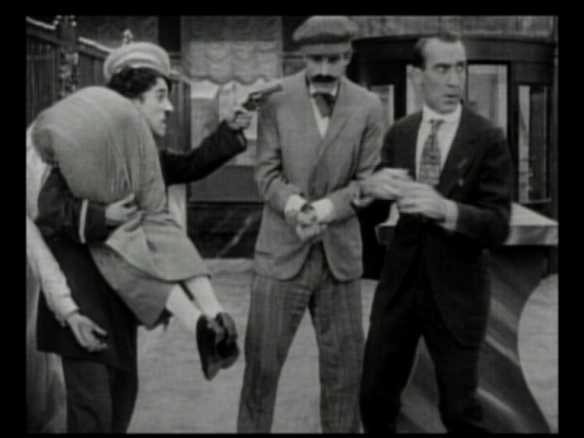
“Cinema’s Popularity: Manifold Potentialities: Shows What Theatre Only Tells.” Belfast Evening Telegraph 29 Sep. 1916: 4.

“Coloured Men and the War.” Belfast News-Letter 4 Aug. 1916: 8.

“Grand Opera House: ‘The Birth of a Nation.’” Belfast News-Letter 8 Aug. 1916: 2.

“Grand Opera House: ‘The Birth of a Nation.’” Northern Whig 8 Aug. 1916: 7; 15 Aug. 1916: 7; 22 Aug. 1916: 7.

Holiday Scenes in Belfast: Big Exodus to the Seaside: The Railway Stations Besieged.” Belfast News-Letter 8 Aug. 1916: 4.

Holloway, Joseph. Holloway Diaries. National Library of Ireland.

Hughes, Tom. How Belfast Saw the Light: A Cinematic History. Belfast: Hughes, 2014. Pp. 237-40.

Jacques. “Absolutely It: Amazing Realism at Gaiety Theatre: ‘Birth of a Nation.’” Evening Herald 19 Sep. 1916: 3.

The Man About Town. “Things Seen and Heard.” Evening Herald 26 Sep. 1916: 2.
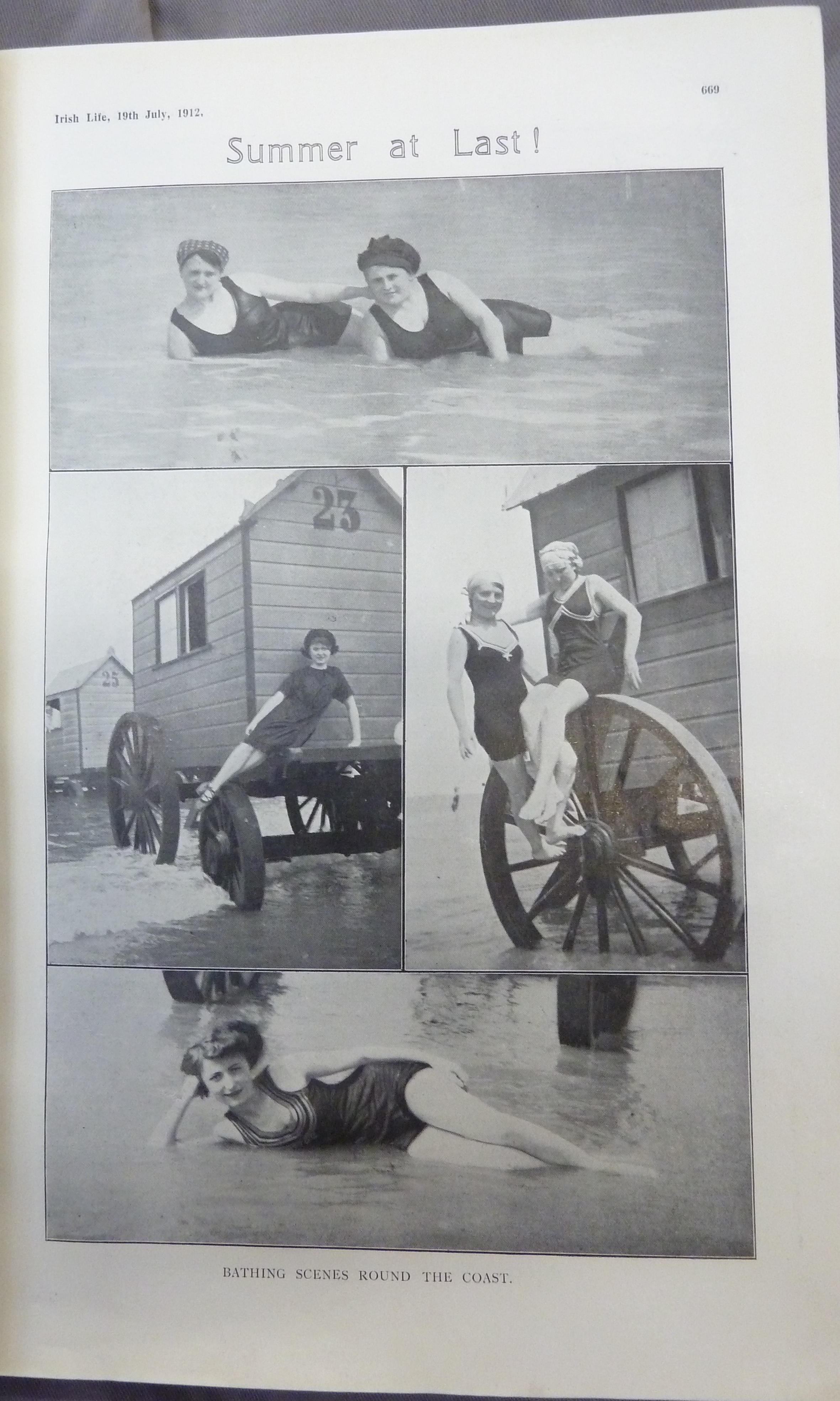
Miller, Nicholas Andrew. Modernism, Ireland and the Erotics of Memory. Cambridge: Cambridge UP, 2002).

“Opera House: ‘The Birth of a Nation.’” Evening Echo 29 Aug. 1916: 2.

“Panopticon.” Belfast News-Letter 15 Aug. 1916: 2.

Stokes, Melvyn. D.W. Griffith’s The Birth of a Nation: A History of “the Most Controversial Motion Picture of All Time.” New York: Oxford UP, 2008.

Irish Audiences Watch “O’Neil of the Glen,” August 1916

If cinema in Ireland in July 1916 prompts reflection on film as a weapon of war, developments the following month show significant developments in the emergence of film as an expression of national culture. On 7 August 1916, audiences at Dublin’s Bohemian Picture Theatre were the first to see O’Neil of the Glen (often spelled O’Neill of the Glen), the first Film Company of Ireland (FCOI) production to be publicly released. Formed in March 1916 by James Mark Sullivan and Henry Fitzgibbon, the FCOI would become the most important indigenous fiction film producer of the 1910s. Ò’Neil of the Glen itself, however, is believed to be a lost film, like all FCOI’s other production except Knocknagow (1918), Willy Reilly and His Colleen Bawn (1920) and one reel of the two-reel comedy Paying the Rent (1920). Nevertheless, its success with audiences was vital to securing FCOI’s future.

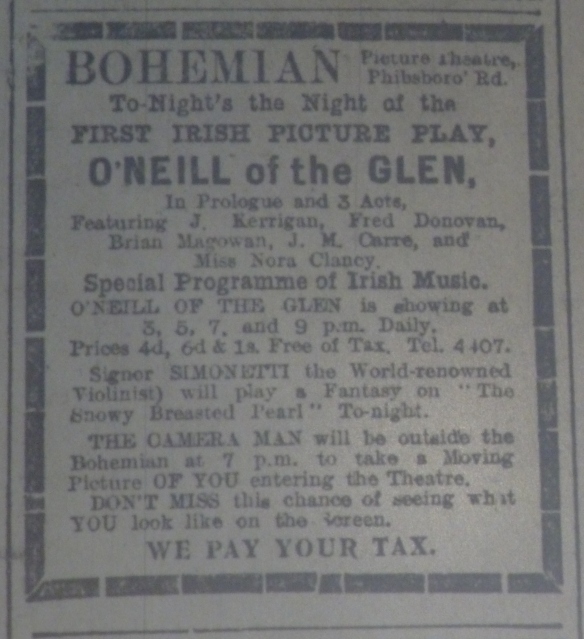
O'Neil Boh 7 Aug 1916

Ad for the first public exhibition of O’Neil of the Glen, at Dublin’s Bohemian, Dublin Evening Mail 7 Aug. 1916: 2.

That success was won in part by the careful management of publicity, a fact that means that the surviving ads, articles and reviews in the press must be treated with caution. It may be a forgivable exaggeration for the papers to have hailed the premiere of O’Neil of the Glen as the start of a new Irish industry, but it was not true that this was “the first picture-play ever produced in Ireland by an Irish company of Irish players,” a claim repeated almost verbatim in several paper, indicating that the journalists were working from the same FCOI publicity materials (“New Irish Industry,”  “O’Neill of the Glen,” “Irish Film Triumph”). Most recently, Charles McEvoy of Dublin’s Masterpiece Cinema had funded Fun at Finglas Fair – even if it had allegedly been destroyed during the Easter Rising before being publicly shown – and in 1912-13, cinema-owner and mayor John J. Farrell had made a number of films with his company Irish Film Productions (Rockett 95, Condon 237).

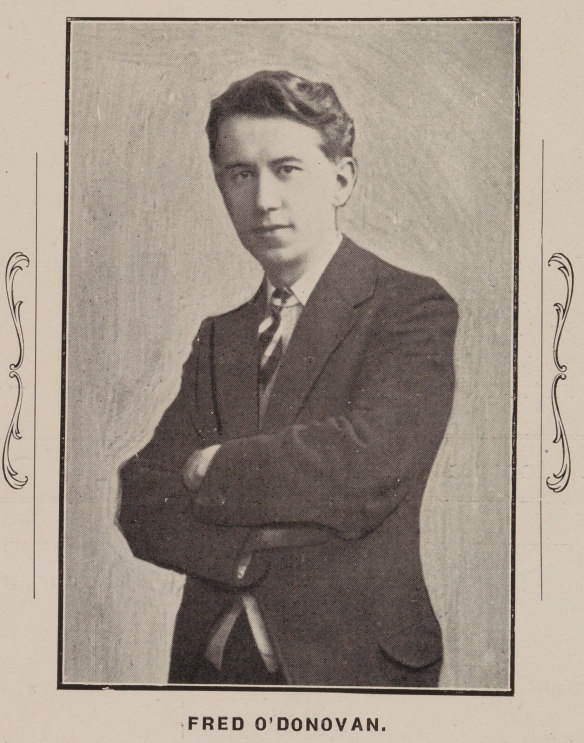
IRISHLIMEGHT1_MAY_P6 001

Abbey Theatre and Film Company of Ireland actor – and later director – Fred O’Donovan; Irish Limelight 1:5 (May 1917): 6.

Nevertheless, although O’Neil of the Glen was not the first indigenous Irish fiction film, it was a very significant one by the country’s most important film production company of the 1910s. On 29 June, FCOI announced a “trial exhibition,” or what would now be called a test screening, of their first completed production, O’Neil of the Glen, at Dublin’s Carlton. By this time, and in the context of management difficulties at the Abbey Theatre, FCOI had been able to contract J. M. Kerrigan and Fred O’Donovan, two of the Abbey’s biggest stars, albeit that they were permitted to appear in certain plays (“Abbey Theatre,” “Platform and Stage”). Kerrigan, indeed, directed and played a part in O’Neil of the Glen, a three-reel feature based on a script adapted by W. J. Lysaght from M[argaret] T. Pender’s story of the same title that had been serialized in the Shamrock in 1891. The film told how Don O’Neil (Brian Magowan), the son of a landowner who had been defrauded by the solicitor Tremaine (J. M. Carre), saves the life of Tremaine’s daughter, Nola (Nora Clancy), whose love he wrests from Graves (O’Donovan), a blackmailing suitor (“Bohemian,” Evening Mail).

“The film is of a quality which leads one to anticipate success for the venture,” wrote an Irish Times correspondent at the trial exhibition, noting that it was part of a process of perfecting the film: “the promoters are engaged in a ruthless revision of the film to bring it up to the highest possible standard” (“Irish Film Production”). The Bioscope’s Irish correspondent Paddy’ was less complimentary about this early cut of the film, pointing out that although “[g]reat care was taken with the production and camera work,” it possessed “many of the weak points common to first productions” (“Paddy,” 13 Jul.). Addressing a lunch for the press at the Gresham Hotel after the screening, Fitzgibbon claimed that FCOI “had started an industry which would eventually be a source of great revenue in Ireland.” For his part, Sullivan argued that the film showed that Irish productions – taking advantage of Irish “imagination, ideals, and artistic temperament and beautiful scenery” – could competing with those anywhere (“Irish Film Production”).

Paddy began to revise his lukewarm opinion of O’Neil of the Glen in light of the news that Frederick A. Sparling had booked the film for its first run at his Bohemian for the week of 7-13 August. The Bohemian was one of Dublin’s biggest and most luxurious cinemas, and Sparling’s commitment to a run that was twice the usual three days “speaks well for the film and the undoubted drawing powers such a production will have for Irish audiences” (Paddy, 27 Jul.). In the event, Sparling also included an unplanned Sunday show to take advantage of the phenomenal level of interest.

Although FCOI appears to have taken the bookings itself, prominent local distributor Ben Cowan of Express Film Agency handled this and other FCOI films from 1916 by running trade shows and placing advertisements in the daily and trade press. It was likely one of Cowan’s “novel ideas in the advertising line” for FCOI cameraman John A. Bennett – a former projectionist at Dublin’s Rotunda – to film the audience on the first night and for this local film to be shown subsequently with the feature (Paddy, 27 Jul.; 17 Aug.). “Don’t miss this chance of seeing what you look like on the Screen,” ads warned the opening-night audience. The musical attractions included a special programme of Irish melodies and the cinema’s “world-renowned violinist” Signor Simonetti playing a fantasy on the “Snowy Breasted Pearl” at the evening shows. “It is confidently hoped that large audiences will visit the Bohemian during the coming week,” revealed a preview in the Evening Mail, “and thus mark in a tangible manner their appreciation of what may justly be described as a really first-class picture-play, and one that is sure to bring the work and the players of the Film Company of Ireland right into the forefront of popularity with audiences and trade alike” (“Bohemian”).

The surprising extent of the success of O’Neil of the Glen must be measured in the first instance as a marketing victory rather than an artistic one, by FCOI. The degree to which these early films challenged existing ways of representing the Irish is questionable, but many contemporary commentators seem initially to have been content that films with wholly Irish creative input were finally being made. Nevertheless, the way in which the company were able to capitalize on the interest and goodwill attending the exhibition of this first indigenous Irish fiction film and, crucially, to publicize the large attendances not only in Ireland, where interest was likely to be strong in any case, but also in Britain, appears to have secured a British distribution deal and thereby to have ensured the company survival in this initial period. This success was built on what appears to have been a genuinely surprising level of interest in the picture. “The film, which was expected to prove a good draw, actually surpassed all anticipations,” observed Paddy, warming further to the film, “a record being established for the week, and queues being the rule every evening” (17 Aug.). The Irish Times commented that enthusiastic audiences in a crowded cinema “proves that the Dublin public is always ready to support and encourage Irish enterprise” (“Film Company of Ireland,” 9 Aug.). “That the genuine enthusiasm displayed last night at the conclusion of the film will be the means of bringing before the public a second production by the Irish Film Company in the near future,” observed the Freeman’s Journal, “is a universal wish” (“Bohemian”).

O'Neil Victoria 9 Sep 1916p4

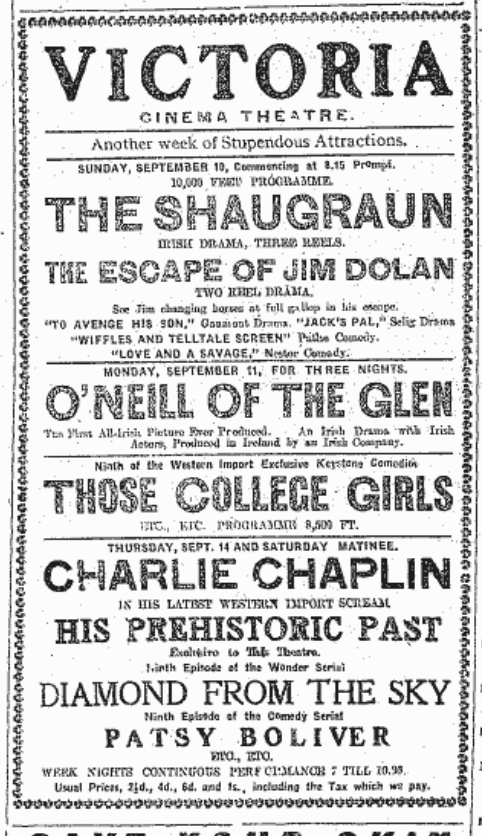
Ad for Galway’s Victoria Cinema Theatre for the week in which O’Neil of the Glen featured. Connacht Tribune 9 Sep 1916: 4.

This wish would be soon fulfilled, and O’Neil of the Glen was exhibited around the country in the following weeks and months. When following substantial runs in Dublin and Belfast it was announced for a three-day run at Galway’s Victoria Cinema Theatre on 11-13 September, a Connacht Tribune reporter distinguished its attractions from that of American films, which were unrivalled “in the matter of cinematographic thoroughness and all-round fullness and finish of technique, but one can get too much of a good thing.” The FCOI’s “national or […] patriotic enterprise” offered something that monotonously perfect and ubiquitous American films could not: “The production is Irish, the subject is Irish, the mise-en-scene is Irish, and the actors and actresses are Irish” (“‘O’Neill of the Glen’”). A writer in the Cork Examiner during the film’s run at Cork’s Coliseum Theatre (14-16 September) concurred, arguing that

[t]hrere certainly should be an opening for cinema representation of Irish drama as played by native Irish actors, whose one object is to show Irish life in its true perspective, without grotesque exaggeration, or what is just as bad, giving an unreal picture of it, even when the intention is friendly to the country and the people. (“Coliseum Theatre.”)

A journalist at the Derry People was particularly interested in the local connections of a film “in which well-known Irish artistes will be screened, and details dealing with Tyrone and neighbouring localities introduced in splendid style” (“Hall”). The film’s second Dublin run was at the Dame Street Picture House (21-3 September) – the cinema closest to FCOI’s offices and where some of their subsequent 1916 films would premiere – before it had first and second runs in Belfast, at the Duncairn (28-30 September) and the Clonard (2-4 October). Subsequent screenings included Mullingar’s National (14-15 October), Kilkenny’s Cinema (18-19 October) and Dublin’s Fr Mathew Hall (2 December).

FCOI IT 14 Aug 1916p4

Irish Times 14 Aug. 1916: 4.

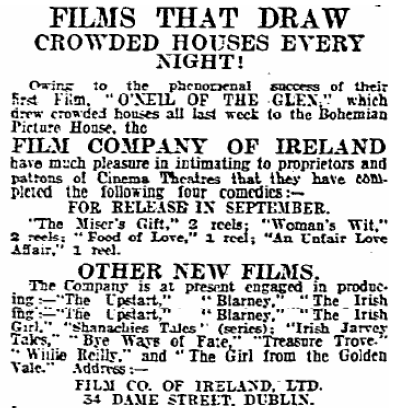
While O’Neil of the Glen toured the country, the company quickly followed up this successful debut with the announcements of their next films in the dailies and trades. On the Monday after the last show of O’Neil of the Glen at the Bohemian, the Dublin papers carried an advertisement headed “Films that Draw Crowded Houses Every Night!” that recommended FCOI’s new films on the basis of the audience-drawing power of that first film. Four two-reel comedies were scheduled for release in September – The Miser’s Gift, Woman’s Wit, Food of Love and An Unfair Love Affair – and nine other forthcoming productions were named, only one of which, “Willie Reilly,” is recognizable as a subsequent FCOI release. An Evening Mail reporter who attended The Miser’s Gift trade show at the Dame Street PH later that week commented that “[i]t is not only characteristically Irish, it is characteristically good. The Irish Picture-House manager who does not support an Irish company which can produce work of the class of ‘The Miser’s Gift’ is missing an opportunity of giving his shows a touch of distinction” (“‘Miser’s Gift’”).

The Miser’s Gift is also lost, but its narrative appears to involve a scheme of Eileen Dolan (Nora Clancy) and her lover, Ned McGrath (Fred O’Donovan), to get her miserly father (J. M. Kerrigan) drunk and dream of leprechaun gold so that he will look favourably on their relationship. “It is agreeable to have pictures such as this,’ commented the Irish Times, “preserving a genuinely Irish atmosphere and that inherent charm which is to be found in Irish life. The sight, for instance, of lepracauns and other little people who live in legend disporting themselves in a fairy fort is a feature which surely is pleasing to Irish eyes” (“Film Company of Ireland,” 18 Aug.). The Irish public got its first chance to delight in authentic Irish leprechauns disporting themselves on the cinema screen in October and November 1916: at Arklow’s Gaiety Picture House (9-11 October), Cork’s Coliseum (12-15 October), Tralee’s Picturedrome (19-21 October), Dublin’s Dame Street PH (26–8 October), Derry’s Hall (2-4 November), Sligo’s Picture Theatre (13-15 November), Kilkenny’s Cinema (15-16 November) and Athlone’s Fr Mathew Hall (22-25 Nov).

Ch5One

Bioscope 24 Aug. 1916: 754.

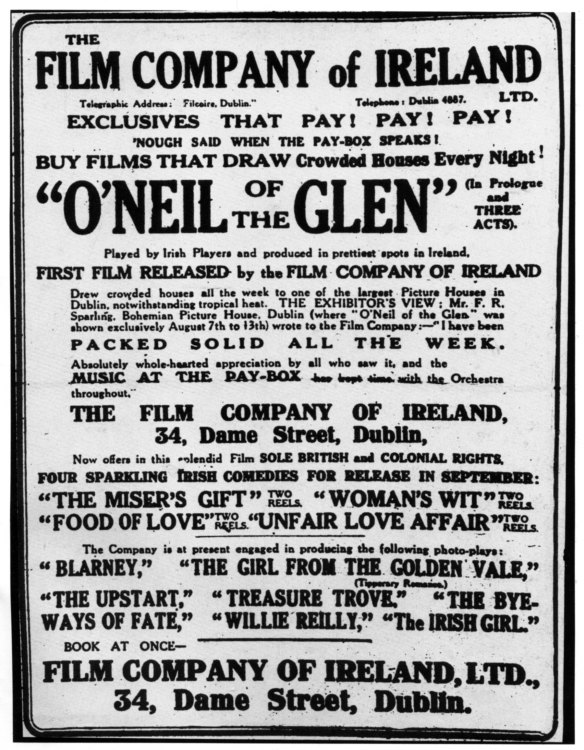
As these arrangements were being made for Ireland, FCOI also entered the British film market on the foundation of O’Neil of the Glen’s Irish success. The Bohemian debut was the subject of an article on the company in the Bioscope of 24 August, which also carried a full-page advertisement listing the actual and intended films mentioned in the Irish papers (“First Irish Film”). Both the article and the advertisement included quotes from Sparling on the huge business the film generated, “the absolutely whole-hearted appreciation of every person who has seen it,” and the fact that “the ‘music’ at the pay-box has kept time with the orchestra throughout.” In contrast to Paddy’s original critical assessment of the film, this article described the audiences’ appreciation of “the exceptional excellence of the first film produced in Ireland by an Irish company and by Irish players.” A month later, although mentioning the film’s success everywhere it had been exhibited, Paddy contended that FCOI’s “second picture, ‘The Miser’s Gift,’ is greatly in advance of the first as regards the quality, and if this company stick to their guns they should still be well in the front rank of British producers” (28 Sep.). Despite Paddy’s reservations, the message prevailed that O’Neil of the Glen packed cinemas in Dublin and Belfast and that Irish exhibitors were eager for more, a message that helped FCOI to acquire a British distributor (Paddy, 14 Sep.). The company did this at the end of October, when Davidson’s Film Sales Agency bought the rights for FCOI’s 1916 films (Paddy, 2 Nov.).

Indigenous Irish film production may not have started with O’Neil of the Glen, but it did enter a new phase.

References

“Abbey Theatre.” Irish Times 7 Aug. 1916: 3.

“The Bohemian.” Dublin Evening Mail 5 Aug. 1916: 5.

“The Bohemian.” Freeman’s Journal 8 Aug. 1916: 6.

“Coliseum Theatre: ‘O’Neill of the Glen.’” Cork Examiner 15 Sep. 1916: 2.

Condon, Denis. Early Irish Cinema, 1895-1921. Dublin: Irish Academic, 2008.

“The Film Company of Ireland.” Irish Times 9 Aug. 1916: 6; 18 Aug. 1916: 2.

“First Irish Film: Success of ‘O’Neil of the Glen.’” Bioscope 24 Aug. 1916: 689.

“The Hall.” Derry People 16 Sep. 1916: 5.

“Irish Film Production.” Irish Times 30 Jun. 1916: 7.

“Irish Film Triumph: Several New Plays.” Cork Examiner 16 Aug. 1916: 6.

“‘The Miser’s Gift’: New Irish Comedy.” Dublin Evening Mail 17 Aug. 1916: 2.

“New Irish Films: Four Coming Comedies.” Freeman’s Journal 15 Aug. 1916: 4.

“New Irish Industry: Film Company of Ireland.” Connaught Telegraph 5 Aug. 1916: 8.

“New Irish Industry: The Film Co. of Ireland: A Promising Enterprise.” Freeman’s Journal 30 Jun. 1916: 6.

“‘The O’Neill of the Glen.’” Derry People 12 Aug. 1916: 5.

Paddy. “Ireland: With the Renters and Exhibitors.” Bioscope 13 Jul. 1916: 173; 27 Jul. 1916: 359; 17 Aug. 1916: 655; 14 Sep. 1916: 1060; 28 Sep. 1916: 1285; 2 Nov. 1916: 518.

“Platform and Stage.” Irish Times 7 Oct. 1916: 9.

Rockett, Kevin. The Irish Filmography. Dublin: Red Mountain, 1996.

“Topics of the Week.” Bioscope 10 Aug. 1916: 466.

The Constant Watchfulness of Irish Cinema in March 1916

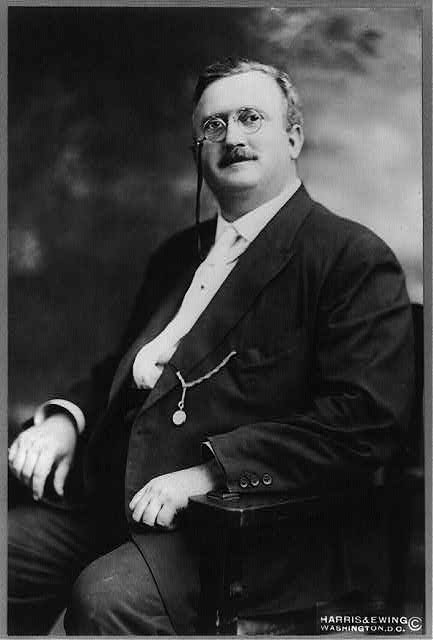
Irish-American James Mark Sullivan, who co-founded the Film Company of Ireland in March 1916. https://www.loc.gov/item/2002706157/

Irish-American James Mark Sullivan, who co-founded the Film Company of Ireland in March 1916. Image from the Library of Congress.

Although Ireland is celebrating the centenary of the 1916 Rising in March 2016, Easter was celebrated in 1916 in late April. Nevertheless, March 1916 saw such momentous cinematic events as the founding of the first major indigenous film production company. And even if Easter itself was still some way off, Irish cinema hit the beginning of the Easter season. In what was clearly a coordinated move by the Irish Catholic hierarchy, several bishops mentioned cinema in their Lenten pastorals, the letters from them read out on 5 March 1916 in churches in their dioceses to mark the start of the 40-day fasting period leading up to Easter. “Immodest representations in Theatres should be reprobated by every good man, and every effort should be made to discountenance them,” ordered the Bishop of Cork, but he had a particular warning about cinema:

We desire to direct your attention particularly to cinematograph and picture shows. The films come from outside, and from places where what concerns Christian modesty is made little of, and there is always a danger that what is unfit to be seen may be exhibited unless constant watchfulness is exercised to exclude what is objectionable and offensive in a Catholic country.(“Lenten Pastorals.”)

This call for “constant watchfulness” was an intensification of the hierarchy’s involvement in the church’s efforts to control cinema. If the church could not prevent people going to picture houses altogether, it was determined that it would shape what, where and when people would watch. The initially mainly lay Vigilance Committees had in late 1915 been put under centralized clerical control as the Irish Vigilance Association, which held a mass meeting at Dublin’s Mansion House that sent a renewed demand for the introduction of a specifically Irish film censorship (“Mansion House Meeting”). The many local campaigns against the opening of picture houses on Sunday were also led from the altar. “At different Masses on Sunday last in the four parish churches, as well as in the Black Abbey and Capuchin Friary,” reported the Kilkenny People, “a strong appeal was made to the people to abstain from attending the local Picture House on Sundays, particularly during Lent” (“Sunday Cinemas in Kilkenny”).

Ad for Stafford's Longford Cinema in St Patrick's week included an episode of The Exploits of Elaine (US: Wharton, 1914), the serial that featured the master criminal the Clutching Hand. Longford Leader 11 Mar. 1916: 3.

Ad for Stafford’s Longford Cinema in St Patrick’s week included an episode of The Exploits of Elaine (US: Wharton, 1914), the serial that featured the master criminal the Clutching Hand. Longford Leader 11 Mar. 1916: 3.

In making their calls for vigilance, the bishops could indicate the harmfulness of cinema by citing the ongoing trial of a gang of boys in Mullingar who had committed robberies inspired by onscreen criminals. The papers reported many similar cases including the prosecution of 20-year-old ex-sailor James J. Sloan who told the Belfast Assizes that his house-breaking equipment was “the materials Charlie Chaplin works with” (“Items of Interest”). The prominence of such stories led James Stafford of the Longford Cinema to refute publicly the claim made by a boy charged with larceny at the local petty session that he had committed the robbery to get money to go to the pictures. “I have made it a point not to admit to the Longford Cinema Theatre boys of this class,” Stafford contended, “and this boy in particular is one of several of his class whom I frequently refused admission” (“Unfounded Allegation”). As the Mullingar case suggests, the class he referred to was the poorest of the working-class.

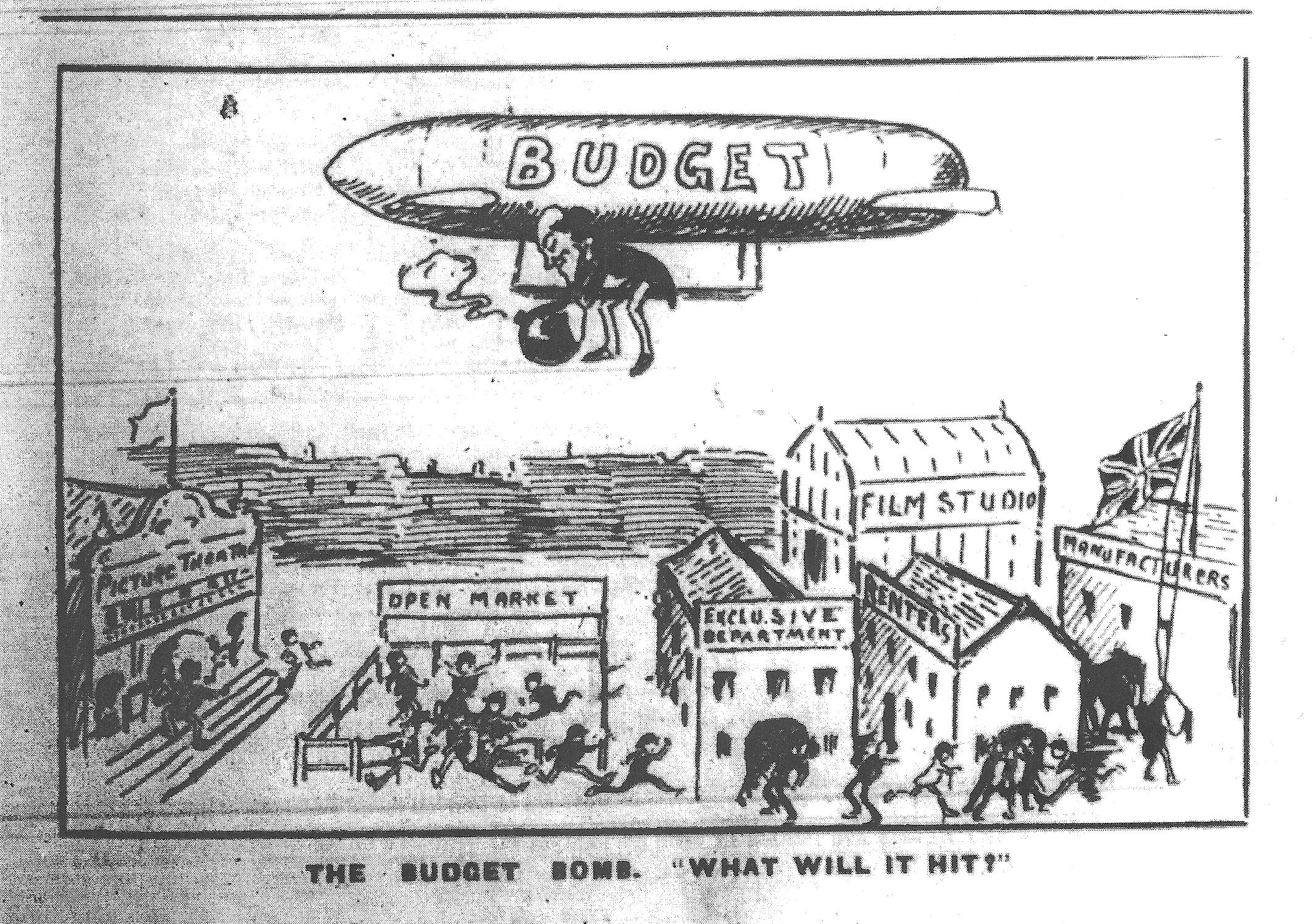
The cinema industry long feared the imposition of crippling taxes, going so far in this cartoon as to identify the British government with the zeppelin raids then terrorizing southeast England. Bioscope 7 Oct. 1915: 16c.

The cinema industry long feared the imposition of crippling taxes, going so far in this cartoon as to identify the British government with the zeppelin raids then terrorizing southeast England. Bioscope 7 Oct. 1915: 16c.

The British government also had a vigilant eye on the cinema industry in Britain and Ireland as a way of raising needed war funds. Months before the imposition of an amusement tax in the May 1916 budget, there was much discussion of its likely effects on the industry and how it was to be collected. “The view which at present commends itself to the authorities,” reported the Irish Independent, “is that the Government should print the tickets for the cinema shows, and these should be purchased from the Government by the trade at a price which would cover the tax” (“Proposed Cinema Tax”). As well as further binding the cinema industry to the British war effort, the tax would alter the working-class nature of cinema. “Upon the injustices of a penny per seat tax there can be not two opinions,” argued Frank W. Ogden Smith in the trade journal Bioscope,

and if such a tax be allowed to pass unchallenged this point must be borne in mind – when we revert to peace times it will mean the cinema as a poor man’s amusement and recreation will have ceased to exist, for the Government having tasted the fruit and found it refreshing in actuality not theory, will not be likely to relinquish the tax. (“Passing of the Penny Cinema.”)

Longford and Mullingar were just two of the Irish places where this process could be most clearly seen in March 1916.

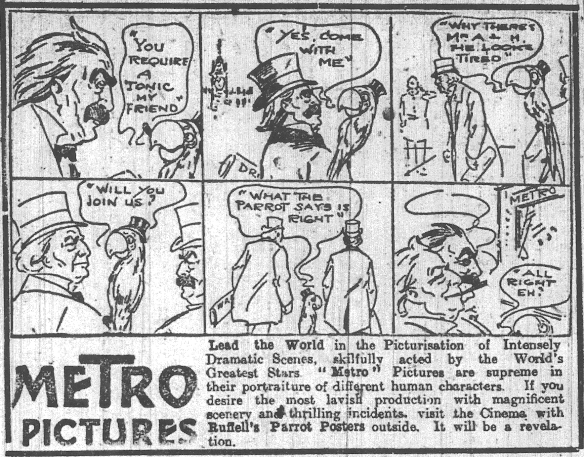
Metro ad featuring Ruffells’ parrot, Dublin Evening Mail 6 Mar. 1916: 2.

Metro ad featuring Ruffells’ parrot, Dublin Evening Mail 6 Mar. 1916: 2.

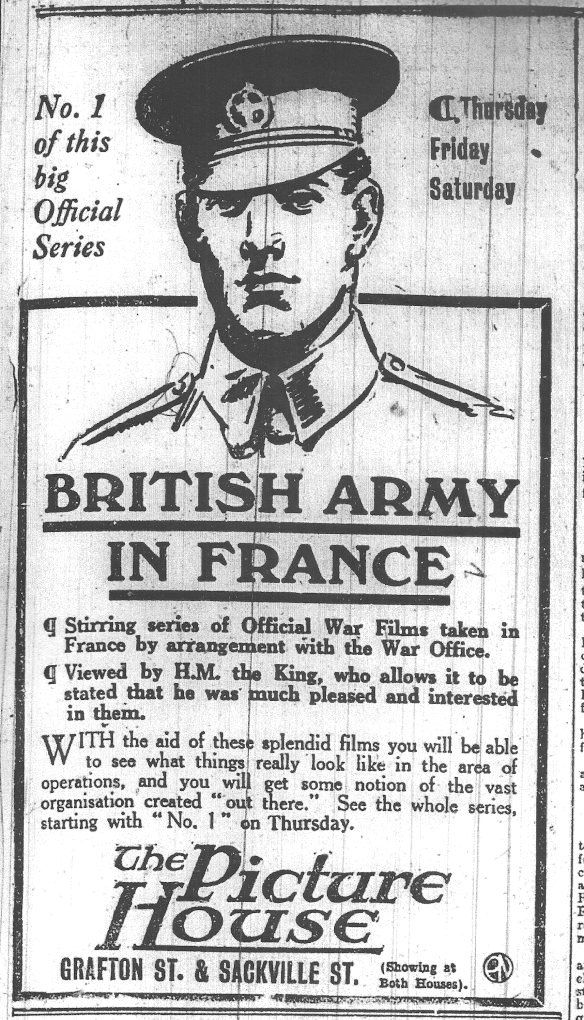
The industry as a whole – including the Bioscope – had long courted an audience far beyond the penny cinemagoer, and it did so in a climate in which many doubted that cinema represented a quality contribution to culture. At a meeting of the Cork County Council, the chairman complained that the large amount of money spent on technical education was wasted because “the people for whom it was intended showed no disposition to profit by it.” Instead, the popularity of Charlie Chaplin and picture houses were proof, he believed, of the failure of the art classes provided to raise the public taste (“Cork County Council”). Publicity strategies to counter such views and promote films and picture houses as quality entertainment were important, and one ad campaign stood out in Ireland in March 1916. Metro’s British agent Ruffells’ Exclusives was pioneering in marketing film brands to the Irish public. Ads for Metro had been appearing in newspapers for some time when the Bioscope reported that Ruffells in Dublin abandoned their trademark parrot for another animal in order to stage a spectacular publicity stunt: “This consisted of six donkey carts, all passing the leading station and advertising on large boards the display of Metro pictures. The houses showing the films were the Bohemian, the Carlton, the Grafton Street and Grand” (“Trade Topics”).

Evening Telegraph 16 Mar. 1916: 4.

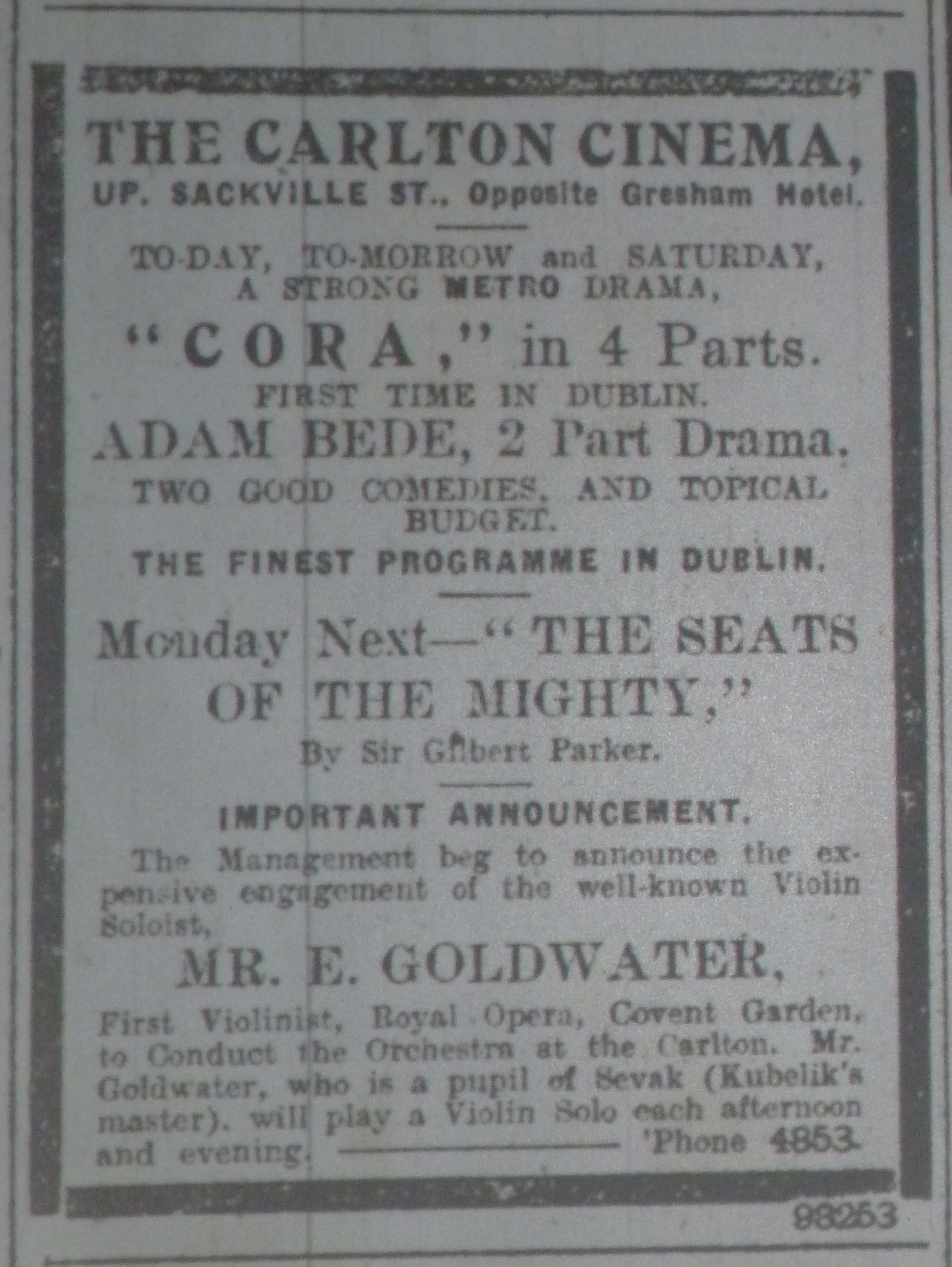
Dublin’s Carlton showing Metro drama Cora. Evening Telegraph 16 Mar. 1916: 1.

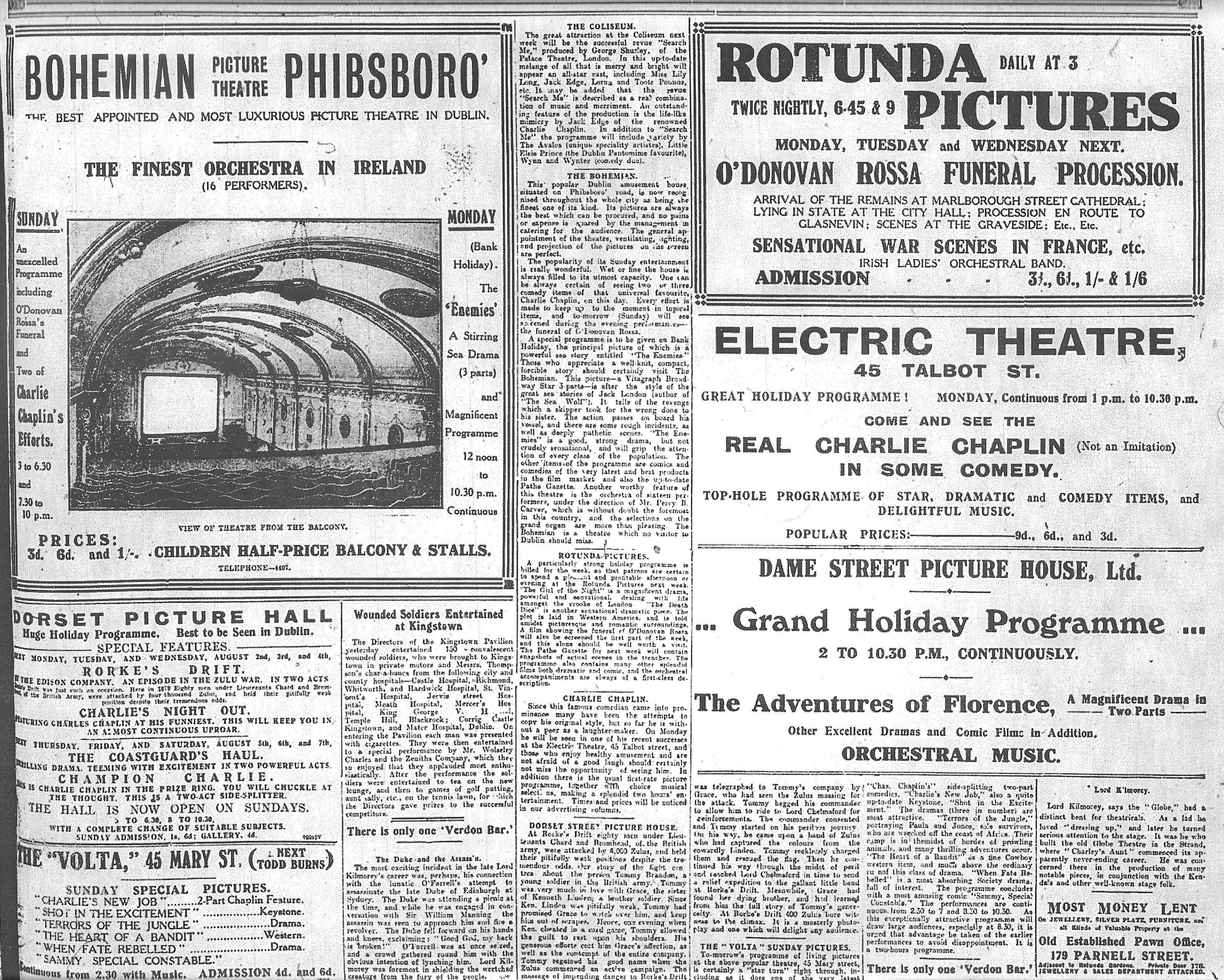
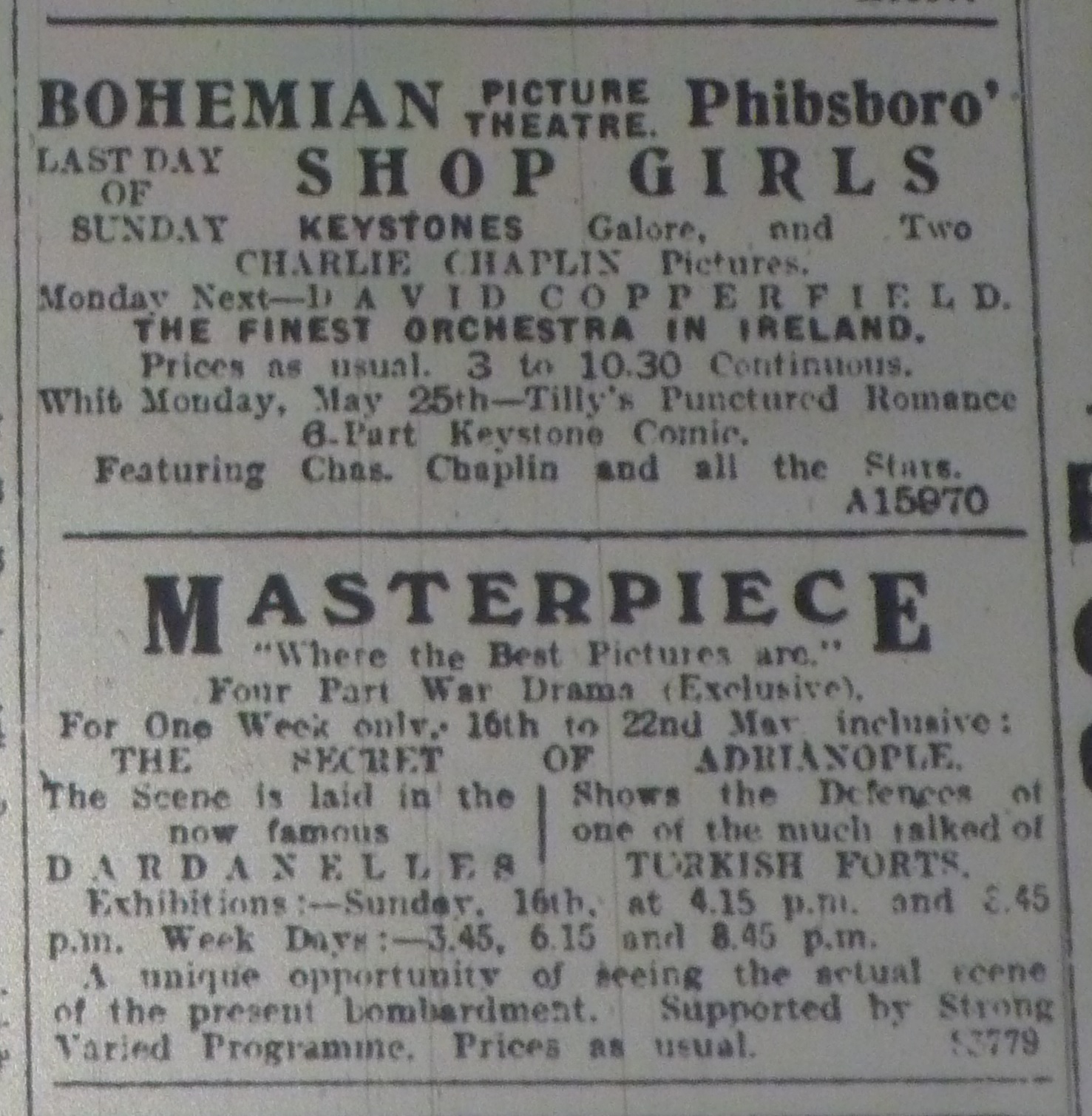
These named picture houses were among Dublin’s most prominent cinemas, and each watched what the others were doing. What they were doing to ensure success was to provide lavishly comfortable buildings, feature such highly publicized films as Metro’s and offer novel musical accompaniment. Located in Phibsboro outside the city centre, the Bohemian had attracted patrons since its opening in 1914 by advertising the best musical attractions in the city. The Bohemian’s orchestra consisted of 16 musicians under musical director Percy Carver. With the increasing competition for cinema patrons in the city centre, the Carlton as the latest-opened picture house sought to secure its audience by adding to its musical attractions. Beginning on Patrick’s Day, 17 March, the Carlton challenged the Bohemian’s musical pre-eminence by engaging the concert violinist Erwin Goldwater. The Irish Times called this “[a] new departure in connection with cinema entertainments [that] takes the form of a violin recital by Mr. E. Goldwater, a pupil of Sevcik, and formerly first violin at the Royal Opera, Covent Garden. Mr. Goldwater will conduct the orchestra at the Carlton” (“Platform and Stage”).

Clontarf reopens 17 Mar 1916 ET

Ad for reopening of the Clontarf Cinema; Evening Telegraph 17 Mar. 1916: 1.

Goldwater’s engagement was not the only significant event that picture-house proprietors planned for the holiday of the Irish patron saint. A company led by I. I. Bradlaw, David Frame and Henry Grandy reopened the Clontarf Cinema in the former Clontarf Town Hall. “It has been re-decorated and reconstructed throughout in the most luxurious manner,” the Evening Telegraph announced, “and will be found to be equal in every respect to the very best picture houses in the city” (“The Cinema, Clontarf”). Several picture houses offered special programmes of Irish films and/or music. Perhaps the most surprising of these was at Belfast’s CPA (Central Presbyterian Association) Assembly Hall. “Five reels of well-selected cinema were screened, and the premier place amongst these was taken by “Brennan of the Moor,” a three-part filmisation of the Irish story,” revealed the Northern Whig. “Mr. F. J. Moffett presided at the organ, and also acted as accompanist. Mr. W. R. Gordon sang several Irish folk-songs in a most pleasing manner” (“C.P.A. Entertainments”).

“Mr. Erwin Goldwater.” Irish Limelight May 1917: 17.

Although Brennan of the Moor (US: Solax, 1913) was revived on occasion, the most popular films to constitute an Irish programme were still those made by Sidney Olcott and Gene Gauntier for Kalem and other companies in Ireland between 1910 and 1914. Nenagh’s Ormond Kinema Company provided films – including an unnamed Chaplin and The Colleen Bawn (US: Kalem, 1911) – free of charge to the Toomevara and Nenagh Hurling Club after their fund-raising concert in Nenagh’s Town Hall on 17 March (“St. Patrick’s Night’s Concert”). “Some unique films of the famous Tubberadora, Toomevara, and Thurles Teams” were also shown (“The Coming St Patrick’s Night Concert”). The Colleen Bawn was the most popular of Dublin-born Dion Boucicault’s stage melodramas, but productions of his more political Arrah-na-Pogue and The Shaughraun were particularly evident in March 1916. In early March 1916, The Shaughraun (US: Kalem, 1912) – which featured an escaped Fenian – was revived at both Dublin’s Rotunda and Bohemian; during the same period, a stage version was produced at Dublin’s Father Mathew Hall by the Barry Sullivan Society, while at the Hibernian Hall, Parnell Square, the Hibernian Players staged Arrah-na-Pogue. The Olcott and Gauntier’s Arrah-na-Pogue (US: Kalem, 1911) was shown at the newly refurbished Omagh Picture House on St Patrick’s night (“Omagh Picture House”). The Rotunda’s programme for St Patrick’s day and the two days following included two other of Kalem’s Irish-shot films: the 1798 drama Rory O’More (US: Kalem, 1911) and The Fishermaid of Ballydavid (US: Kalem, 1911).

Small ad from the Film Company of Ireland seeking Irish scenarios; Freeman's Jorunal 9 Mar. 1916: 2.

Small ad from the Film Company of Ireland seeking Irish scenarios; Freeman’s Jorunal 9 Mar. 1916: 2.

The Kalem films were so regularly revived in part because no fiction films had been shot in Ireland since Olcott had stopped coming to Ireland following the outbreak of the war. In March 1916, this situation was about to change with the founding of the most important indigenous Irish film production company of the silent period. On 2 March, Irish American lawyer and diplomat James Mark Sullivan and Henry Fitzgibbon registered the Film Company of Ireland (FCOI) at Dublin’s Companies Registration Office. The FCOI had little early press coverage. “The objects are to establish, organise and work in Ireland the manufacture and construction of cinema films of every description,” reported the Freeman’s Journal, seemingly reproducing the information on the company registration form,

and to engage in the making of scenic and dramatic moving pictures, and in the sale and exchange of cinema pictures, and to engage in the employment of skilled and unskilled labour, and of all such artistes, authors, and performers as the development of the business may require. (“An Irish Film Company.”)

Ads that appeared in the papers on 9 March specifically sought authors of “photo play scenarios, preferably with Irish atmosphere and background.” These ads gave the address of the FCOI’s offices as 16 Henry Street, uncomfortably close to the GPO, soon to be the major site of the Easter Rising.

J. M. Kerrigan with Sara Allgood in a 1911 Abbey touring production of The Playboy of the Western World. Image from Wikipedia.

J. M. Kerrigan with Sara Allgood in a 1911 Abbey touring production of The Playboy of the Western World. Image from Wikipedia.

The FCOI also sought actors, and here Joseph Holloway’s diary offers an intriguing early insight. When actor Felix Hughes answered an FCOI ad for actors, he “was astonished on entering the manager’s room to see Joe Kerrigan quite at home there with his back to the fire – the manager was seated at a table & spoke with the twang of a Yankee.” Kerrigan was one of the Abbey Theatre’s leading actors, and Hughes was surprised to encounter him seemingly embedded with Sullivan in the FCOI. However,

Kerrigan spoke up for him & said to the manager, “he’s the very one we want,” (evidently K is to be the star actor in new Co. & has some monetary interest in it as well.) “He has played at the Abbey & travelled with Co to London.” So the manager said, “We must have Felix,” & entered his name & address & said, “he would hear from him in the course of four or five weeks time when all arrangements were fixed up to begin operations. (Holloway, 21 Mar. 1916).

As its operations began, the FCOI gave the hope that cinema would not just be something that the authorities constantly surveilled but would produce challenging films for burgeoning Irish audiences at a historical moment.

References

“The Cinema, Clontarf.” Evening Telegraph 16 Mar. 1916: 2.

“The Coming St Patrick’s Night Concert.” Nenagh News 11 Mar. 1916: 4.

“Cork County Council: Annual Estimate.” Cork Examiner 1 Mar. 1916: 3.

“C.P.A. Entertainments.” Northern Whig 20 Mar. 1916: 7.

Holloway, Joseph. Holloway Diaries. National Library of Ireland.

“Items of Interest: A Youthful Burglar” Irish Independent 17 Mar. 1916: 4.

“An Irish Film Company.” Freeman’s Journal 4 Mar 1916: 2.

“Lenten Pastorals: Diocese of Cork.” Cork Examiner 6 Mar. 1916: 7.

“Mansion House Meeting: Message from the Pope.” Freeman’s Journal 14 March 1916: 3.

Ogden Smith, Frank W. “The Passing of the Penny Cinema.” Bioscope 9 Mar. 1916: 1008.

“Omagh Picture House: Extensive Alterations.” Ulster Herald 18 March 1916: 5.

“Platform and Stage.” Irish Times 18 Mar. 1916: 7.

“Proposed Cinema Tax.” Irish Independent 23 Mar. 1916: 4.

“St. Patrick’s Night’s Concert.” Nenagh News 18 Mar. 1916: 3.

“Sunday Cinemas in Kilkenny.” Kilkenny People 18 Mar. 1916: 5.

“Trade Topics.” Bioscope 30 Mar. 1916: 1377.

“An Unfounded Allegation Contradicted.” Longford Leader 25 Mar. 1916: 2.

“The Nation’s Historian” or a “Violent Stimulant to the Eyes”?: Irish Cinema at the Beginning of 1916

Balfour Bio 6 Jan 1916

Arthur Balfour, “Cabinet Minister as Cinema-Lecturer,” touts the importance of war films; Bioscope 6 Jan. 1916: 16.

On 29 December 1915, Arthur Balfour, Britain’s First Lord of the Admiralty, attended a screening of the war film Britain Prepared (Britain: Urban, 1915) at London’s Empire Theatre, Leister Square. “[T]these pictures constitute something more than an afternoon’s amusement,” he asserted. “They contain a lesson of the deepest import to us and the world” (“Britain’s Might Revealed”). The trade journal Bioscope was delighted with Balfour’s comments before the screening, drawing attention to them in a prominent article in its first 1916 issue. “This is, we believe, the first time in the history of the cinematograph that a Cabinet Minister has made a formal speech of introduction at an exhibition of moving pictures,” it claimed, “and as such it is an event of no small significance.” The Bioscope of 20 January clarified the magnitude of its significance, when it declared that cinema was now – finally – “The Nation’s Historian”:

The Trade has just cause for pride and gratification in the complete unanimity with which Press and public, Cabinet Minister and man-in-the-street alike, have welcomed the official cinematograph pictures of the war and the life and training of our soldiers and sailors. It has, we admit, taken a very long time to convince the Government and the Fourth Estate of the value of the cinematograph as the national historian, but now that their approval is forthcoming and the work pronounced to be good, we can well afford to regard the time as well spent. (“Nation’s Historian.”).

Doubtless Balfour’s endorsement of Britain Prepared was a valuable governmental recognition of the British film industry, and as such it is an important historical document. It is more doubtful that a film clearly conceived as propaganda – showing how Britain had prepared and was prepared to fight its enemies – can be considered a work of history. Nor was the Bioscope really interested in making a case for the film as history; it was enough of an achievement that Balfour’s presence and words showed how useful cinema had become to the war effort.

Metro ad DEM 3 Jan 1916

David Lloyd George and H H Asquith feature in this ad for Metro Pictures; Dublin Evening Mail 3 Jan. 1916: 5.

While Balfour argued that Britain Prepared was not mere entertainment but a film that British politicians should take seriously, one distribution company suggested that two other Cabinet ministers were watching its films for relaxation. In January 1916, the Dublin Evening Mail carried a series of ads placed by Ruffell’s, British agents for US production and distribution company Metro Pictures. The ads featured the Ruffell’s mascot, a parrot in a top hat, and in the first of these ads – which is in comic-strip form – the parrot convinces Minister for Munitions David Lloyd George and Prime Minister Herbert Henry Asquith to watch a Metro film as a needed break from their war duties. The incongruity of the images of these senior politicians visiting a cinema with the behatted and cigar-chewing parrot might distract from the no-less significant if admittedly less spectacular incongruity of this and other ads appearing in an Irish daily newspaper. Distribution was a wholesaling business; it acted as the intermediary between the manufacturers – film production companies such as Metro – and the retailers – the cinema-owners who actually showed the films. In the ordinary course of business, a distribution company such as Ruffell’s would advertise in such cinema trade journals as the Bioscope but not in the dailies. Ruffell’s did advertise in the trade press, but this series of ads sought to create recognition among cinema-goers of the relatively new Metro brand name and of the Ruffell’s parrot.

British Army DEM 20 Jan 1916

Official war film British Army in France at the Provincial Cinematograph Company’s Dublin picture houses. In the fist half of this week, the Grafton had shown With the Indian Troops in France. Dublin Evening Mail, 20 Jan. 1916: 5.

And the parrot was right: cinema was more likely the nation’s – or the world’s – entertainer than its historian. Amusement was the primary reason that Irish patrons visited a picture house, even if they did also come for other reasons, including to see how the war that they mostly read about in newspapers actually looked, and to cheer or to boo at a film that sought to use such images to engender patriotic feelings towards a nation that was invariably Britain. Nonetheless, the notion of the cinema as national historian had particular resonances for Ireland in 1916, as it has in 2016 as the country commemorates 1916. The experience of the more than 200,000 thousand Irishmen in the British armed forces were, of course, represented to some extent by Britain Prepared and other propaganda films that were appearing in increasing numbers. The Picture Houses in Grafton Street and in Sackville/O’Connell Street, which were owned by the British chain Provincial Cinematograph Theatres, made a particular feature of these films, promoting them with prominent illustrated ads, such as the one for British Army in France on 20 January. The Bioscope quoted Balfour as regretting that Britain did not “have a permanent record of the grand deeds of our armies in France and Flanders” (“Britain’s Might Revealed”). A number of such films did exist, but filmmakers would answer this call for a permanent record most spectacularly later in the year in the form of the film The Battle of the Somme (Britain: British Topical Committee for War Films, 1916).

As one of the main purposes of such films was to show the unity of the kingdom, they could not represent the motives of Irish nationalists, who had to look elsewhere for elements of an Irish historical experience on film. This was clearly so in the case of the separatist nationalists who sought Irish independence from Britain and opposed recruitment, but it also included the many more moderate Irish nationalists, even soldiers who had joined the war in answer to John Redmond’s call to fight for Home Rule. Nationalist MPs at Westminster ensured Ireland was treated as a special case even in relation to military recruitment, a fact emphasized in January 1916 when the Military Service Act excluded the country from the compulsory conscription. Given the paucity of film production in Ireland, there was little prospect of cinema providing a detailed film record of the struggle for Irish national self-determination. The nearest thing to such a film was Ireland a Nation (US: Macnamara, 1914), shot in Ireland in 1914 but not shown in the country until 1917. Newsreel films of armed National and Irish Volunteers parading do exist, albeit that the Ulster Volunteers were better at media management, including arranging for cinematograph operators to record significant demonstrations. Fiction films representing Ireland’s rebellions in 1798 and 1803 had been made by US companies such as Domino and Kalem, Sidney Olcott shooting many Irish-shot films for the latter. The special Sunday shows at Dublin’s Phibsboro Picture House on 23 January featured For the Wearing of the Green (US: Domino, 1914), in which “Paddy Dwyer, the Irish blacksmith, and his helper, Dennis Grady, who is also his daughter Norah’s sweetheart, are the prime leaders in the conspiracy against the Crown” (“Domino”). The Hibernian Electric Theatre’s Sunday feature a week later was Olcott’s The Mayor from Ireland (US: Kalem, 1911), in which two Irish immigrants follow each other in the office of New York mayor. Neither of these films was a new release, but their revival suggests their importance for Irish audiences in offering fictional self-representations that included revolutionary romances.

Hibernian ad ET 29 Jan 1916p1

Ad for Hibernian, Evening Telegraph 29 Jan. 1916: 1.

Indeed, the Hibernian Electric Theatre may provide one of the most direct links between Irish cinema and the revolution that was being planned for 1916. This picture house at 113 Capel Street, Dublin, had previously been called the Irish Cinema and had been owned and run by Richard Graham. Financial difficulties including rent default forced Graham to sell in late 1915 (“Capel Street Picture House”). No account of the reopening as the Hibernian appears to exist, but it was advertising in the Evening Telegraph by the start of January. The ads and short notices that month give an indication of some of the people involved, including manger Thomas Fullam and musical director Miss M. Grundy (“Hibernian Electric Theatre”). It is possible that it was owned or part owned by Michael Mallin, as later recalled by his son (Hughes 76-78.). Dublin silk weaver, British Army bugler, union organizer and leader of the Irish Citizen Army, Mallin would be executed in May 1916 for his role in the Easter Rising. How his picture-house experience may have had a bearing on his revolutionary activity or vice versa is difficult to say. Nevertheless, the Hibernian was located beside the Trades Hall – a fact noted in ads – and it is likely that its programming aimed to attract union members, as well as the many working class people who lived in the slum districts that would have been the catchment area for the cinema’s audience. In 1913 and 1914, the Irish Cinema had been the only picture house and one of the few entertainments of any kind that advertised in the radical labour journal The Irish Worker. However, apart from The Mayor from Ireland, its offerings seem little different from those of other Dublin picture houses.

Larkin Prison II 4 Jan 1916p4

Irish Independent 4 Jan. 1916: 4.

If Irish picture-house owners – even radical ones – had only moulded cinema in limited ways to produce a national moving image, religious groups were working more deliberately to ensure that cinema reflected the churches’ worldview. This was particularly the case with Catholic groups, such as the Dublin Vigilance Committee, which in December 1915 had coalesced with other vigilance groups around the country to become the Irish Vigilance Association (IVA). Following his arrest on 31 December 1915, serial cinema protester and militant IVA member William Larkin was released from Dublin’s Mountjoy Jail on 4 January 1916. He had been imprisoned for non-payment of the fine imposed on him in October and November for his protest at the Bohemian Picture Theatre in September (“Picture Theatre Protest”). The IVA arranged a parade of welcome from Larkin’s house in Sherrard Avenue in the north city to Foster Place, a favoured place to hold speeches beside the city-centre building that had until 1800 had been the Irish parliament. Larkin’s short prison term had done nothing to lessen his activism on the introduction of film censorship; indeed, it allowed him to claim a certain martyrdom. “I was treated as a low criminal in Mountjoy Jail for protesting against a film,” he claimed in an exchange of correspondence published by the Evening Telegraph. “I had to don a convict’s garb, eat skilly, lie on a board, and refuse hard bread. I had to parade with degenerates in a prison yard; and all, that our youth might be spared gazing on suggestion” (“Proposed Cinema Censorship”).

This concern with young people also prompted calls for censorship from reformers seemingly unaligned with the IVA. In a letter to the Telegraph, E. Gordon urged regulation of picture houses to prevent children from attending late evening shows. “I have seen toddlers and youngsters, aye, and smoking cigarettes (another Dublin byelaw more honoured in the breach than the observance) in picture houses at 10.30 p.m,” he observed:

Where did they get the money, and where were their homes? Where were their parents? Why are those children allowed to spend their lives thus? Perhaps the housing question would account for a lot of it. Now, those youngsters go in to a picture house (“It’s only tuppence, Billy”). They do not go in to look at a moral lesson faithfully learned, or for education – only for a laugh, and “it’s comfey.” (“Children at the Cinema.”)

Gordon wished for an educational cinema, recognizing it as “a great, wonderful and fascinating optical achievement (if directed in the proper channel) that was never dreamt of twenty years ago.” As such, it was an “accomplishment which makes old lanternists blush, and yet their blush can be condoned, for the old scientific lantern will still hold its own, at least in the class-room and lecture hall.”

In the Dublin township of Rathmines, the ongoing controversy on the opening of picture houses on Sunday continued into early 1916. At a meeting on 5 January, the council eventually split 8-8, and the chairman cast the deciding vote in favour of closing cinemas on Sundays; they had had limited opening hours before this. Councillor Thomas Kennedy spoke in favour of keeping them open, reading a supporting letter from the Ratepayers’ Protection Association that argued that soldiers’ relatives particularly liked seeing war reports and that closing cinemas on the only day when many people could visit them would drive these people to the pubs for recreation. Rejecting such arguments, Chairman Sibthorpe explained that he had cast his vote in favour of Sunday closing because oculists had “stated that their work had been more than doubled since these cinemas had been applying a violent stimulant to the eyes of the young people, and they were absolutely ruining the sight of the rising generation” (“Cinema Shows”).

Young people who got into trouble with the law – and their legal representatives – were well aware of these discourses on cinema’s pernicious effects on the young and of how to use them to their advantage. When “two young fellows” named Richard Barnes and Thomas Farrell appeared before Mr. Swifte at Dublin’s Southern Police Court on 27 January 1916, their solicitor argued that they had entered a banana store illegally because of watching burglaries at the picture houses and playing slot machines (“Cinema and Slot Machines”). These new forms of popular culture “were the means of leading many a young fellow astray,” he argued.

Charlie at the Bank

Chaplin foils a robbery in Charlie at the Bank (US: Essanay, 1915).

The person responsible for a good amount of this violent visual stimulation in Ireland in 1916 was Charlie Chaplin, but in January 1916, he was foiling robberies rather than committing them. The writer of the Evening Telegraph’s “Gleaned from All Sources” column, however, had picked up the news that Chaplin’s career was on the wane, “which is the obvious and inevitable result of overdoing the Chaplin ‘boom.’ When it came to imitations in music-hall revues and Charlie Chaplin calendars and pin-cushions,” s/he observed, “a reaction was inevitable.” Despite merchandizing and overexposure, that reaction was not apparent in Dublin picture houses, according to the review writer in the same issue of the Telegraph. Charlie at the Bank had recently been released, and the reviewer was assessing the show at the Pillar Picture House. “There is more riotous fun packed into this two-reel comedy than any other photo-play of a like length. The world’s great comedian, Charlie Chaplin, has outdone himself in this new production. While all his other comedies are funny, this one is a scream. It abounds in real humour and comic situations, with Chaplin at his best in his inimitable antics” (“Pillar Picture House,” 18 Jan.). Charlie at the Bank was shown at more picture houses than any other film that month, suggesting that cinema-owners did not believe that Chaplin’s career was experiencing a dip. Audiences seemed to agree: on account of the “hundreds who could not gain admission” during the three day run, the film was held over for a further three days (“Pillar Picture House,” 20 Jan.).

As 1916 began, Irish audiences enjoyed a thriving cinema culture that more often offered them a violent stimulant of the Chaplin kind than national history.

References

“Britain’s Might Revealed by Film: A Cabinet Minister as Cinema-Lecturer.” Bioscope 6 Jan. 1916: 16A.

“Children at the Cinema.” Evening Telegraph 8 Jan. 1916.

“Cinema and Slot Machines.” Dublin Evening Mail 27 Jan. 1916: 5.

“Cinema Shows: Sunday Performances in Rathmines: Action of Urban Council.” Evening Telegraph 5 Jan. 1916: 5.

“Domino: The Wearing of the Green.” Moving Picture World 3 Mar. 1914: 1302.

“Dublin and District: Picture Theatre Protest.” Irish Independent 1 Jan. 1916: 6.

“Gleaned from All Sources: The Late Charlie Chaplin.” Evening Telegraph 18 Jan. 1916: 1.

“Hibernian Electric Theatre.” Evening Telegraph 29 Jan. 1916: .

Hughes, Brian. Micheal Mallin. Dublin: O’Brien Press, 2012.

“The Nation’s Historian: Triumphant Vindication of the Cinematograph.” Bioscope 20 Jan. 1916: 229.

“Pillar Picture House.” Evening Telegraph 18 Jan 1916: 5; 20 Jan 1916: 5.

“Proposed Cinema Censorship.” Evening Telegraph 11 Jan. 1916: 3.

Processions, Protest and the Perfect Woman in Irish Picture Houses, Late Summer 1915

Summer was usually a bad time for indoor entertainments such as cinema. But the Irish weather during July 1915 – like that of July 2015 – did not favour outdoor activities. “It has been a sad time for July holiday-makers,” observed the Irish Times in early August, “and as yet there is no hint of a better hope for August, except that which may be taken from the thought that what has persisted so long must soon change” (“Wet Weather”). While some temporary picture houses opened at seaside resorts, some established venues followed the practice of the theatres and closed for several weeks in July and/or August. Although Dublin’s Rotunda usually stayed open throughout the summer, it took advantage of this practice in 1915 by closing on 7 June for extensive renovations and reopening on 26 July.

Swimmer Annette Kellerman was considered the “|Perfect Woman” because here measurements corresponded to the classical dimension of the Venus de Milo. Australian poster from the collections of the National Library of Australia, available here.

Australian swimmer Annette Kellerman’s bodily measurements promoted on a poster for the film Neptune’s Daughter. Collection of the National Library of Australia, available here.

The weather didn’t stop Dublin architect Joseph Holloway from travelling across town on the evening of Friday, 9 July, from his home in Northumberland Road south of the city to the Bohemian Picture Theatre in the northern suburb of Phibsborough. He was clearly quite taken with the “great film drama of a legendary story in five parts, called Neptune’s Daughter featuring Annette Kellerman (the Perfect Woman)” because he described it in more detail than any other film he had seen that year (Holloway, 9 Jul. 1915). The film was one of the several mermaid fantasies the Australian swimmer made during her film career in the 1910s and early 1920s. Dublin audiences had seen Kellerman three years previously in a similar live stage show, when she had appeared at the Theatre Royal with a company of 40 artistes in Undine, a 14th-century set “idyll of forest and stream” (“Theatre Royal”). Although a skilled athlete, Kellerman’s celebrity was partly based on her controversial promotion of a form-fitting one-piece swimsuit for women. This attire allowed women swimmers the ease of movement needed for athletic achievement, which was not permitted by form-hiding two-piece Victorian bathing costumes. Her championing of women’s athletics fitted well with such contemporary campaigns for women’s equality as the suffrage movement, and at a special matinee during her week in Dublin in 1912, Kellerman gave a lecture on women’s physical culture. At the same time, the publicity for her theatrical appearances fully exploited the spectacle of her body, which was declared perfect because it corresponded so exactly to the measurements of the Venus de Milo.

“Summer at Last!” Irish LIfe 19 Jul. 1912: 669.

“Summer at Last!” Irish LIfe 19 Jul. 1912: 669. Courtesy of National Library of Ireland.

Photographs published by the glossy illustrated weekly Irish Life in July and August 1912 – just after Kellerman’s visit – throw some light on the degree of controversy her appearance is likely to have caused in the early 1910s. Irish Life published many photographs of Ireland’s leisure class at golf, tennis, horse riding, motoring and other activities. Under the title “Summer at Last!” the issue of 19 July 1912 published photos of six women bathers, and the one-piece swimsuit is much in evidence: only one of the women has a swimsuit that covers her upper legs, arms and shoulders. Although four of the women are on or beside bathing machines that suggest the persistence of Victorian seaside practices, they appear unconcerned by the gaze of the camera or are even welcoming of it. The photo story suggests a fairly permissive view of the display of the female body in such public spaces as beaches and of the reproduction of such photographs in a widely circulating magazine of the “respectable” classes.

“On the Rocks” and “Disillusioned,” Irish Life 9 Aug. 1912: 791 and 16 Aug. 1912: 840.

“On the Rocks” and “Disillusioned,” Irish Life 9 Aug. 1912: 791 and 16 Aug. 1912: 840. Courtesy of National Library of Ireland.

However, this sense of the freedom of bodily display is somewhat challenged by the letter of complaint that the editor received the following month in response to Irish Life’s publication on 9 August 1912 of a postcard with a bather – in this case, probably a model – no more undressed or welcoming of the camera’s gaze than the previous women. The complaint was not a trivial one: it came from the Catholic Church based Dublin Vigilance Committee (DVC). Founded in early November 1911, the DVC had grown rapidly and held the first of what was to become an annual show of strength in the form of a procession through the streets of Dublin and a mass meeting at the Mansion House in July 1912. This was an astonishingly successful event, drawing letters of support not only from the Irish Catholic hierarchy but also the pope. The fact that it took place at the Mansion House meant that the movement already had the imprimatur of Dublin’s Lord Mayor, who attended, but the meeting was also addressed by Ireland’s highest government official, the Lord Lieutenant, Lord Aberdeen, who had also been the president of the National Vigilance Association of England for the previous 15 years. This was a movement with serious political clout. Nevertheless, when Irish Life responded to the complaint on 16 August, it was with an article that was more resentful than contrite and that was illustrated by children playing on a beach who were “Quite Happy! / Provided There Are no Vigilance Committees to Object.”

Three years later, at the Bohemian on the evening of 9 July 1915, Holloway was also quite happy with Neptune’s Daughter (US: Universal, 1914). However, the filmmakers – including Dublin-born director Herbert Brenon – pushed the degree of bodily display in Kellerman’s performance to full nudity, causing Holloway some qualms. “The story was splendidly enacted,” he thought, “but Annette Kellerman’s lack of costume was very daring at times.” Nevertheless, Holloway

thought it a very beautiful film, with nothing suggestive in it, – perhaps the incident of the diving from the rocks, again and again, clad only in nature, might have been omitted, with no hurt to the story, but, then Annette Kellerman wanted to show what an expert diver she is, & gave the display.

For a full week in early July 1915, Dublin’ s Bohemian Picture Theatre showed Neptune’s Daughter with Australian swimming star Annette Kellerman; Evening Telegraph 5 Jul. 1915: 1 and 8 Jul. 1915: 1.

Dublin’ s Bohemian Picture Theatre retained Neptune’s Daughter for a full week in early July 1915; Evening Telegraph 5 Jul. 1915: 1 and 8 Jul. 1915: 1.

Holloway’s defensiveness here is understandable because the DVC had not gone away in the interim and was in 1915 shifting its focus from what it termed “evil literature” to “the filthy picture screen” (“Fighting a Plague”). Neptune’s Daughter had been due to finish its three-day run at the Bohemian on Wednesday, 7 July – two nights before Holloway saw it – but because of its popularity, Bohemian manager Frederick Sparling extended its run into the second half of the week. On the Thursday night, the packed Bohemian was visited by William and Francis Larkin, the members of the DVC most likely to make a protest. The newspapers reported that at 9 o’clock, the Larkins “began to hiss, and they persisted in this form of protest for forty minutes, to the end of the film” (“‘Neptune’s Daughter’”). “It was evident that the audience found nothing of a suggestive or offensive nature in the production,” opined the Freeman’s Journal, “and they showed their approval by applauding warmly (“Annette Kellerman at the Bohemian”). The Larkins and the DVC had by no means finished with cinema, and Neptune’s Daughter encountered some further difficulties. The film was condemned from the altar by a local priest when it opened on 22 July for a three-day run at Sparling’s other picture house, the Sandford in the south-city suburb of Ranelagh. “I have reason to believe,” the Bioscope’s Paddy contended, “that the Reverend Father in question had not seen the film but was going on the strength of the publicity matter – which, it will be admitted is rather striking” (Paddy).

Evening Telegraph 31 Jul. 1915: 3.

Evening Telegraph 31 Jul. 1915: 3.

Part of the reason the Bohemian was the site of these events was that it had become one of the most popular picture houses in Dublin. It was a venue that could induce Holloway and presumably others to travel across the city, albeit that Holloway travelled to see Annette Kellerman in Neptune’s Daughter. Regular newspaper ads helped to build and maintain this popularity. At the end of July on a page headed “City Theatres and Picture Palaces to Visit During the Holidays,” the Bohemian published an unusually large ad with a photograph illustrating its claim to be “the best appointed and most luxurious picture theatre in Dublin.” If this ad was addressing potential audience members with reasons to choose the Bohemian from among the other picture houses, those reasons had to do with the luxury experience to be had there. Taken from the back of the balcony, the photo emphasized the decorative plasterwork, light fittings, comfortable seating and large screen. The ad’s largest text apart from the Bohemian’s name referred not to the film offerings but to the “Finest Orchestra in Ireland,” made up of 16 performers. You went to the Bohemian for its beautiful physical and aural environment.

August bank holiday offerings by Dublin's picture houses; Evening Telegraph 31 Jul. 1915: 3.

August bank holiday offerings by Dublin’s picture houses; Evening Telegraph 31 Jul. 1915: 3.

Whereas the Bohemian’s ad pushed film titles to a peripheral position, the ads for the Bohemian’s five rival Dublin picture houses prominently displayed film titles they had chosen for the August holiday weekend. Charlie Chaplin featured in four of the six picture house ads, with the Electric Theatre in Talbot Street emphasizing that it had the “Real Charlie Chaplin in Some Comedy (Not an Imitation).” This may have been a general reference to Chaplin’s multitude of screen and stage imitators or a more specific one to the music hall comedian Jack Edge, who was shown in the Coliseum Theatre’s advertisement on the same page dressed as Chaplin.

The most prominent title advertised by the newly renovated Rotunda was a film of the funeral of the Fenian Jeremiah O’Donovan Rossa, an outdoor activity largely undisrupted by the weather. Organized by the Fenians’ revolutionary successors, the Irish Republican Brotherhood (IRB), the funeral was a massive demonstration of the ability of the IRB to mobilize the more militant factions of Irish nationalism. The IRB arranged for O’Donovan Rossa’s body to be repatriated from New York to Dublin, where it lay in state for three days at City Hall and was subsequently accompanied on Sunday, 1 August, by a procession of about 5,000 mourners – watched by at least ten times that number – to Glasnevin Cemetery, where Patrick Pearse delivered his renowned graveside oration. Pearse was not audible in the film by Whitten’s GFS, which recorded highlights of this three-day commemoration, but the volley of shots over the grave by armed Volunteers and the extent of public support were no doubt eloquent enough for the many people who watched the film in picture houses around the country in the coming days and months. Those eager to see the film first did not have to wait for the screenings at the Rotunda, which did not have a licence to open on Sundays, but could attend the Bohemian, where it was on view a few hours after the end of the funeral and at a picture house on the route of the funeral procession. There they could shelter from the vagaries of the Irish summer in some comfort.

References

“Annette Kellerman at the Bohemian.” Freeman’s Journal 10 Jul. 1915: 7.

“Fighting a Plague: Vigilance Committee’s Crusade.” Irish Catholic 11 Sep. 1915: 1

Holloway, Joseph. Holloway Diaries. National Library of Ireland.

“‘Neptune’s Daughter’: Protest in Dublin Picture House.” Irish Times 9 Jul. 1915: 6.

“Theatre Royal.” Sunday Independent 30 Jun. 1912: 6.

“Wet Weather.” Irish Times 4 Aug. 1915: 4.

The Lure of the Picture House: Disaster and Comedy in Irish Cinemas, May 1915

By May 1915, cinema had become so compulsive for some Irish people that it landed them in trouble with the law. Dublin newspapers reported on “the lure of the picture house” that had led two children, Annie Hughes and Rose Kavanagh, from Newtown Park Avenue in Stillorgan, to beg door-to-door to get money to go to the cinema (“Lure of the Picture House”). At the Police Court in Kingstown (now Dún Laoghaire), Kavanagh’s father said that his daughter acted without his knowledge and that “it was the attractions of the picture houses that cause them to beg” (ibid.). Hearing from the police that the girls were constantly begging, Justice Michael Macinerney put them on probation for 12 months.

Illustrated ad for Rupert of Henzau (Britain: London, 1915) at Dublin's Picture House, Grafton Street; Evening Telegraph 31 May 1915: 2.

Illustrated ad for Rupert of Henzau (Britain: London, 1915) at Dublin’s Picture House, Grafton Street; Evening Telegraph 31 May 1915: 2.

Whatever about its compulsion to drive people to illegal activity – a point made both by some reform groups and by some wrongdoers seeking to lay the blame for their actions with the new medium – other commentators were making the point that cinema had become a habit for many people. Writing in Irish Life, playwright and novelist Edward McNulty assessed the progress of the cinematograph against the many claims made for it:

[A]ll the things predicted of the cinematograph are undoubtedly realisable, but, unfortunately, most of the brightest anticipations have not been achieved. The cinema was, above all, to be educational. All the drudgery of teaching was to vanish. Schools and colleges were to be transformed into theatres of instruction; the daily paper was to be supplanted by the Cinema News Bureau, and the French irregular verbs were to be assimilated in the guise of light comedy. (Paddy, 20 May).

Nevertheless, “ in spite of its defects and disappointments, we must gladly acknowledge that the marvel of cinema is the vehicle of diurnal delight all over the civilised globe” (ibid).

Although Irish cinema of the period was certainly a vehicle for diurnal delight, May 1915 was striking for the motivations other than delight that lured patrons to the picture houses. If diurnal delight was epitomized by Charlie Chaplin’s comedies, their power of attraction was at least matched by war films. The Cinema News Bureau had not – and would never – replace the newspaper, but the sinking of the RMS Lusitania showed how the media worked together to serve wider ideological war needs. The Cunard Line’s transatlantic steamer was torpedoed by a German submarine off Kinsale, Co. Cork, at about 2pm on 7 May, and initial reports appeared in the evening newspapers (“Lusitania”), with fuller accounts dominating the news on 8 May. The story had several aspects of interest to Irish papers, some of which had particularly local resonance and other of which linked to war-related issues. Rescue efforts were coordinated from the Cork port of Queenstown (now Cobh), where survivors and victims were initially brought and the inquest held. The large loss of civilian lives – almost 1,200 of the nearly 2,000 people on board died – world have made this a particularly important story in any case, and one that justified propagandistic condemnation of German disregard for civilian life and the rules of war. As well as this, the fact that more than 100 Americans were among the victims provided an impetus for discussion of the hoped-for US entry into the war on the British side.

Newspaper reports were joined on Monday, 10 May by the first newsreel images. The big newsreel companies Gaumont and Pathé sent film units to Queenstown. “Immediately the news was received,” revealed the trade journal Biosocpe,

Gaumont’s dispatched four photographers to the south of Ireland – one from London, Liverpool, Dublin and Belfast – and their joint film contributions were promptly sent to London, where they were supplemented by a few views of the arrival at Euston of survivors. The subject is introduced by a general view of the Lusitania, Messrs. Pathé Frères had men at Queenstown, and a staff of three photographers at Lime Street Station, Liverpool, to meet the train conveying survivors. (Filming ‘Lusitania’ Incident.”)

On Monday, Gaumont released a 350-foot “special topical,” while Pathé initially included just a 50-foot (approx. 1 minute) item in their regular Pathé Gazette, with the intention of supplementing this with a further 150-foot item for the weekend. “The enterprise of these two firms is only surpassed by their restraint,” commented the Bioscope, “when it is remembered that about ten cameras were employed, and the output of film ran into four figures” (ibid.).

Entertainment ads showing impact of Lusitania sinking; Evening Telegraph 10 May 1915: 1.

Entertainment ads showing impact of Lusitania sinking; Evening Telegraph 10 May 1915: 1.

Irish audiences also had the opportunity to see these films. Patrons of Dublin’s Rotunda were offered “a series of pictures depicting incidents connected with the arrival of the Lusitania victims and survivors at Queenstown” (“Rotunda Pictures,” 11 May). The depth of emotion expressed by the journalist who visited the Picture House in Sackville/O’Connell Street suggests that s/he saw the longer Gaumont film. “A picture showing scenes and incidents after the sinking of the Lusitania was shown at this House yesterday;” s/he reported.

[I]t was both interesting and pathetic, and one left with feelings of deepest emotion at the havoc and misery caused to countless human beings by the unmediated act of murder on the part of the German submarine, which, with a total disregard for the lives of women and children sent the mighty ship to the bottom. (“O’Connell Street Picture House.”)

The clear anti-German feeling here was congruent with the reporting on the sinking in general and particularly with the verdict of the inquest, which was given in an editorial item on the same page as the review of the Sackville/O’Connell. “This appalling crime was contrary to international law and the convention of all civilized nations,” it began, “and we, therefore, charge the owners of the submarine, the German Emperor, and the Government of Germany, under whose orders they acted, with the crime of wilful and wholesale murder” (“The Kinsale Verdict.”)

What seems incongruous – but may only seem so – is that the writer so affected by the Lusitania film should find immediate relief in the comedies that accompanied it on the same programme. “After viewing those harrowing incidents,” s/he observed, “the excellent comedies came as a most welcome change; they included ‘Love and Dough,’ featuring the well-known screen comedian Ford Sterling” (“O’Connell Street Picture House”). Images of war and physical comedy complemented each other on the picture-house screen, and as will be seen below, Chaplin had become the comedian in highest demand. Although for audiences in the early 21st century such changes of tone may seem strange or even inappropriate, for audiences in the 1910s, used to entertainments that included variety and contrast, this appears to have been perfectly acceptable.

In any case, films of various kinds provided the imaginative means for coming to terms with the tragedy of war, as well as the spectacle of such new technologies as the zeppelin, the torpedo and the submarine. Bearing echoes of the Lusitania sinking, for example, Dublin’s Masterpiece placed a special ad in the Evening Telegraph at the end of May advising the public that it would give its final exhibition of The Italian Navy “in which is shown a torpedo at its deadly work of sinking a passing vessel” (“The Masterpiece,” 29 May). The Lusitania sinking also had consequences for Irish cinema that only became clear much later. Although Walter Macnamara had shot the Irish historical drama Ireland a Nation for his New York-based production company partly in Ireland in 1914, a copy of the film did not reach the country until 1917 because “the first copy dispatched by them was lost with the ill-fated Lusitania; a duplicate copy was substituted, but […] this also failed to successfully run the submarine ‘blockade’” (“Between the Spools”).

The Lusitania films were joined by other propagandistic war films in mid-May. On 13-15 May, a “very important” War Office film of Lord Kitchener’s visit to British army headquarters in France was shown at Dublin’s Picture Houses in Grafton and Sackville/O’Connell Streets (‘“Lord Kitchener in France”’). Over the same period, the Grafton was also showing a film of the Battle of Neuve Chapelle,

“illustrated by Kineto War Map No. 5. By means of this exceedingly clever animated map the Battle of Neuve Chapelle is shown in a manner most thrilling to watch. The representation of the whole battle is wonderful, and everyone who sees it will be more than interested, as it forcibly portrays the difficult struggle of the British to hold this position against the heavy fire of the enemy’s’ batteries. (Ibid.)

Ad for Dublin’s Masterpiece showing The Secret of Adrianople (1913); Evening Telegraph 15 May 1915: 1.

Ad for Dublin’s Masterpiece showing The Secret of Adrianople (Denmark: Kinografen, 1913) and Bohemian ad drawing attention to the big Whit Monday attraction, Tillie’s Punctured Romance (US: Keystone, 1914); Evening Telegraph 15 May 1915: 1.

For the week of 16-22 May, the Masterpiece advertised The Secret of Adrianpole. The preview in the Evening Telegraph described it as “a magnificent four-part war drama, the scene of which is laid in the now famous Dardanelles, and shows the defences of the much-talked-of Turkish forts” (“The Masterpiece,” 11 May). However, the film was not set during World War I, having been released under the title Adrianopels hemmelighed by the Danish company Kinographen in 1913. Interest in the Dardanelles raised by the Gallipoli land campaign that began on 25 April 1915 lent it renewed topicality:

Now, when all eyes are focused on the Dardanelles, and every scrap of information about the present bombardment eagerly devoured, this great picture comes most opportunely, reproducing in interesting fashion the places daily mentioned in the Press, and showing particularly the actual defences of Fort No. 13, one of the fortifications of so much interest at the moment. (Ibid.)

Although these war films clearly attracted audiences, by early summer 1915 Charlie Chaplin was Irish cinema’s most consistent draw. As already mentioned, the Rotunda showed the Lusitania newsreel beginning on Monday, 10 May; however, the “principal attraction for the great majority of the audience who will frequent the Rotunda this week will, undoubtedly, be the Keystone comedy film entitled ‘The Knockout’” (“Rotunda Pictures,” 11 May). The Knockout (US: Keystone, 1914) actually starred Roscoe “Fatty” Arbuckle and Minta Durfee, with Chaplin in a minor role, but the review of the Rotunda shows mentioned only that it featured “the well-known comedian, Charles Chaplin, as referee in a boxing match of a decidedly novel description” (ibid.). This favouring of Chaplin was consistent with a recent comment that no cinema “programme now is complete without the well-known comedian, Charles Chaplin” (“Rotunda Pictures,” 8 May).

Charlie Chaplin, caught between Mabel Normand and Marie Dressler in Tillie's Punctured Romance (US: Keystone, 1914)

Charlie Chaplin, caught between Mabel Normand and Marie Dressler in Tillie’s Punctured Romance (US: Keystone, 1914).

For the week beginning with the Whit Monday holiday, 24 May 1915, the Rotunda again featured a Chaplin film, Charlie’s New Job (US: Keystone, 1914), but the Bohemian upstaged them by securing exclusive rights to Tillie’s Punctured Romance (US: Keystone, 1914). The first feature-length comedy, the six-reel Tillie’s Punctured Romance starred Chaplin alongside stage actress Marie Dressler and Keystone favourite Mabel Normand. Reporting on a press showing of the film on 9 May, a writer in the Evening Telegraph observed that the “farcical element throughout the whole performance has full sway, and the spirit of fun dominates the various scenes. […] The film has been secured by the ‘Bohemian’ at the cost of £100, and the enterprise of the management should meet with a huge measure of public appreciation” (“Bohemian Picture House”). Their enterprise apparently was rewarded because the reviewer of the Whit Monday show commented that “Chaplin is certainly at his best in this production, and all those desirous of seeing him should go early, as the demand for seats last evening was very great” (“The Bohemian”).

Such diurnal delights would continue to lure audiences for many years to come.

References

“Between the Spools.” Irish Limelight 1:2 (Feb. 1917): 19.

The Bohemian.” Evening Telegraph 25 May 1915: 2.

“Bohemian Picture House.” Evening Telegraph 10 May 1915: 2.

“The Kinsale Verdict.” Evening Telegraph 11 May 1915: 2.

“Filming ‘Lusitania’ Incident.” Bioscope 13 May 1915: 623.

‘“Lord Kitchener in France.”’ Evening Telegraph 12 May 1915: 4.

“The Lure of the Picture House.” Evening Telegraph 3 May 1915: 6.

“Lusitania: Sinking Off Cork Coast: Help from Queenstown: 1,400 Passengers on Board.” Evening Telegraph 7 May 1915: 3.

“The Masterpiece.” Evening Telegraph 15 May 1915: 8; 29 May 1915: 8.

The O’Connell Street Picture House.” Evening Telegraph 11 May 1915: 2.

Paddy. “Picture in Ireland.” Bioscope 20 May 1915: 773.

“Rotunda Pictures.” Evening Telegraph 8 May 1915: 8; 11 May 1915: 2.

In the Grip of Spies: Irish Cinemas and War Propaganda, March 1915

On the eve of St. Patrick’s Day 1915, several Dublin newspapers reported on an exciting chase of a suspected spy through the city. “For the past couple of day,” the Evening Telegraph revealed,

the military authorities have regarded with suspicion the movements of an individual in the city. To-day the man was seen in the vicinity of O’Connell Bridge, where he again attracted the attention of the military, and when they proceeded to approach him the man immediately made off. (“City Sensation.”)

The pursuing soldiers commandeered a car when they were unable to catch the man on foot, but he was eventually caught by a passing cyclist who responded to the soldiers’ calls to stop the spy. However, although the man was arrested, he was released without charge when he turned out to be a respected Kildare cattle dealer named Murphy. It is unclear why Murphy expected that expressing his view to British soldiers “that the Kaiser might smash the British army and dominate the world in the end” would be uncontroversial, even though such views were common among militant nationalists and radical labour activists (“‘Stop Spy’ in Dublin Streets”).

Evening Telegraph 15 Mar. 1915: 2.

Evening Telegraph 15 Mar. 1915: 2.

What is interesting, though, is that the expression by an Irishman of such anti-British sentiments led him to be labelled a spy. Indeed, this story fitted into a discourse on spies and spying spread by newspapers and other popular media including the cinema that dovetailed with the British government’s war policies (see also, for example, in same issue of Evening Telegraph “Imaginary Spy” and “Danger of Spies”). For three days in mid-March, Dublin’s Dorset Picture Hall showed In the Grip of Spies (Britain: Big Ben, 1914), and this title offers an apt description of the state of fear of “the enemy among us” that this discourse aimed to spread. “From end to end of the British Isles they are talking of the German Spy menace,” a press ad claimed. “This Film deals with the theft of a naval Code Book, which is equivalent to saying that it is of absorbing interest at the present time” (ibid). But spying was also a suitable subject for comedy, with patrons at the Picture House, Sackville/O’Connell Street enjoying Wiffles Catches a Spy (France: Pathé, 1915).

In general, however, the discourse on spies and the cinema was not comic. Spies brought the war even closer to Ireland and Britain than the German naval blockade blockade to which this ad linked it. Suspicion could be cast on anyone who used a film camera, which purposely or inadvertently could provide intelligence for German attacks. Echoing an incident in Dublin in September 1914 when Norman Whitten was threatened with being shot for filming troops embarking at Dublin port, an article in the Evening Telegraph in early March 1915 reported from the Gateshead Police Court on the arrests, fining and confiscation of the footage of Stanley Dorman and Edwin Joseph Jennings who had filmed a Tyneside naval installation without permission (“Film of a Warship”).

We Serve Neither King nor Kaiser banner and its removal from Liberty Hall in Evening Herald 21 Dec. 1914: 1.

We Serve Neither King nor Kaiser banner and its removal from Liberty Hall in Evening Herald 21 Dec. 1914: 1.

More importantly, the discourse on spies served the useful ideological purpose of suggesting that the divisions of prewar society had been overcome in the face of a common enemy and that any organization or individual not engaged in the war effort was – wittingly or unwittingly – an agent of the Kaiser. Draconian legislation was put in place to deal with such individuals and organizations. Passed just after the outbreak of the war, the Defence of the Realm Act (DORA) introduced strict censorship and gave the police and military widespread powers of arrest. In Ireland, unionists and the mainstream nationalist who followed John Redmond supported the war, but militant nationalists and radical trade unionists condemned it, and some openly supported a German invasion. “When it is said that we ought to unite to protect our shores against the ‘foreign enemy,’” wrote labour leader James Connolly,

I confess to be unable to follow that line of reasoning, as I know of no foreign enemy of this country except the British Government, and know that it is not the British Government that is meant. […] Should a German army land in Ireland to-morrow we should be perfectly justified in joining it if by so doing we could rid this country once and for all from its connection with the Brigand Empire that drags us unwillingly into this war. (“Our Duty in this Crisis.”)

At the start of the war, a banner proclaiming “We Serve Neither King nor Kaiser, But Ireland” was erected on the facade of Liberty Hall, headquarters of the labour movement, and it was only removed by soldiers and police in December 1914 (“‘Liberty’ Hall”). Earlier that month, such radical papers as the Irish Worker, Sinn Fein, Irish Freedom and Eire/Ireland were suppessed (“Irish Papers,” “Another Dublin Paper”).

By contrast, the British trade press continued to urge the wider use of cinema in support of the war effort. In the face of opposition by reformers unsympathetic to popular culture and by the churches to Sunday opening, the industry aimed to win wider social acceptability by aligning itself with state policy. For the Bioscope, cinema certainly played a crucial role as rational recreation at a time of great collective stress. An editorial in March 1915 rejected the snobbish “reproach on those who seek relaxation in theatres and music halls” and argued that “the cinemas are playing no mean part in providing the great mass of people with innocent and healthful entertainment” (“Amusements in War Time”). However, it could also play a much more active role in shaping public opinion in support of the war, a point that the trade papers had argued from an early point in the war. In September 1914, for example, the Bioscope had praised the views of Liberal politician Sir Henry Norman, who in a letter to the London Times had emphasized the role that battlefield reporting could play in support of recruiting and arousing enthusiasm for the war at home. Norman proposed sending to the front with the correspondents “at least one official cinematographer, whose films of the glories of war – we shall have plenty of other means of learning of its sorrows – should be shown in every town and village in the land” (“The Cinematograph at the Front”).

“Atrocities on the Cinema.” Dublin Evening Mail 27 Mar. 1915: 5.

Dublin Evening Mail 27 Mar. 1915: 5.

With little indication that the British government was exploring the propaganda possibilities of the cinema, the press continued to offer stories showing that Germany was winning the propaganda war among the German population, as well as exploiting such advanced technological application as the use of the cinematograph in reconnaissance. The Dublin Evening Mail, the Dublin evening paper with a distinctly unionist editorial line, was particularly fond of these stories, but it also showed that the cinema had the potential to reveal uncomfortable truths about the war. An article in late March, for example, reported that

a cinema theatre in Trieste has been showing pictures of the campaign in Serbia which are intended to be patriotic, but which unconsciously reveal revolting atrocities committed by Austrian soldiers.

After scenes of an Archduchess visiting the wounded, of camp life and other ordinary incidents of the war, some films were projected showing the martyrdom of a Serbian suspected of espionage, the burning alive of a Serbian family in their home by Imperial troops because they were reported to have fired on soldiers from their house, also Austrian soldiers killing off wounded on the battlefield. (“Atrocities on the Cinema.”)

Once the authorities realized what the films depicted, they destroyed them.

Cartoon showing the shooting and exhibition of a German propaganda film; Dublin Evening Mail, 19 Jan. 1915: 3.

Cartoon showing the shooting and exhibition of a German propaganda film; Dublin Evening Mail, 19 Jan. 1915: 3.

The dominant story that the mainstream and cinema trade press in Ireland and Britain told about enemy propaganda concerned its untruthfulness. This was well illustrated in mid-January 1915 when the Dublin Evening Mail published a cartoon depicting how adept the German film industry was in keeping from the German public the realities of their army’s depredations in Belgium. Its two panels showed how a German filmmaker conspired with the German army to produce a faked film of soldiers helping vulnerable Belgian citizens, and how this film influenced public opinion in support of the war when exhibited in cinemas. The title of the cartoon – “German ‘Kultur’ Illustrated” – seemed to carry a criticism of cinema in general in suggesting that German culture should be associated with such a low form as cinema.

Alleged eyewitness accounts of the efficacy of German film propaganda were a part of this discourse, and in March an Irishwoman offered the Bioscope a particularly lengthy personal account. If she is anything more than an invention of propaganda, Norah Mahone seems to have been a remarkable woman. She was described as

a young Irish lady and a member of the theatrical profession, who, after being held a prisoner for several months, has recently succeeded in escaping from the enemy’s land, where she was staying at the outbreak of war.

A talented woman in more ways than one, Miss Mahone visited Dresden last July with the object of completing some business in connection with certain inventions she had patented, and also, incidentally, to take a “cure” in that city. (“German Allegorical Film Play.”)

Following descriptions of her mistreatment by the German authorities and a deluded public, Mahone offered details of such films as the departure of the Saxon army, “an almost barbaric scene in its uncontrolled emotionalism and riotous display.” Because films were so popular in Germany,

the Government are using the cinematograph shows and cafés for propaganda work. Practically all the films shown deal directly with the war, and nearly all of them are of a most filthy and scurrilous nature calculated to arouse in spectators, the worst emotions and most biased hatred against the Allies, and especially against England. These films are all manufactured, I believe, under the indirect supervision of the Government, many of them being allegorical plays, and the rest more or less faked “topical” pictures. (Ibid.)

The efforts of the industry and its supporters would soon convince the British government about the power of the cinema propaganda. Despite the prominence of such Irish people as Norah Mahone, however, these kind of films would always prove to be controversial in Ireland.

References

“Amusements in War Time.” Bioscope 11 Mar. 1915: 875.

“Another Dublin Paper: Suppressed this Morning.” Evening Telegraph 5 Dec. 1914: 3.

“Atrocities on the Cinema: Austrian Films that Told Too Much: Destroyed by Authorities.” Dublin Evening Mail 27 Mar. 1915: 5.

“The Cinematograph at the Front.” Bioscope 3 Sep. 1914: 859.

“City Sensation: Arrest by Military: Man Pursued: By Motor and Cycle.” Evening Telegraph 16 Mar. 1915: 3.

“Danger of Spies: Stringent Regulation: Of Traffic with Holland.” Evening Telegraph 16 Mar. 1915: 4.

“Film of a Warship: Drastic Action by the Authorities.” Evening Telegraph 4 Mar. 1915: 1.

“A German Allegorical Film Play: An Irish Actress’s Remarkable Experience in Germany.” Bioscope 18 Mar. 1915: 1021, 23.

“Imaginary Spy: Exciting Chase in London: Dublin Fusilier Sent to Jail.” Evening Telegraph 16 Mar. 1915: 3.

“Irish Papers Suppressed by the Government: Defence of Realm Act: Instruction by Military: Copies Seized and Printers Warned.” Evening Telegraph 3 Dec. 1914: 3.

“‘Liberty’ Hall: Troops and Police Remove a Motto.” Evening Herald 21 Dec. 1914: 1.

“Our Duty in this Crisis.” Irish Worker 8 Aug. 1914: 2.

“‘Stop Spy’ in Dublin Streets.” Irish Independent 17 Mar. 1915: 5.

Rolls of Honour: Irish Film Businesses and the War, Autumn 1914

“The British Cinematograph Industry has made a magnificent response to the country’s call for men at this terrible crisis,” observed the trade journal Bioscope shortly after Britain’s entry into the First World War. The magazine requested that “managers of the cinematograph business houses or theatres, any of whose workers have temporarily left them for this noble purpose, kindly communicate the fact to us, mentioning the name of the man and the regiment he is joining” (“Trade Topics”). The following issue’s “Roll of Honour” (20 Aug.), a list of members of the trade who had joined the armed forces, did not mention any men from Irish companies, but Irish correspondent Paddy observed that one of the sons of Irish exhibitor James T. Jameson had “been called to the colours” (Paddy, 20 Aug.).

Roll of Honour 1

The Bioscope’s second “Roll of Honour” for men in film businesses who enlisted featured five Irishmen; 27 Aug. 1914: 784.

Beginning on 27 August, the names of employees in Irish or Ireland-based film companies began to appear on the Bioscope’s “Roll of Honour.” The first of those mentioned was William Vass Morris of Cork, described in the census of 1911 as a photographic agent, who was joining the South Irish Horse. Morris was joined on this list by three members of Gaumont’s Dublin office, another Morris, Ganey and Kinnemont, and by Byrne of Dublin’s Grand Cinema. Two members of Provincial Cinematograph’s Belfast staff – Cummings and Lydall – appeared on the first “Roll of Honour” in September. Provincial had already publicized the special contribution of its personnel to the war effort, and the Dublin Evening Mail had duly passed on this information to its readers (“The Picture House Staff”). Those named by the Evening Mail article had prominent positions in the company’s London head office, including chairman of the board Sir William Bass and general manager Aubrey Meares. It also claimed that

[b]etween 60 and 70 attendants at various theatres owned by this company have been called out on reserve, and the company has decided to allow 10s per week to the wife, and 2s 6d for each child during the man’s absence. All employes will be re-instated at the conclusion of the war. (Ibid.)

By early October, Dublin’s Evening Telegraph was putting the number of Provincial staff who had “joined his Majesty’s forces” at 109 (“Picture House Employes”).

Ad for war films at the Grafton; Dublin Evening Mail, 14 Sep. 1914: 2.

Ad for war films at the Grafton; Dublin Evening Mail, 14 Sep. 1914: 2.

Some Irish film production companies expanded their business during the war, taking advantage of new filmmaking opportunities – although these were not without risks – as well as pursuing some innovative work. Norman Whitten of the General Film Supply featured in a short article in the Bioscope in mid-September. It explained that Whitten had mounted a platform in front of a train to take “the beautiful scenery around Galway Bay. In the light of recent stirring events, the ‘topcials’ secured should be of distinct value to exhibitors” (“New Series of Irish Topicals”). As well as this kind of work that he had been doing for some time, Whitten – assisted by a Mr. Ashton who presumably had taken the place of Whitten’s previous cameraman, Benny Cann – made several war-themed films, but not as many as he planned. In early September, Paddy reported that Whitten had been threatened with being shot if he persisted in trying to film soldiers embarking on transport ships at Dublin’s North Wall. The War Office had revoked the permit to film that Whitten had earlier obtained. As Paddy observed, this was disappointing for Whitten, who had been building up his business in local topicals to a point where his film Funeral of Victims Shooting Affair Sunday, July 26th circulated in eight copies, which “constitutes rather a record” (Paddy, 3 Sep.). This film was of continuing relevance because of the campaign of the relatives of victims to get Dublin Corporation to petition the king (“Bachelor’s Walk Outrage”).

Whitten appears to have had eight regular subscribers for his topicals in Dublin, but such a circulation seems small by comparison with the other kinds of war films his company was making at the time. Paddy described Whitten’s Sons of John Bull as both a topical and a “‘cartoon’ film,” but the element of animation is not clear from his description, which makes the film appears to have been a series of filmed portraits and/or still images connected with dissolves and intertitles:

[I]t is a series of photos, hand-coloured, of famous people connected with the war. Each subject dissolves into the next, which rather enhances the beauty of the film. Another portion of the film is entitled “Friends,” and depicts famous men connected with our Allies, including a splendid photo of the king of Belgium. (Paddy, 3 Sep.)

The film ran 100 feet (or about 1 minute 40 seconds), but it is not clear why Paddy considered it “a great advance over the system of still slides,” which it clearly resembled, albeit without the presence of a lantern lecturer to explain the images.

By early October, Paddy was characterizing this film as “a pronounced success in Dublin and elsewhere,” and revealing Whitten’s plans to release a second film of the same kind on 22 October (Paddy, 1 Oct.). Twice the length of Son of John Bull at 200 feet, Britannia’s Message appears to have included newsreel and to have begun with an animated sequence. It

opens with Britannia drawing aside some curtains and revealing a German spy. Interesting scenes include an outside view of hundreds of young fellows besieging a recruiting office, a view of the Rugby Volunteers drilling at Lansdowne Road, Dublin, and a view of troops leaving for camp. (Ibid.)

The latter was presumably shot after Whitten had been given a new permit. The potential public interest beyond Ireland in these pro-war shorts was indicated by the fact that British distributor Cosmopolitan was handling them.

Within Ireland, business at the cinemas was reported to be good. In mid-September, Paddy made a tour of many of Dublin’s cinemas reporting that “in the great majority of cases [I] found business excellent; in fact, in certain houses exceptionally brisk.” His researches made him conclude that there was a difference between working-class and middle-class picture houses. He argued that

it is chiefly the houses which make an appeal to the 2d. and 3d. people that suffer most from the war. The patrons of these houses were largely drawn from reservists of one kind and another and their families. The bread-winner being away on service, the family naturally are thrown back on slenderer resources, and so cannot attend the “movies” as frequently as they might wish. However, as business gradually resumes more normal aspects, it is to be hoped that this state of things will be somewhat alleviated. (Paddy, 24 Sep.)

The Picturedrome is visible on the right of this photograph of Dublin's Harcourt Road. https://www.flickr.com/photos/nlireland/7628356832/

The Picturedrome is visible on the right of this photograph of Dublin’s Harcourt Road in c. 1912. https://www.flickr.com/photos/nlireland/7628356832/

One working-class picture house that he visited was the Picturedrome in Harcourt Road. For Paddy, the Picturedrome was “a theatre which I regret to find I have not mentioned in these notes for some time,” but he was not alone in his lack of coverage because the Picturedrome – catering for a local working-class audience – did not advertise in the Dublin newspapers and so was ignored by reviewers. “Business here was fairly brisk,” Paddy observed, “considering the regular patrons of the hall are drawn from men now with the colours.” Manager Will Sommerson was presenting a bill dominated by three Vitagraph films The Auto Bandits of New York, Old Reliable and Her Mother’s Wedding Gown. “[I]t’s astonishing the popularity of Vitagraph films in Ireland” – although The Auto Bandits seems to have been made by the Ruby Feature Film Company. The only other film he mentioned at the Picturedrome was “an exceptionally interesting scenic, ‘The Volcanoes of Java’” (ibid.).

Tivoli Theatre of Varieties, Burgh Quay, Dublin, May 1915. https://www.flickr.com/photos/nlireland/12082817723/

Tivoli Theatre of Varieties, Burgh Quay, Dublin, May 1915. https://www.flickr.com/photos/nlireland/12082817723/

The most notable thing about the Picturedrome’s programme is that Sommerson appears to have chosen none of the war-themed films that some other exhibitors were making a point of including on their programmes. At the Tivoli Theatre of Varieties, for example, the music-hall bill included the films Cyclists of the Belgian Army and The 23rd French Dragoons, which “had been specially procured by Mr. Charles M. Jones for the benefit of his patrons – a large proportion of soldiers being amongst the audience each night” (ibid.). At the Dorset Hall, manager Frederich Sullivan accompanied the dramas Jim, the Fireman (Britain: Barker, 1914) and In the Wolf’s Fangs (US: Bison, 1914) with “the authentic film of the Germans entering Brussels, and I noted that this film had been passed by the Censor” (ibid.).

The Man About Town's "Things Seen and Heard" column began with items on film on 5 and 10 Oct. 1914: 2.

The Man About Town’s “Things Seen and Heard” column in the Evening Herald began with film items on 5 and 10 Oct. 1914: 2.

Commentators in the Dublin papers were more ambivalent about war films. Also writing on 24 September, the same day as Paddy’s coverage of the Dublin picture houses appeared in the Bioscope, the Evening Herald columnist The Man About Town was pleased to hear from “the proprietor of one of our largest picture houses” that business was quite good, as well as to get a demonstration of the Topical Picture Slide, a new method of displaying topical news. Despite this unnamed proprietor’s focus on matters topical, he told the Man About Town that “[p]eople hear so much about the war that when they go to a cinema they look for something to relieve their minds from the awfulness of it, and I find that with a carefully selected and well-balanced programme business is really good.” A regular cinemagoer, the Man About Town provided an example a week later of a picture house patron who was traumatized by war images on screen. “I was attending a picture theatre the other day with a lady,” he revealed,

and gradually it was borne in upon me that my airy persiflage was falling on deaf or, at least, inattentive ears. The film was telling a thrilling story, and the incidents just being depicted were those of a naval encounter in the course of which the hero – an officer of the Royal Navy – is fatally wounded. My companion seemed a little distraite, and at last observed: “Oh, I wish they wouldn’t show things like this.” Then I remembered that her brother is at present serving in a ship in the North Sea. The cunning of the scene was too much for her. (30 Sep.)

Earlier in the month, he had suggested that certain picture houses were clumsily attempting to elicit patriotic responses from the Dublin audience. “In a picture theatre in — street yesterday a picture of King — was shown,” he observed,

the band played “— Save the King,” the audience uncovered (their heads), and there was some applause. So far so well. Then a raucous voice shouted in an unmistakable brogue, “Hip, hip, hurrah.” Without being able to swear to it, I have no doubt, having regard to the accent, the venue, and the audience, that this enthusiast was a paid rather than a paying spectator. In other words that he was one of the staff. Surely enthusiasm should grow of itself, and not be fomented in this way? As it was the demonstration fell flat. (12 Sep.)

The role of the picture house attendant who cheered was clearly crucial here, but music also played a significant part in this case and generally in shaping the experience of patrons. Paddy commented that the music at the Phibsboro Picture House at the northern edge of the city was “deserving of great praise, and no one takes more interest in her work or gives a more spirited and tasteful exhibition of playing than Miss Eagar”(24 Sep.). The Man About Town included an item entitled “‘Glorious’ War,” in which he demonstrated the way that talented musicians could influence the audience’s reception of war films. “While I was at a picture-house the other night,” he began, “scenes were shown of Belgian wounded being removed in ambulances. The pictures were rather harrowing, and as they were being displayed the band discoursed Elgar’s famous march, ‘Pomp and Circumstance.’ It set one thinking” (14 Sep.).

Therefore, although Irish film businesses generally embraced the pro-war patriotism that dominated the British industry, local exhibitors and audiences were more ambivalent about what they were seeing on the screen.

References

“Bachelor’s Walk Outrage: Relatives of the Victims: Corporation Resolution: To Petition King.” Evening Telegraph 5 Oct. 1914: 4.

The Man About Town. “Things Seen and Heard: ‘Glorious’ War.” Evening Herald 12 Sep. 1914: 2; 14 Sep. 1914: 2; 24 Sep. 1914: 2; 30 Sep. 1914: 2.

“New Series of Irish Topicals.” Bioscope 17 Sep. 1914: 1079.

Paddy. “Pictures in Ireland.” Bioscope 20 Aug. 1914: 752; 3 Sep. 1914: 913; 24 Sep. 1914: 1129; 1 Oct. 1914: 31.

“Picture House Employes.” Evening Telegraph 10 Oct. 1914: 3.

“The Picture House Staff: Many Men Off to the Front.” Dublin Evening Mail 21 Aug. 1914: 4.

“Roll of Honour.” Bioscope 20 Aug. 1914: 784; 27 Aug. 1914: 3 Sep 1914: 869.

“Trade Topics.” Bioscope 13 Aug. 1914: 617.