“A Terrible Lot of Pups in Balbriggan”: Ensuring the Observance of Cinema Regulations

Reporting on their work in the final quarter of 1913, the Dublin Corporation councillors on the Public Health Committee revealed that they had granted an application for a pay increase made by two public servants. Building surveyors J.J. Higginbotham and William Mulhall deserved an extra £15 per annum because

the duties of examining plans of proposed Places of Public Resort, and the inspection and charge of the several Theatres, Cinema Houses, and other Places of Public Resort, had, to a large extent, devolved to them. […] There had been a large increase in the number of places of public amusement within recent years. These were scattered over a large area, and required frequent inspection to ensure the observance of the Regulations” (Dublin Corporation).

In 1910, the Corporation had increased the pay of Walter Butler, inspector of theatres and places of public resort, in acknowledgement that his work had increased with the introduction of the 1909 Cinematograph Act. However, with the growth in the number of picture houses and their wider distribution around the city than any other places of public resort, Butler delegated more of that work to Higginbotham and Mulhall, and they had to be compensated for the extra workload in their turn. Although the most obvious manifestation of the popularity of cinema was the appearance of a new kind of building on the streetscape, among many less apparent but wide-reaching material effects was its contribution to the careers of certain public officials.

Map of Dublin indicating main places of public resort, that is, theatres and cinemas.

Map of Dublin indicating main places of public resort, that is, theatres and cinemas.

Building regulation was one of the ways that cinema became a cultural institution imbedded in the institutional landscape of 1910s Ireland, and it raises questions about who was doing the regulating. This process was driven from inside Dublin Corporation and other local councils by powerful councillors and other senior officials who were sometimes themselves picture house proprietors or shareholders. John J. Farrell – Dublin’s mayor in 1911 and proprietor in 1913 of the Electric Theatre, Talbot Street and Mary Street Picture House – is frequently cited in this regard (Rockett 28-9, 33-4). However, Farrell was by no means alone in his conflict of interest. Dublin’s long-serving chief medical officer Sir Charles Cameron performed the opening ceremonies of several picture houses, including such early ones as the Dublin Cinematograph Theatre – later the Picture House, Lower Sackville/O’Connell Street – in April 1910, and Farrell’s Electric Theatre in May 1911. When he opened the picture house at the Clontarf Town Hall in July 1913 – receiving a gift of a gold-mounted umbrella – he revealed that he was a shareholder in a cinema company “which was paying 20 per cent., and he was only sorry he didn’t sell out all he had and invest the proceeds in a picture house (applause and laughter)” (“Clontarf Electric Theatre”).

Dorset Picture Hall in its later guise of the Plaza. (Irish Architecture Online.)

Dorset Picture Hall, in its later guise of the Plaza, clearly retaining its origins as a Baptist chapel. (Irish Architecture Online.)

Twenty percent was also the handsome return on profit enjoyed by Farrell and the shareholders of the Talbot Street Electric Theatre, but Cameron was not among these shareholders; “he only honoured us by opening it” (“Dublin Electric Theatre”). Nevertheless, Farrell appealed the Electric’s £160 valuation in November 1913, and the Recorder (chief magistrate) reduced it, accepting that the Electric should not have a higher valuation than the Dorset Street Picture House, which Farrell claimed could hold 1,600 people and charged 3d, 6d and 1s when the Electric had to do away with the top rate on its 3d-6d-9d scale. Effectively shifting attention onto the Dorset, whose owner had no known links to the Corporation, Farrell observed that “in Lent, when other places of a like character were nearly empty, the door porter at Dorset street held out his hands and said, ‘Room for no more’ (laughter)” (ibid).

Handbill for M. W. Shanly's Dorset Picture Hall in July 1914, featuring the latest film adaption of T. W. Robertson's play David Garrick.

Handbill for M. W. Shanly’s Dorset Picture Hall in July 1914, featuring the latest film adaption of T. W. Robertson’s play David Garrick. (Courtesy of the National Library of Ireland.)

Indeed, the Dorset was an interesting venue; one of the largest picture houses in Dublin, it had been barely converted from the former Bathesda Chapel by M. William Shanly, who was known primarily for providing chairs at parks in London and Dublin (“Dorset Picture Hall”). Despite having a much larger capacity than the Electric, it resembled Farrell’s picture house in housing a tearooms and being located well off the city centre’s main thoroughfares and close to a large railway station; in the Dorset’s case, this was Broadstone Station. “Travellers can see the pictures, and have their tea, with the assurance that they have not far to go when the time comes to catch their train” (Paddy, 14 Mar. 1912). Already an imposing building, the Dorset was by night “a veritable blaze of light. No less than 300 electric lamps adorn the building, and they have been grouped with care” (Paddy, 5 Dec 1912). Although many patrons smoked, “improved ventilators on the sides and roof of the hall, and on the stage [ensured that] there are scarcely any smoke rays form the operating box to the screen” (ibid).

Dorset small ad for staff. Irish Times 20 March 1911: 1.

Dorset small ad looking for staff. Irish Times 20 March 1911: 1.

With such a large clientele, the Dorset required an extensive staff, and Shanly and his manager Frederick William Sullivan advertised for many of these positions in the Irish Times in March 1911. These included ticket checkers, bill posters, a lady pianist who could play to pictures, two young women to sell tickets and refreshments, an experienced assistant operator to help with the picture house’s five projectors, and boys to sell programmes. The requirements for the door porter mentioned by Farrell were most specific: the two men who were sought must have retired from the police, present a smart appearance, be active and be prepared to wear a uniform. Shanly and Sullivan clearly intended to give the impression that whatever the state of picture houses in other parts of the city, the behaviour on their premises would be well regulated.

Not all Irish picture shows in late 1913 had an imposing attendant or two on the door capable of deterring unruly behaviour. On 22 November, the small County Dublin town of Balbriggan witnessed scenes of uproar, when a group of six local young men rushed the Town Hall to gain free admittance to a picture show (“At the Cinema”). Rather than a burly ex-policeman on the door, a man named McInerney “constituted himself doorman at the outer entrance on the occasion, and was trying to keep order, in the hope that his efforts in that direction might be rewarded by free admission to the pictures” (ibid). McInerney was no match for the six young men, some of whom

went into the passage where tickets for the cinema performances were being issued, and by their frightful language and disorderly and violent conduct caused such a scene of confusion that many intending patrons of the show turned away from the door, while other, who were already inside, came out again through fear and went home (ibid).

At the trial of the young men for riotous and disorderly behaviour, local lamplighter Patrick Darkin “informed the magistrates that there was ‘a terrible lot of pups in Balbriggan,’ and advised their Worships to put a stop to their conduct, which, he said, had resulted in a great deal of damage to the Town Hall” (ibid). Effective regulation of picture houses would be necessary for the cinema to considered respectable entertainment. This would serve the business interests of owners and shareholders, including those working within Dublin Corporation to ensure that their own business interests were legally protected.

References

“At the Cinema: Wild Scenes in Balbriggan.” Evening Telegraph 3 Dec. 1913: 6.

“Clontarf Electric Theatre: New Picture Enterprise.” Freeman’s Journal 19 July 1913: 5.

“Dorset Picture Hall.” Irish Builder 13 May 1911: 317.

Dublin Corporation. Committee Minutes, 1914: 1, pp. 592-3.

“Dublin Electric Theatre: Appeal Against Valuation of Premises.” Dublin Evening Mail 4 Nov. 1913: 3.

Paddy. “Pictures in Ireland.” Bioscope 14 Mar. 1912: 759.

Paddy. “Pictures in Ireland.” Bioscope 5 Dec. 1912: 725.

Rockett, Kevin and Emer. Film Exhibition and Distribution in Ireland, 1909-2010. Dublin: Four Courts, 2011.

Serial Queens and Super Villains

On 25 November 1913, Dublin’s Evening Herald reported that haulier Sidney Norman of Neath, Wales, had seriously injured himself in the early hours of the previous Saturday when he had jumped ten feet from his bedroom window while dreaming he was escaping from robbers he had seen that evening on a picture theatre screen (“Man’s Leap to Escape Cinema Robbers”). For this ordinary Welshman, the images on the screen had literally become the landscape of his dreams, to his severe bodily cost. The Herald picked this up as a news oddity and published it on its front page, where its readers might wonder at the gullibility of some picture-house patrons or the need to control this new entertainment that was coming to increasingly direct the dreams of its audience.

One of the ways in which it did this was through films of greater length and complexity. The increasing length of films had been a particular issue in the film industry since 1911. “We can remember when a drama of 1,000 ft. was often grumbled at on account of its length,” noted an editorial in the British cinema trade journal Bioscope in September 1911, “but it seems as if that day were past, and the demand for a picture play constituting the usual length of an entire programme has sprung up (“The Length of the Film”). The film of 1,000 feet (about 16 minutes at 16 frames a second) was the standard product of the US distributors, but in Europe, longer films, often with high-cultural prestige such as Italian company Cines’s 1913 Quo Vadis?, captured both the imagination of the public and the film market where they were sold as features or exclusives.

3 Musketeers Phoenix Nov 2013

An unusually large ad for an unusually long film: Evening Herald banner for The Three Musketeers at the Phoenix, 15 Nov. 1913: 4.

In Dublin in November 1913, the Phoenix Picture Palace marketed itself as the picture house that specialized in the long film. “The Phoenix Picture Palace is rapidly becoming famous for the exhibition of big classic film productions,” began a notice in the Herald,

“From Manger to Cross,” “Quo Vadis?” “Monte Cristo,” “The Battle of Waterloo,” etc., have all been shown at the Phoenix within the last few months. Last evening the patrons of this popular house had presented to them the longest film yet shown in this country – the “Film D’Art’s” remarkable production of Dumas’s popular and widely read work, “The Three Musketeers” (“‘The Three Musketeers’”).

This issue of the long film was not resolved in 1911, however, and the Bioscope continued to favour a varied programme of shorter films, arguing in an October 1913 editorial that the long film’s “charm and importance can be better sustained outside the ordinary picture theatres. The popularity of the cinema has been built up on the variety of the entertainment it offers, and a lessening of that variety means a weakening of public interest” (“Exclusives and Other Matters”).

Doubtless, the Bioscope was influenced in its thinking by the nature of variety theatre, cinema’s chief rival in popular entertainment in Britain, Ireland and elsewhere. A solution to providing a lengthy film as part of a variety programme was available in another popular form: the serial. Fictional writing had long been serialized in newspapers and magazines, where it appeared alongside many other kinds of writing in another kind of variety format. In November 1913, the Evening Herald carried an episode of popular novelist Emma M. Mortimer’s Robert Wynstan’s Ward each day, and this was wholly unremarkable.

However, the autumn of 1913 saw a new phenomenon arrive in Ireland: the film serial. When the Rotunda began showing the serial What Happened to Mary in September 1913, the Dublin Evening Mail commented that the Rotunda “management in producing a ‘serial’ film, have broken new ground as far as Dublin picture houses are concerned” (“Rotunda Pictures” 23 Sep.). Unlike the Phoenix, the Rotunda favoured a more varied programme of shorter films, so that when High Tide of Misfortune, the tenth episode of What Happened to Mary, was exhibited there in the week of 24-29 November 1913, it shared the bill with the main film, Broken Threads United; a “very complete picture […] of the procession to Glasnevin on Sunday in connection with the Manchester Martyrs’ commemoration”; the comedies His Lady Doctor, Ghost of the White Lady and Love and Rubbish; and the Pathé Gazette newsreel (“Rotunda Pictures” 25 Nov). The serial was integrated into this variety film programme that was lent some locally produced coherence by being accompanied by the music of the Irish Ladies’ String Orchestra.

What Happened Mary Fuller

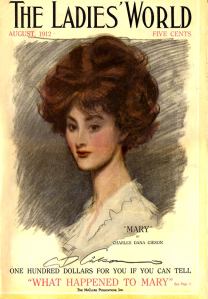
August 1912 cover of US magazine Ladies’ World featuring Mary Fuller and What Happened to Mary. From “The First Movie Serial.”

To what degree the variety format was more successful in attracting a larger and more diverse audience is debatable, but the inclusion of What Happened to Mary seemed a direct appeal to young women. Narrating the adventures of a country girl who comes to the city, What Happened to Mary was produced by Edison in twelve monthly episodes beginning in US picture houses in July 1912 in parallel with the serialized story that appeared in the US mass-circulation women’s magazine Ladies’ World, making its lead actress Mary Fuller into a star (Singer 213). Running from 22 September to 13 December, the first Irish exhibition at Dublin’s Rotunda tied in with its weekly serialization in the British women’s magazine Home Chat (“The Rotunda,” “The Picture Houses”). As such, it was clearly marketed primarily at women. An indication of its local success is the fact that the Rotunda immediately followed it with Who Will Marry Mary?, the Edison sequel, which again featured Mary Fuller.

Although it would take another year for the serial to reach the height of its popularity with such “serial queens” as Helen Holmes the adventurous heroine of The Hazards of Helen and Pearl White in The Perils of Pauline and The Exploits of Elaine, this earlier serial followed some of the patterns of the later ones. Shellley Stamp argues that “for a complete understanding of the template serial heroines offered viewers we must look beyond the screen exploits of Pauline and her compatriots towards the substantial star discourse that circulated around the actresses who played these women on screen” (Stamp 217). Some of the Dublin reviews suggested What Happened to Mary did create the desire in its audiences for more information about Mary Fuller: “‘Alone in New York’ is the second instalment of the ‘What Happened to Mary’ serial; all who have seen the opening scenes of Mary’s adventures will be eager to know more about this fascinating actress” (“Rotunda Pictures” 27 Sep.).

Flapper on Tram IL 24 Oct 1913

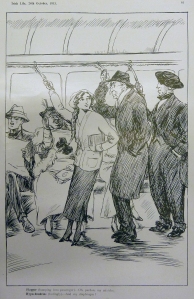
An Irish flapper finds space for herself in the public sphere; Irish Life 24 Oct. 1913: 91.

More specific information on the reception of What Happened to Mary among Irish audiences, and particularly Irish women, does not seem to survive. The fact that the exhibition of the film was tied to the publication of a British magazine is indicative of the subsidiary place of Ireland in the publishing and film industries. The Irish women’s magazine Lady of the House, which had very little to say about cinema of the period, made no mention of the serial, but it and other Irish periodicals show how women were represented in popular media. Was the young flapper shown travelling on a tram in a cartoon in the glossy and expensive Irish Life in October 1913 likely to have found Mary’s adventures or Mary Fuller’s star persona enthralling? Perhaps, but it is not clear that the serial form allowed Mary Fuller to capture the imagination of the public to a greater extent than the at-least-sometimes more active heroines of stand-alone films. In the Herald’s notice for the Rotunda on 30 September, the third episode of What Happened to Mary was not mentioned, but the reviewer focused on the heroine of A Wild Ride, set on a South African ostrich farm, in which “a resourceful and up-to-date heroine, in a situation of dire extremity, outwitted cunning and ferocious savages, rode an ostrich across the trackless veldt at high speed, and brought soldiers to the relief of her imprisoned family” (“Rotunda Pictures” 30 Sep.). Such derring-do in the serial would await The Hazards of Helen, which would not hit Dublin screens until 1915.

Other kinds of film serial followed quickly on the heels of What Happened to Mary and offered different forms of fascination – whether that be attraction or repulsion. Sharing the bill at the Rotunda with A Proposal Deferred, the fifth episode of What Happened to Mary in the week beginning 20 October was the second part of Gaumont’s five-part Fantômas (1913), each of which contained three to six episodes. Directed by Louis Feuillade and based on a popular series of 32 French novels by Pierre Souvestre and Marcel Allain that were published in monthly instalments between February 1911 and September 1913, the films followed the early exploits of the eponymous super villain as he terrorizes Paris (Walz and Smith). “Those who go to the Rotunda this week will, at any rate, get plenty of sensation,” observed the Irish Times.

The film, “Fantomas,” is a choice blend of mystery, tangled plot, and blood-curdling enterprise. It is not easy to grasp all the bearings of the incidents or their mutual relationship. The film, however, introduces us to some remarkable phases of Paris life and its institutions. And the glimpses of the city’s streets and parks are always full of interest. It is very admirably acted by all the characters (“Rotunda Living Pictures”).

Unlike What Happened to Mary, Fantômas did not appear on a reliable weekly or even monthly basis that might establish a loyal pattern of attendance. Nevetheless, even if not regular, Fantômas was popular, and the Rotunda continued to premiere the new parts as they were released, showing The Tragedy at the Masked Ball over the Christmas period of 1913 and the fifth part, The False Magistrate, in June 1914.

These serials were not restricted to city audiences but travelled on the important Irish Animated Picture Company exhibition circuit established by James T. Jameson of the Rotunda. In his praise of Jameson in January 1914, the Bioscope’s Irish correspondent Paddy revealed that two of the What Happened to Mary episodes had recently been seen around the country: A Proposal Deferred had been at Tralee, while the twelfth and final episode, Fortune Smiles – receiving “considerable applause” – was on the programme at Galway. The YMCA hall in Queenstown was showing the fourth part of Fantômas, The Tragedy at the Masked Ball (Paddy). As such they came, no doubt to inhabit the dream and nightmare worlds of many Irish people.

References

Birchland, Robert. “What Happened to Mary?” Hollywood Heritage 18: 2 (Fall 1999). Hollywoodheritage.org. http://hollywoodheritage.org/newsarchive/Fall99/Mary.html. 19 Nov. 2013.

“Exclusives and Other Matters.” Bioscope 9 Oct 1913: 87.

“The First Movie Serial.” 100 Years Ago Today. http://100yearsagotoday.wordpress.com/2012/07/26/the-first-movie-serial/. 19 Nov. 2013.

“The Length of the Film: A Question of Policy.” Bioscope 7 Sep. 1911: 471.

“Man’s Leap to Escape Cinema Robbers.” Evening Herald 25 Nov. 1913: 1.

Paddy. “Pictures in Ireland.” Bioscope 22 Jan. 1914: 351.

“The Picture Houses: Rotunda Pictures.” Evening Telegraph 30 Sep. 1913: 2.

“Pictures at the Rotunda.” Freeman’s Journal 21 Oct. 1913: 9.

“The Rotunda.” Irish Times 23 Sep 1913: 5.

“Rotunda Living Pictures.” Irish Times 21 Oct. 1913: 5.

“Rotunda Pictures.” Dublin Evening Mail 23 Sep. 1913: 3.

“Rotunda Pictures.” Evening Herald 27 Sep. 1913: 9.

“Rotunda Pictures.” Evening Herald 30 Sep. 1913: 5.

“Rotunda Pictures.” Dublin Evening Mail  21 Oct. 1913: 2.

“Rotunda Pictures.” Evening Herald 25 Nov. 1913: 5.

Singer, Ben. Melodrama and Modernity: Early Sensational Cinema and Its Contexts. New York: Columbia UP, 2001.

Stamp, Shelley. “An Awful Struggle Between Love and Ambition; Serial Heroines, Serial Stars and Their Female Fans.” The Silent Cinema Reader. Ed. Lee Grieveson and Peter Krämer.London: Routledge, 2004.

“The Three Musketeers’” Evening Herald 18 Nov. 1913: 5.

Walz, Robin, and Elliott Smith. Fantômas. http://www.fantomas-lives.com/fanto6.htm. 28 Nov. 2013.

Duelling Cinematographs: “An Unrehearsed Picture”

Image

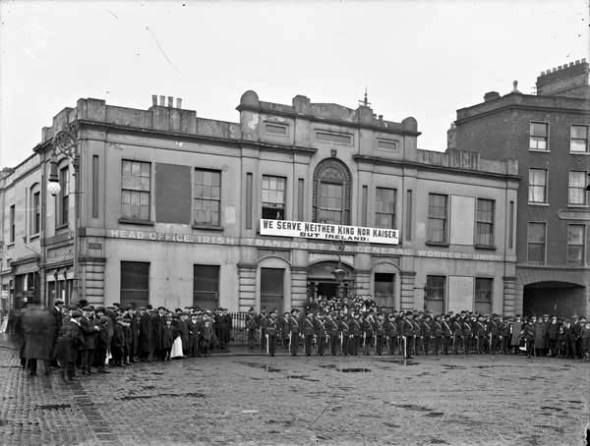
Liberty Hall, Beresford Place, in 1914, with members of the Irish Citizens’ Army, a militia formed to protect workers during the Lockout. From National Library of Ireland on Flickr Commons.

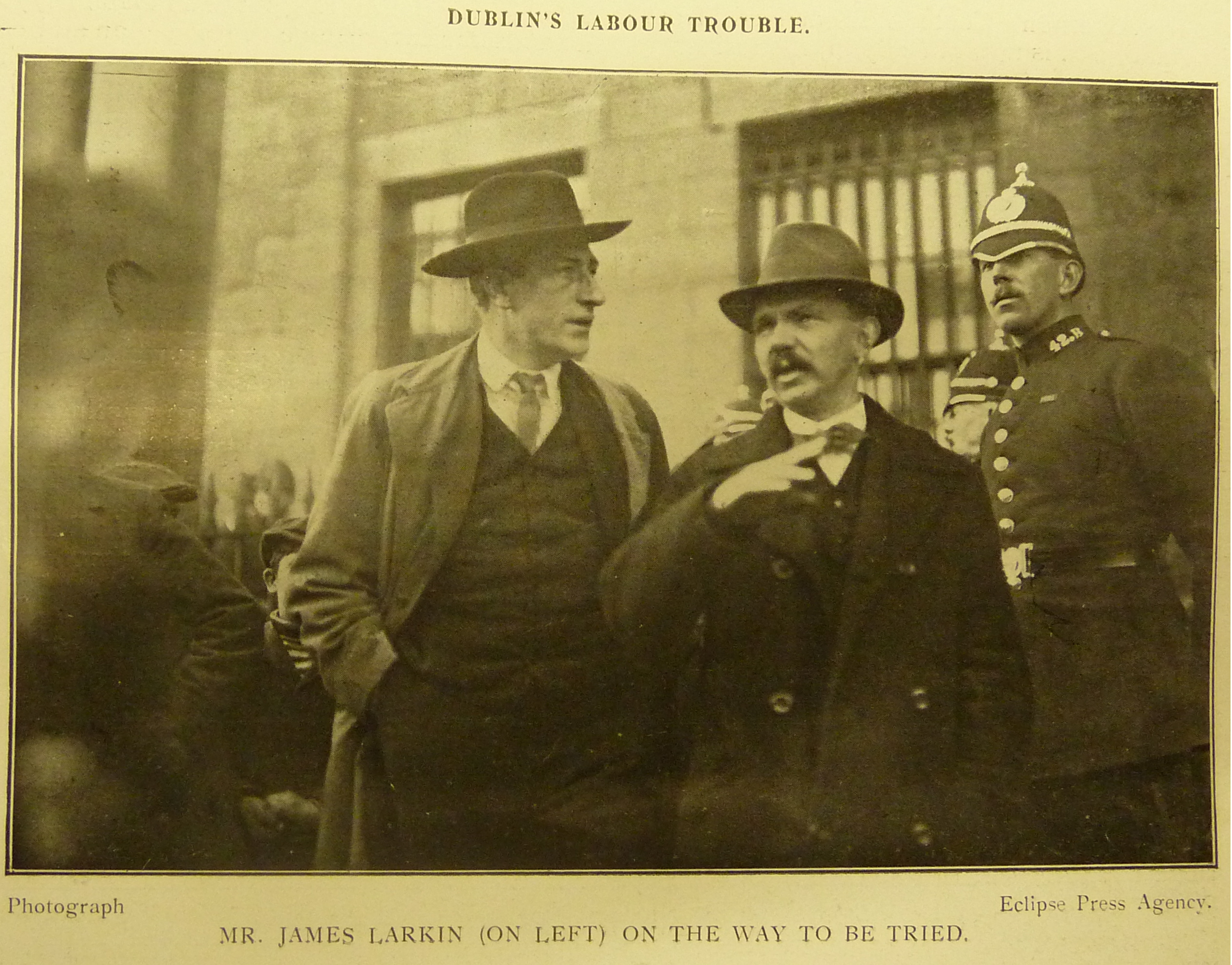
Moving pictures of events of the Dublin Lockout were taken, even if these do not – or are not known to – survive. On 25 October 1913, for instance, the Evening Telegraph reported on an incident of what might be called “duelling cinematographs.” This occurred during the trial on charges of sedition of Irish Transport Workers’ Union leader Jim Larkin and three colleagues as a result of their roles in the city’s strikes. Each morning of the trial, Larkin was accompanied on the walk of a mile from Liberty Hall, in Beresford Place, to the court in Green Street by a crowd of supporters, who waited outside the courthouse and accompanied him back to Liberty Hall, surrounded by police (“Back to Liberty Hall”). “Apparently by arrangement,” begins the Telegraph’s account of what it presents as a publicity event stage-managed for the camera on 25 October,

a cinematograph operator with his machine arrived at Liberty Hall in a taxi-cab about half past one o’clock this afternoon. He entered the building and soon afterwards he took up a position in one of the upper windows. Some 400 or 500 men were loitering about Beresford place, and they pressed forward to watch the operator’s movements, unaware of the fact that they were themselves to be pictured. Mr. James Larkin came to the window and warned them back, so that they would not be within range of the camera, and would also present a more imposing spectacle. There were also instructed to cheer and raise their caps so as to give the necessary life to the picture. All this was well managed, and doubtless the result will impress the patrons of some British or American picture palaces (“Cinema Machines”).

Who this camera operator was is not clear. It was likely to have been one of the several camera operators working in the city, among whom were Norman Whitten, those working for Gaumont and James T. Jameson, and other picture house owners/managers who had cameras and shot local films. Regardless of who shot this film, it shows that the union leadership were – like other political organizations of the time – beginning to think of the cinema as a publicity conduit, alongside the more established methods of pickets, mass meetings, newspapers and other form of print, and theatrical productions. The union was finally attempting to take control of this new means of representation.

In this iconography, Liberty Hall and Beresford Place played an important part as the location in the city where workers could congregate relatively freely and their leaders could address them. A Dublin Evening Mail article on the history of Liberty Hall helpfully sketches its descent from elite residence in the 18th century to hotel in which Dublin’s music hall entertainment originated to a near ruin at the beginning of the 20th century. “In 1908,” it concludes, “the tumble-down premises were taken by that stormy petrel, Jim Larkin, and turned into the headquarters of the Irish Transport Workers’ Union Since that the grimy old windows have looked out upon many a lurid scene” (“Liberty Hall”).

Irish Life 21 Nov. 1913: 247.

Irish Life 21 Nov. 1913: 247.

Larkin and the other union leaders were on trial for their part in inciting riot, particularly on 31 August, when they had been determined to – in the words of W.B. Yeats in “No Second Troy” – “hurl the little streets upon the great.” They had done this by holding a mass meeting on O’Connell/Sackville Street, one of what the Recorder had termed the city’s “principal streets,” whose dual naming encoded the Nationalist/Unionist struggle to gain symbolic control over the capital’s main thoroughfare. The police escort that accompanied Larkin and his supporters from Beresford Place to Green Street – passing Yeats’s Abbey Theatre – made sure that the trade unionists did not impose themselves on the shopper of O’Connell/Sackville Street.

Although union leaders appear to have been slow in using the cinema to promote their cause in the early weeks of the Lockout (a point already made here and here), by late October 1913, Larkin seems to have thought that cinema might provide another way of hurling the little streets unto the great. Although the authorities were intent on preventing trade unionists protesting on the city’s principal streets, a film of union activity might reach the cinemagoers at such prestigious picture houses as the Rotunda, Sackville or Grafton, and so bring Beresford Place to O’Connell/Sackville Street or Grafton Street.

While calling attention to this union film, the Telegraph article presents itself as unmasking Larkin’s manipulation of the truth. Commending Larkin and the camera operator for their direction of events, it acknowledges the film’s likely power to influence US or British audiences. It does not mention its influence over Irish audiences, partly as flattery of its readers’ shrewdness in seeing through the artifice, but also because the article goes beyond revealing Larkin’s deception to describe the Telegraph own counter-filmmaking. “A much more interesting series of pictures,” it reveals

was, however, obtained by our unauthorised cinema operator, who came upon the scene just as his rival had commenced from the window. At once he, too, began to work his machine from the street, obtaining, as he hopes, a more correct view of the crowd, and a complete record of Mr. Larkin’s work as stage manager. The latter series of pictures, if every produced, should add to the gaiety of nations (“Cinema Machines”).

This is an astonishing claim, describing a situation in which two films were shot of Larkin addressing a crowd of workers at Liberty Hall, the second one sponsored by a newspaper anxious to discredit the union leader. This second operator can no more be identified than the first, but it seems extraordinary that the newspaper was able to locate a cinematographer quickly enough to film the proceedings.

The last line of this quote – particularly the phrase “if ever produced” – casts some doubt on the Telegraph’s film ever being seen. This may be because there was some difficulty with the filming or that the cinematographer merely pretended to film. It may also be an acknowledgement that neither of these films would have been guaranteed a screening in Dublin (or abroad; the second film is here envisaged as contributing to “the gaiety of nations” rather than of Dublin or Ireland). Dublin picture houses included such newsreels as the Pathé Gazette or Topical Budget as part of their programmes and occasionally screened films of local political or social events such as the Dublin Horse Show. However, the picture houses seem deliberately to have avoided shooting and/or showing films of this contentious strike. There is no evidence that these films were shown in any Dublin picture house.

References

“Back to Liberty Hall.” Dublin Evening Mail 23 Oct. 1913: .

“Cinema Machines: At Work at Liberty Hall: An Unrehearsed Picture.” Evening Telegraph 25 Oct. 1913: 5.

“Liberty Hall: A Footnote to History: Harmonies and Discords.” Dublin Evening Mail 21 Oct. 1913: 2.

“An Objectionable Class from the City”

“One aspect of the strike which has probably not been brought home to the public,” begins a tantalizing article in the Evening Herald on 18 October 1913, “is the effect which it has had upon the amusements of Dublin, such as theatres, music halls, and cinematograph shows” (“Dublin Theatres and the Strike”). Despite offering the views of prominent – albeit unnamed and paraphrased – theatre, music hall and cinema managers, the almost 700-words that follow are, if intriguing, also finally frustratingly unspecific. This is not because as a newspaper owned by employers’ leader William Martin Murphy, the Herald missed few opportunities to point out the folly of Dublin’s striking workers, who had been, it often argued, criminally led astray by union leader Jim Larkin. There are traces of that editorial line here, but the real disappointment is that the writer appears misleadingly to conceive each of these entertainments as being entirely identified with a single class. This, then, looks gratifyingly like a suitable case for analysis and supplement.

The article starts soundly enough by observing that the Lockout affected the city’s entertainments in general in two ways:

firstly, that inasmuch as the earning capacity of some thousands of men has been stopped, therefore their spending capacity has likewise been curtailed.

Secondly, that where the earnings have not been interfered with, among those who are not directly concerned with the strike, yet who live some considerable way from the city, they have been unable to patronise the various entertainments provided for their amusement owing to the difficulties of travel consequent upon the curtailment of the tramway programme (ibid).

A large number of workers with severely reduced income and restrictions on public transport were undoubtedly key factors affecting audience numbers, but the article is less convincing in the argument it makes about the identification of entertainments with particular classes.

It implies that theatre provided entertainment for the social elite, music halls catered for the middle class, and cinema was for the working class. This is done by showing that not all types of entertainment were equally affected by the Lockout. The theatres “have done comparatively well, and the manager of one important theatre stated that had it not been for the strike he would have eclipsed all records” (ibid). Music halls, by contrast,

had suffered considerably, the seats of these houses, whilst altogether more expensive than those of cinematograph shows were cheaper than those of the theatres, so that whereas the man who would pay three or four shillings for a seat at the theatre would and could afford the cost of a conveyance to and from his residence[, t]he man who came from the outlying parts could not, and it is too far to walk a couple of miles each way (ibid).

The difference in ticket prices here seems to create a rigidly stratified system. Stratification based on price, class and type of entertainment certainly existed but not in the way implied here. It is too much of a simplification to state that theatregoers were substantially of a class that could in the absence of trams due to the strike, afford private transport or a cab, while music hall patrons were from a class that lived in the suburbs (to a degree that severely impacted on the business of music halls) but could not afford to pay both for admission and transport home. But the argument become particularly problematic in relation to cinema.

Although the article seems to suggest that the cinematograph shows were competing with music halls for audience, it only discusses picture houses as working-class venues:

In the poorer parts of the city where the cheaper cinematograph shows abound, these have been directly affected by the loss of custom consequent upon those who patronise them being strikers, and therefore, not earning any money. Some of these have suffered severely, and their owners and managers will be very pleased when the strike is settled (ibid).

Certainly the business of picture houses located in working-class areas was affected by the Lockout, but which ones the writer had visited or was thinking of is unclear.

Map Oct 1913

Map of Dublin in 1913 with pins indicating locations of picture houses, music halls and theatres.

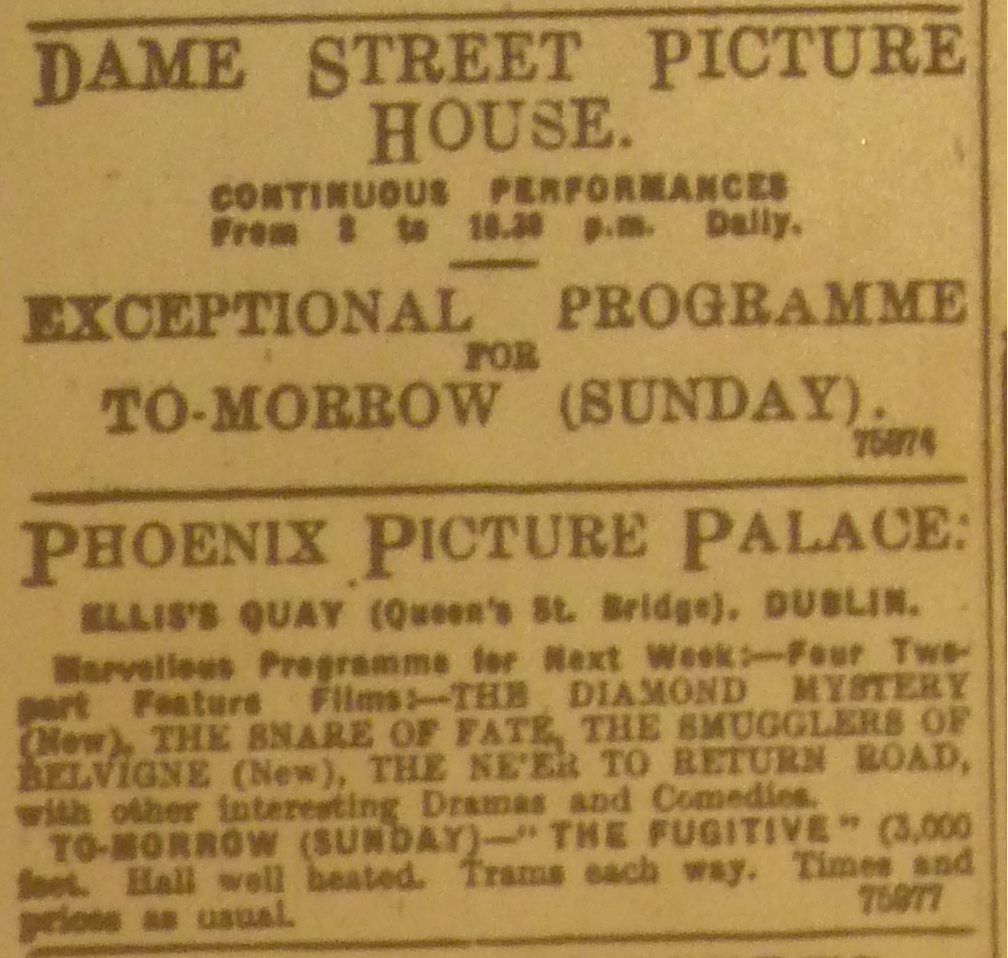
The controversy over the Sunday opening of picture houses suggested that going to the pictures was not just a working class entertainment. On 24 October 1913, the Recorder of Dublin – the city’s chief magistrate – considered an application for a Sunday music licence for the Dame Street Picture House, without which it could not open. From their previous applications in April and July 1913, the proprietors of the Dame Street Picture House knew the authorities’ views that the Grafton and O’Connell Street picture houses “were frequented by persons of the better class, and there was no necessity that they should be opened on Sundays for their benefit” (CSORP/1915/2211). As a result, the proprietors argued that the “people who frequented the Grafton street house were generally people who went shopping. The Dame street house was frequently largely by the working classes, and the object of the application was to give facilities to the working classes to attend performances on Sundays” (ibid). They classed themselves among the picture houses that were allowed to open on Sunday: the Phoenix Picture Palace, the Irish Cinema in Capel Street, the Dorset Picture Hall, the Camden Picture House, the Theatre de Luxe in Camden Street, the Picturedrome in Harcourt Road, the Brunswick Street Cinema, the Princess Cinema in Rathmines, the Mary Street Picture House, the Volta in Mary Street, the World’s Fair Varieties in Henry Street and the Electric Theatre in Talbot Street (ibid).

Dame Phoenix Sunday 1913

Ads for Sunday shows at Phoenix and, despite the Recorder’s ban, the Dame; Evening Telegraph 25 Oct. 1913: 4.

The Recorder did not accept this, contending that Dame Street was one of the city’s principal streets – “near the residence of the King’s representative” in Dublin Castle – and not located in a working-class district (“Picture Houses”). He therefore treated the picture house there as he did the ones in Grafton Street and O’Connell Street by refusing them a Sunday licence. “He would give every facility to Sunday entertainments for the working classes, but he would not, so far as he could prevent it, give up the principal streets to these syndicates on Sundays” (“Sunday Cinemas”).

The Recorder’s licensing session also considered local objections to Sunday shows at Clontarf Town Hall, one of the city’s latest picture houses to open – and so not listed above. When Clontarf was incorporated into an expanded Dublin at the turn of the century, the administrative powers of its local council were assumed by Dublin Corporation, and its town hall had no function. Beginning on 18 July 1913, the hall’s leasee George Humphreys ran it as a picture house, with the proviso that he give it up when the Corporation needed it. “Mr. Robertson, (who represented the police) said that he went to the petty Sessions at Clontarf the other day, and they were held in this picture show (laughter)” (“Clontarf Cinema”). Reverend John L. Morrow, chairman of the Clontarf Citizens’ Association objected to the renewal of the picture house’s licence on the basis that local people had not been consulted on its use for this purpose. He complained in particular that its Sunday shows “brought out an objectionable class from the city” (ibid). Humphreys dismissed this claim, observing that “the hall was patronised by people like Ald. Maguire, of Clontarf; Mr. Brady (solicitor), and many other representative and legal gentlemen” (ibid). By 1913, the picture house no longer provided entertainment only for the working class.

References

“Clontarf Cinema: Citizens’ Association: Raise an Objection.” Evening Telegraph 24 Oct. 1913: 3.

CSORP/1915/2211, National Archives of Ireland.

“Dublin Theatres and the Strike.” Evening Herald 18 Oct. 1913: 4.

“Picture Houses: And Licence for Sunday Shows.” Evening Herald 24 Oct. 1913: 2.

“Sunday Cinemas: In Leading Streets.” Evening Telegraph 24 Oct. 1913: 6.

“Soul Stirring Views of the Cripples”: The (First) Irish National Pilgrimage to Lourdes

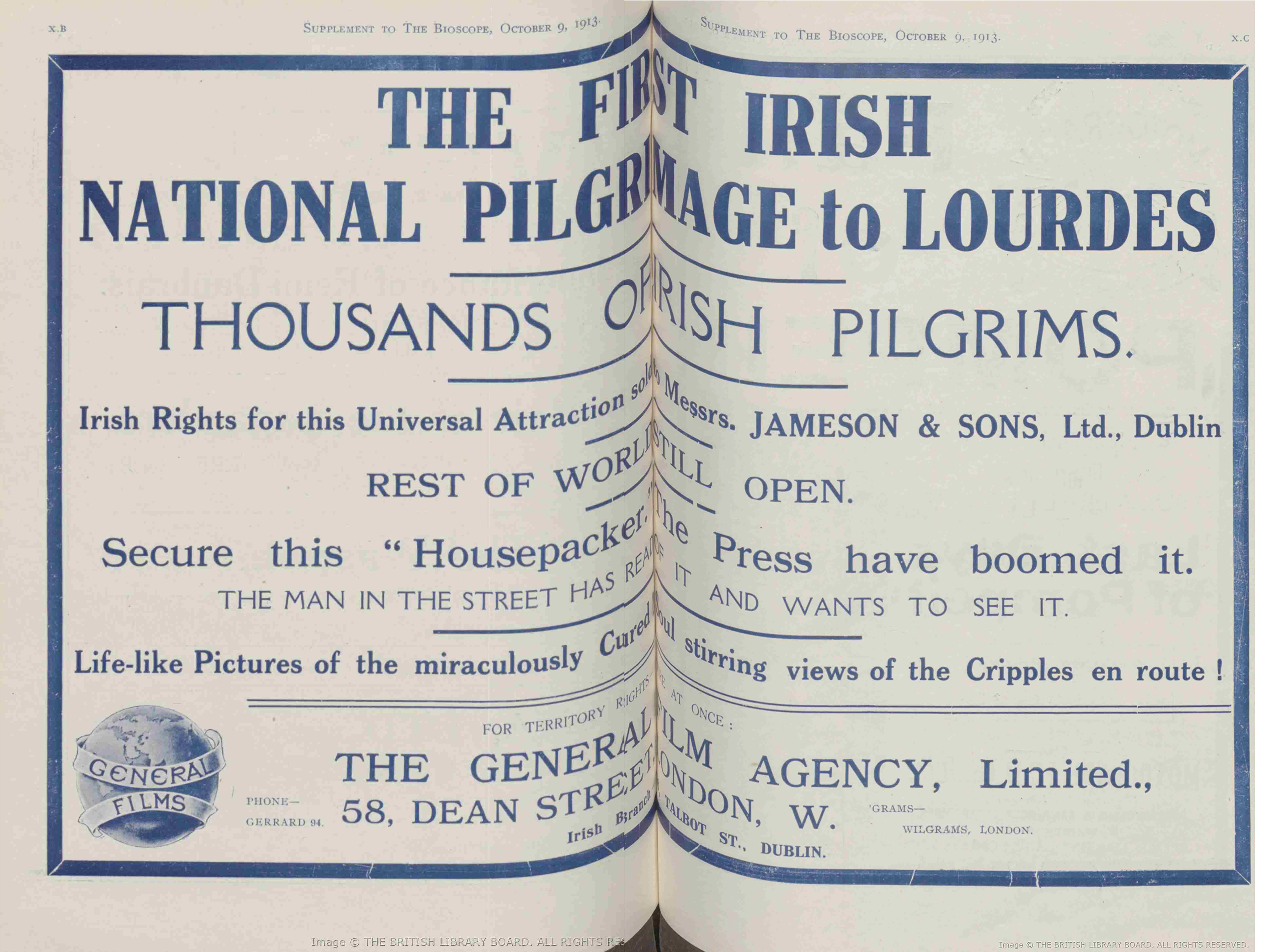
Bioscope 9 Oct. 1913, xb-c.

On Friday, 3 October 1913, the Irish Times reported that several Catholic clerics had attended a private viewing at the Rotunda, Dublin, of the film The First Irish National Pilgrimage to Lourdes and that the film would open to the public at the same venue the following Monday (“A Pilgrimage in Picture”). The preparations for and progress of the pilgrimage by over 2,000 Irish Catholics – including the miraculous cures of such pilgrims as Grace Maloney (“Miracle at Lourdes”) – were extensively covered in the press, and newspaper readers may also have been aware that the pilgrimage had been filmed because as many of the pilgrims prepared to depart on 8 September and arrived back on 19 September, some papers had reported that cinematographers were among them (“Lourdes Pilgrims,” “Home Again”).

The film at the Rotunda, therefore, had benefitted from much pre-publicity, and it sought to show cinemagoers the important elements of the pilgrimage in detail. It ran not the 5-10 minutes expected of a newsreel but – according to the Times – for “[n]early an hour,” with the Dublin Evening Mail putting its length in feet – the more popular way of expressing film length at the time – at 2,500 feet (“Rotunda Pictures”), or almost 42 minutes at the most common silent projection speed of 16 frames per second. The film “has many-sided interest for Dublin picture house patrons, most of whom had friends on the pilgrimage” (“Rotunda Living Pictures”), but the Rotunda sought to ensure the attention of its audience by setting them a puzzle: “Unique interest attaches to the film in that it shows an unknown lady, who experienced a cure, looking from a railway carriage window, and the management invite the co-operation of the public in identifying her” (A Pilgrimage in Picture”).

Such strategies to engage the Dublin and Irish audience would not have worked elsewhere, and other techniques would have been needed. Ads in the British trade journal Bioscope using such phrases as “Life-like Pictures of the miraculously Cured” and “Soul stirring views of the Cripples en route” show that the distributors suggested that exhibitors stress the miraculous and make disability into spectacle. Even emphasizing such attractions and given that Jameson had already secured the Irish rights, this film must have been difficult to sell in Britain except in areas with large concentrations of Irish migrants. In Ireland, much of the press coverage of the pilgrimage itself suggests that the spectacle of disability was less of interest than the miraculous cures. The Irish Catholic, for example – which never mentioned the film – devoted its lead stories on 4 and 11 October to medical confirmations of the cures.

Like the vast majority of early films made in Ireland – or anywhere else, for that matter – this film is believed to be lost. Nevertheless, the newspapers provide an account of its contents. A reporter for the Evening Herald, who had been at the press screening on 3 October, offered the most detailed description of the film. The scenes consisted of the following: “Pilgrims breaking journey at London and entering train at Victoria station; going on the special boats and scenes on board from Folkestone to Boulogne; Mass at the Madeline, Paris, outside the Madeline, brake loads of pilgrims; special trains leaving Bordeaux. Nearing Lourdes and panorama as seen from train; arrival at Lourdes and scenes of town and neighbourhood; tram ride up to Basilica; In Lourdes, general group; the first procession; on the way to the Grotto, and scenes at the Grotto and Basilica; portrait of Mdlle. Bernadette, and view of where she lived; the Calvary and monument; procession of the Blessed Sacrament; homeward bound – leaving Lourdes, and scenes at various places on the returning route” (“Lourdes Pictures”). One can only agree with the Herald reporter that the film thoroughly covered the event.

Pilgrimage ads W1 W2

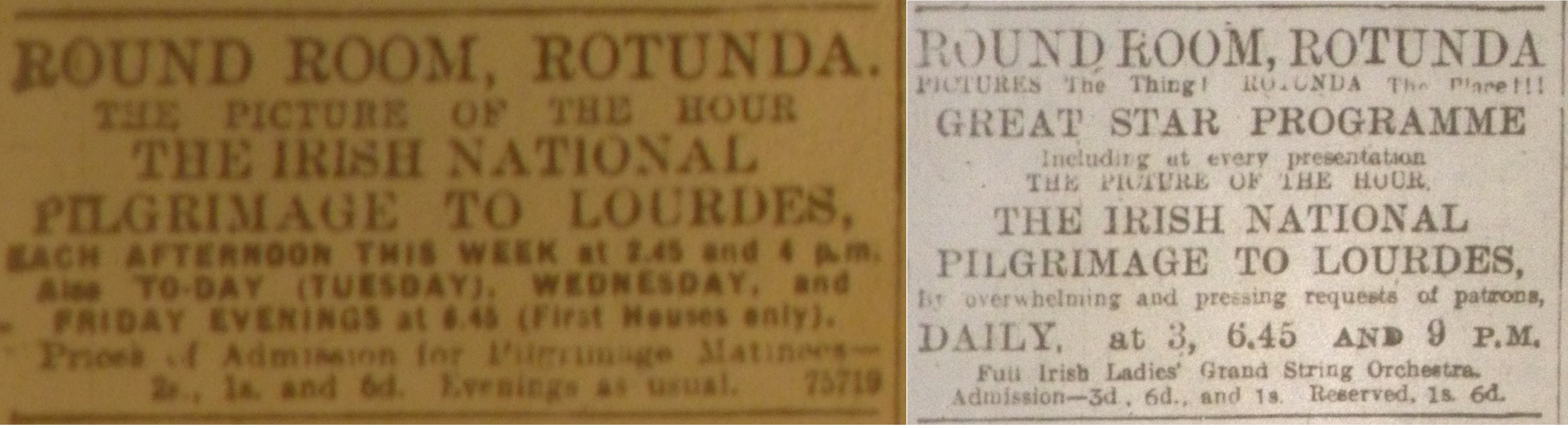
Differences in exhibition strategies at the Rotunda for the Irish National Pilgrimage to Lourdes (left) during its first week and (right) during its second week; Evening Telegraph 7 Oct. 1913: 2, and Dublin Evening Mail 13 Oct. 1913: 4.

Despite its topicality and multiple attractions for an Irish audience, Jameson initially adopted an unusual exhibition strategy. Rather than integrating it into the Rotunda’s normally advertised times of 3pm (matinee), 6:45 and 9pm, he decided to show it apparently alone – or possibly with a reduced supporting programme – at two matinees at 2.45 and 4pm, and with the rest of the advertised programme “at the first evening houses, commencing at 6.45 p.m., on Tuesday, Wednesday, and Friday” (“Pilgrimage in Picture”). The 6:45 show on Monday, Thursday and Saturday and all the lucrative 9pm shows would offer a programme that did not include the pilgrimage film, and this other programme – headed by Mary in Stageland, the third part of the Mary Fuller serial What Happened to Mary – was advertised separately. Whether he had already booked the first programme before he became aware of the availability of the pilgrimage film or whether he believed that the audience for the pilgrimage film would not be interested in the films enjoyed by his regular audience, and vice versa, is not clear.

The film’s popularity appears to have surprised this canny exhibitor, who changed his exhibition strategy in the second week of the film’s run. His decision to run the film for a second week already demonstrated that he identified unusual interest in it, but for the second week, he integrated it into his regular 3pm, 6:45 and 9pm schedule. Predicting that the programme would “undoubtedly prove to be one of the most popular ever set before a Dublin audience,” the Freeman’s Journal reported that the “film has been reproduced at the Rotunda on the overwhelming and pressing requests of patrons, and that the management only justified itself in complying with the enormous demand was thoroughly testified by the approval shown” (“Rotunda Pictures”).

Ch4Two

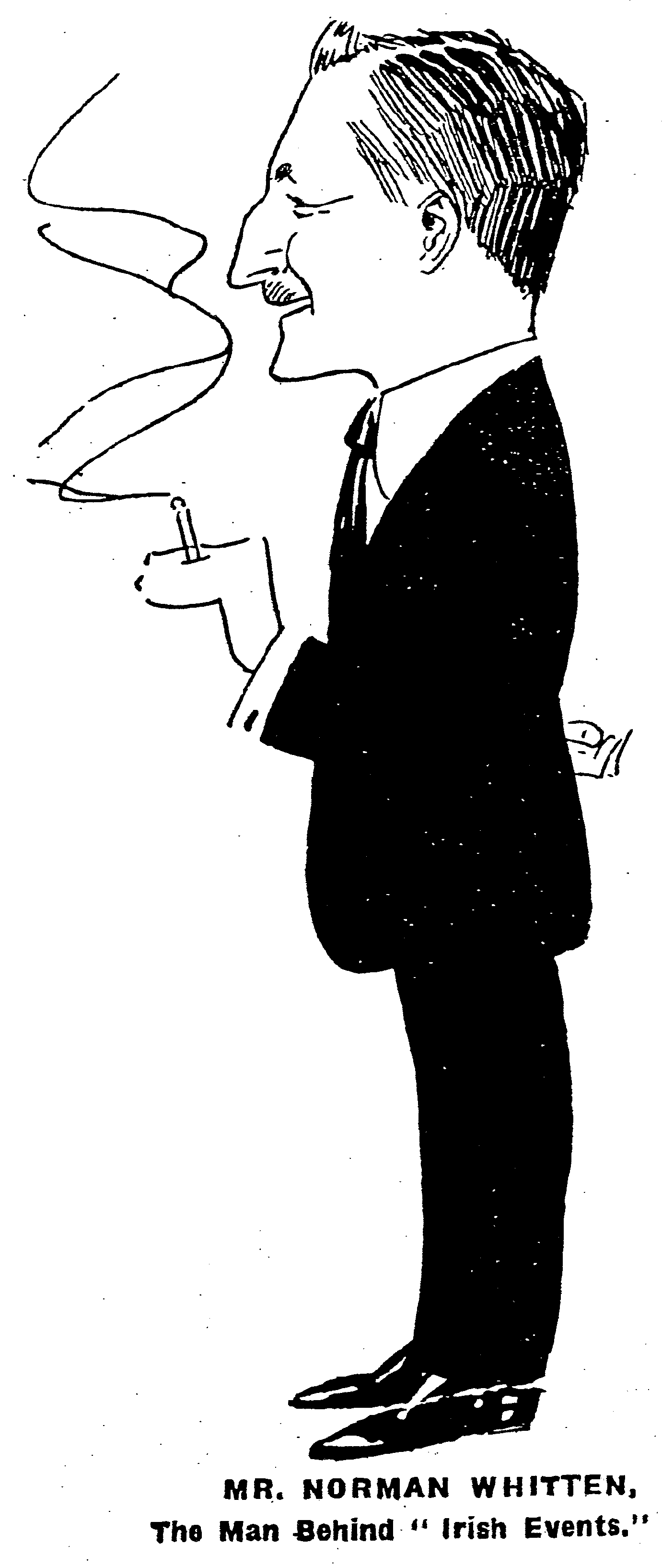
Frank Leah’s caricature of Norman Whitten. Irish Limelight 1:10 (October 1917), p. 1.

The film was produced by the General Film Agency (later, the General Film Supply), a company run by Norman Whitten that seems to have some relationship with a London-based company of the same name. English-born, Whitten had worked with British film pioneer Cecil Hepworth in the early 1900s but moved to Ireland in the early 1910s. In 1917, he would found Irish Events, the first Irish newsreel, before also shooting such fiction films as the bilingual life of St. Patrick Aimsir Padraig/In the Days of St. Patrick (1920). One of Ireland’s most successful film producers of this period, he showed a remarkable ability to understand Irish cinema audiences. In 1913, he began advertising his services as a producer of advertising films and local topicals (films of local events). Whether he was commissioned to make the pilgrimage film or initiated the project himself is not clear, but he certainly had considerable cooperation from the pilgrimage organizers.

The Dublin papers were almost universally positive in their reviews of the film. Although also positive, the Daily Express’ review is notable for the writer’s attempts to draw a distinction between what we would now see as fiction and documentary (at least of a kind):

Pictures recording actual events which are unembarrassed are usually never so effective as those which are produced after continual experiment This however, does not apply to the same extent as regards the present pictures as it might in the case of other pictures. The climatic conditions at Lourdes are pre-eminently suitable for the cinematograph, and without exception the various events, which the pictures pourtray are shown with marked clearness and distinctness (“Lourdes Pictures at the Rotunda”).

The pilgrimage film was not as bad as the writer had experienced other factual film to be, but s/he clearly preferred fictional films, or at least films that allowed rehearsal of some kind. The discussion of climatic conditions was one often aired when anyone tried to explain why so few films were made in Ireland or why those that were made featured relatively poor cinematography.

The one piece of criticism made in relation to the film concerned the choice of musical accompaniment at the Rotunda. The Dublin Evening Mail‘s “Music and Drama” columnist commented at length on film music, arguing that “semi-neutral music is the most effective,” explaining that by this s/he meant “that the selections should be broadly in sympathy with the general character of the film” (“Music and the Drama.”). Exemplary of this was Sackville Picture House musical director Jack Larchet’s recent “dignified” selection of Mendelssohn’s Trio in D Minor and Shubert’s Unfinished Symphony to accompany Hamlet (Hepworth, 1913), featuring theatre star Johnston Forbes-Robertson. By contrast s/he found the accompaniment of the pilgrimage film at the Rotunda by the elsewhere much praised Irish Ladies’ String Orchestra, under the direction of May Murphy, “not only inappropriate but it was badly played. Gounod’s ‘Ave Maria’ was suitable enough if it had been well rehearsed, but Stephen Adam’s ‘Holy City’ and ‘The Star of Bethlehem’ are not sacred songs in the real sense of the word” (ibid). This kind of criticism, however, is indicative that picture houses would increasingly be held to the highest standards of entertainment.

References

“Home Again: Pilgrims Back in Ireland.” Irish Independent 20 Sep. 1913: 5.

“Lourdes Pictures.” Evening Herald 4 Oct. 1913: 6.

“Lourdes Pictures at the Rotunda.” Daily Express 4 Oct. 1913: 10.

“Lourdes Pilgrimage.” Irish Times 8 Oct. 1913: 4.

“Lourdes Pilgrims: 2,300 Irish Folk Will Travel.” Irish Independent 6 Sep. 1913: 6.

“Miracle at Lourdes: Girl from Killaloe Cured.” Evening Herald 13 Sep. 1913: 2.

“Music and the Drama.” Dublin Evening Mail 13 Oct. 1913: 7.

“A Pilgrimage in Picture.” Irish Times 4 Oct. 1913: 5.

“Rotunda Living Pictures.” Irish Times 14 Oct. 1913: 5.

“Rotunda Pictures.” Dublin Evening Mail 11 Oct. 1913: 7.

“Rotunda Pictures.” Freeman’s Journal 14 Oct. 1913: 9.

The Phoenix and the Rubble of Church Street

Image

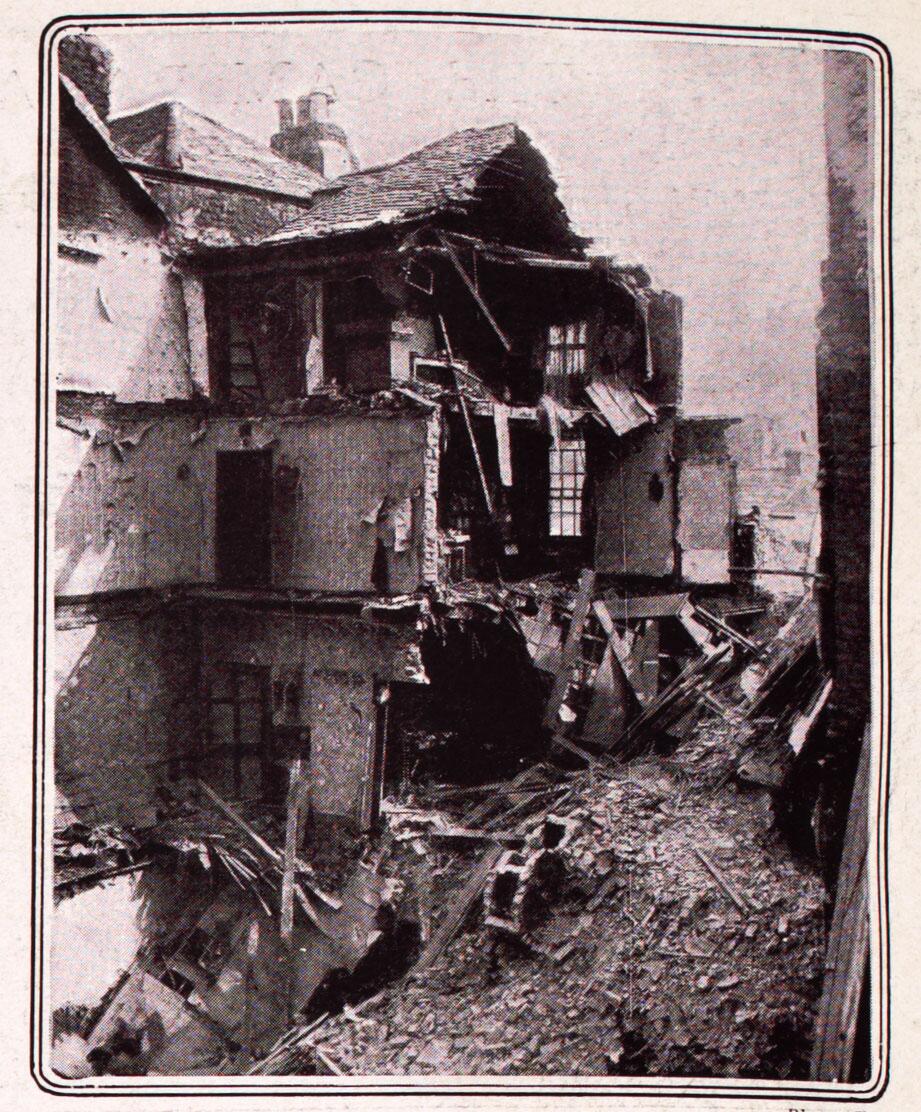
Illustrated London News, 13 September 1913. Tweeted by National Library of Ireland, 2 Sep. 2013 (pic.twitter.com/s2DtgIYSwQ).

The decision of Dublin picture houses at the end of August 1913 to screen such social events as the Horse Show and the Neptune Rowing Club’s At-Home rather than the iconic opening sorties of the Lockout is indicative of the place that cinema as a cultural institution was coming to occupy in the Irish mediascape. Although not universally true for all picture houses – and as places of employment, some became sites of the ongoing labour disputes – picture houses were businesses owned and managed by men (almost exclusively men) who either already belonged to or who had ambitions to belong to the “respectable” classes. The Phoenix Picture Palace’s activities in relation to the Church Street Disaster in the first week of September 1913 gives some evidence of this.

Few events early in the Dublin Lockout better underscore the dire conditions in which many of the city’s workers lived than the Church Street Disaster. These events have been widely written about and will be commemorated this weekend, 6-7 September 2013 by the Stoneybatter and Smithfield People History Project. In brief, at about 8:30 on the evening of 2 September 1913, two tenement houses in Church Street collapsed, killing seven people. The most affecting story to circulate in the aftermath of the collapse was that of 17-year-old Eugene Salmon who saved several members of his family from one of the collapsing buildings but died while attempted to save his sister, Elizabeth. The newspapers were happy to make Salmon the tragic victim of the slums, and Dublin Corporation eventually felt pressured into setting up a Local Government Board inquiry (Nov 1912-Feb 1913) into the housing of the working class (extracts here). Neither the newspapers nor Jim Larkin as the representative of the striking workers made much of the fact that Salmon was a locked-out worker from Jacob’s biscuit factory. This allowed employers, led by newspaper owner William Martin Murphy, to claim solidarity with slum dwellers by condemning living conditions in the tenements, supporting an inquiry and initiating a relief fund for the survivors of the collapse (Corlett).

Among the many contributions to the relief fund established by the Freeman’s Journal/Evening Telegraph newspaper group were the proceeds from a benefit night on Tuesday, 9 September at the Phoenix Picture Palace. The Phoenix was located well out of the city centre, on Ellis’s Quay, about 10-minutes walk from Church Street. It was owned by the Phoenix Picture Palace, Limited, who directors were David Frame, Henry Grandy, John MacKay and Andrew Wright (“World of Finance”). When these proprietors reported on the progress of the Phoenix’s construction in July 1912, they projected that its 1,500 seats would mainly be occupied by the working-class residents of the surrounding district (Paddy, 4 July). The rising popularity of cinema would allow such large entertainment venues to operate in residential areas of the city and its suburbs. The proprietors also clearly assumed that as the Phoenix was located on a tramline just minutes from one of the city’s main railway stations, Kingsbridge, they could rely on significant passing trade from travellers using the Great Southern and Western Railway’s lines to and from towns and cities in the south and west. For the benefit night on 9 September, the Phoenix added live acts to the previously booked films, including singers (the “distinguished artistes” Maude Harrington Clancy – a recent Feis Ceoil medal-winner – contralto Madame Gill-Gorevan and baritone Albert Vine Sanderson), humorist Chris Bruton and the “manager of the Phoenix, Mr. Cathal MacGarvey, [who] will also make a re-appearance on the concert platform for this deserving charity” (Church St. Disaster”). The nature of the event and the tone of the newspaper coverage – which made no mention of the films – suggest that this was not designed to bring together the tenement dwellers but rather represented an occasion for a middle-class audience to display their charity. As such, it was successful. A “large audience was present, including several clergymen” (“Dublin and District”), and 353 shillings and sevenpence was donated in the Phoenix’s name to the relief fund (“Freeman-Telegraph Fund”).

Coliseum Opening 1913

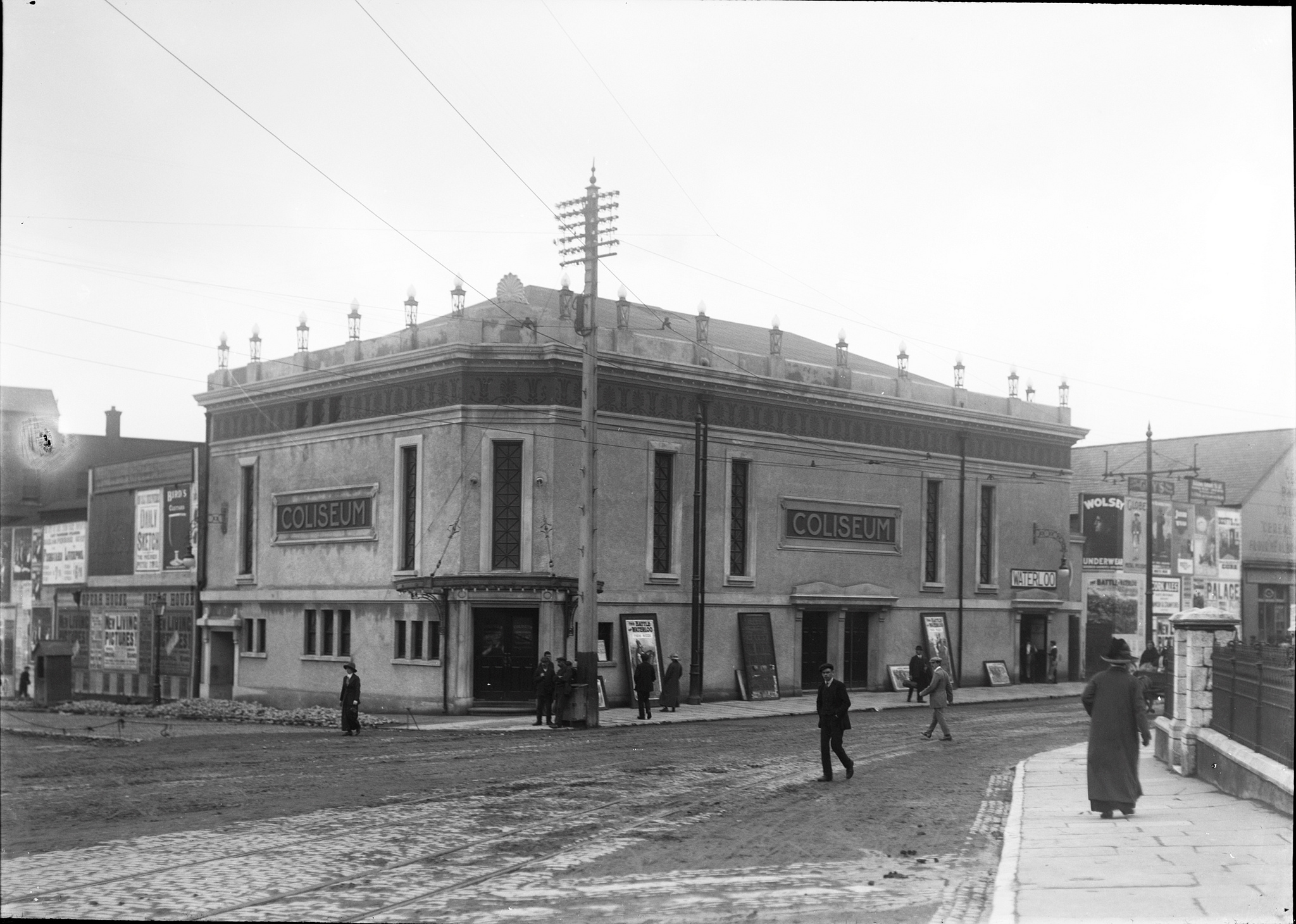
The Coliseum Cinema, King (now MacCurtain) Street, Cork. National Library of Ireland  on Flickr Commons.

There was nothing particularly unusual in this; it was how successful business men drew positive attention to the social good their companies represented. In May 1912, the Electric Theatre in Talbot Street – a picture house in which David Frame shared an interest with then-Lord Mayor of Dublin John J. Farrell – had gained publicity by holding a benefit for the Titanic relief fund (Paddy, 30 May). For Frame and his partners in the Phoenix, the social respectability that came from the benefit for the Church Street victims was timely. Indeed, the 9 September was a big day for this group of businessmen, whose newest venture, the Coliseum in Cork, also opened on that day.

References

“Church St. Disaster.” Evening Herald 5 Sep 1913: 5.

Corlett, Chris. “The Church Street Disaster, September 1913.” History Ireland 17:2 (Mar-Apr 2009).

“Dublin and District: Aid for the Church Street Sufferers.” Irish Independent 10 Sep. 1913: 5.

“Freeman-Telegraph Fund.” Freeman’s Journal 12 Sep. 1913: 7.

Paddy. “Pictures in Ireland.” Bioscope 30 May 1912: 639; 4 July 1912: 25.

“World of Finance.” Bioscope 18 Sep. 1913: 933.

Screening the Lockout (?)

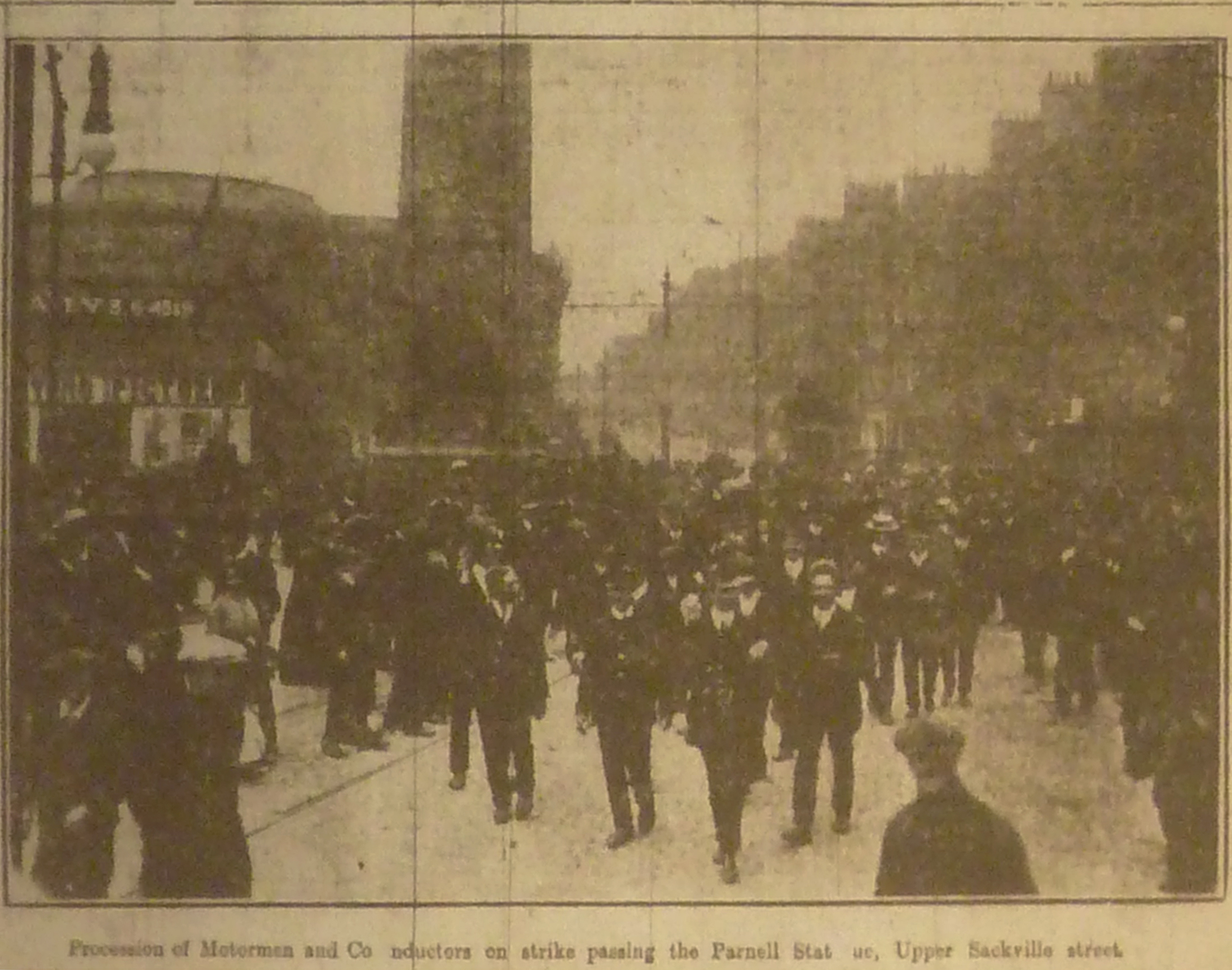
Dublin tramway workers pass the Rotunda, one of the city’s most important picture houses. (“Dublin Tramwaymen’s Strike.” Dublin Evening Mail 27 Aug. 1913: 2.) A different view of this picture house can be found here.

A hundred years ago, on Tuesday, 26 August 1913, the labour dispute known as the Dublin Lockout began when just before 10am, some 200 motormen and conductors of the Dublin United Tramway Company abandoned their trams in the city centre. The tram strike would prompt the Dublin Employers’ Federation – led by the tram company’s chairman and owner of the Irish Independent and Evening Herald newspapers William Martin Murphy – to lock out workers affiliated with Jim Larkin’s Irish Transport and General Workers’ Union. Riots, the arrests of union leaders, demonstrations and vicious police baton charges followed. Newspapers played an important part in this dispute – and in how we remember it a century later; see Century Ireland – but what about cinema?

As early as 1907, cinema was being called the art form of the working class (Patterson), an accessible and relatively cheap form of not just entertainment but also information about the world in moving pictures that did not require a high level of literacy. Although Dublin had just a few film venues before 1910, the new medium of cinema very quickly came to have a significant place in Irish society in the early 1910s. By August 1913, Dublin had three times more picture houses than it did theatres, and half of the theatres also showed fiction films and newsreels on a regular basis as part of their variety programmes. Picture houses were not only located in the city’s business core like the theatres but also in residential areas and in the suburbs and townships adjacent to the city. They often therefore relied to a greater extent than the theatres on the patronage of local audiences. However, these picture houses were also businesses, in which a dichotomy between worker and employer also existed.

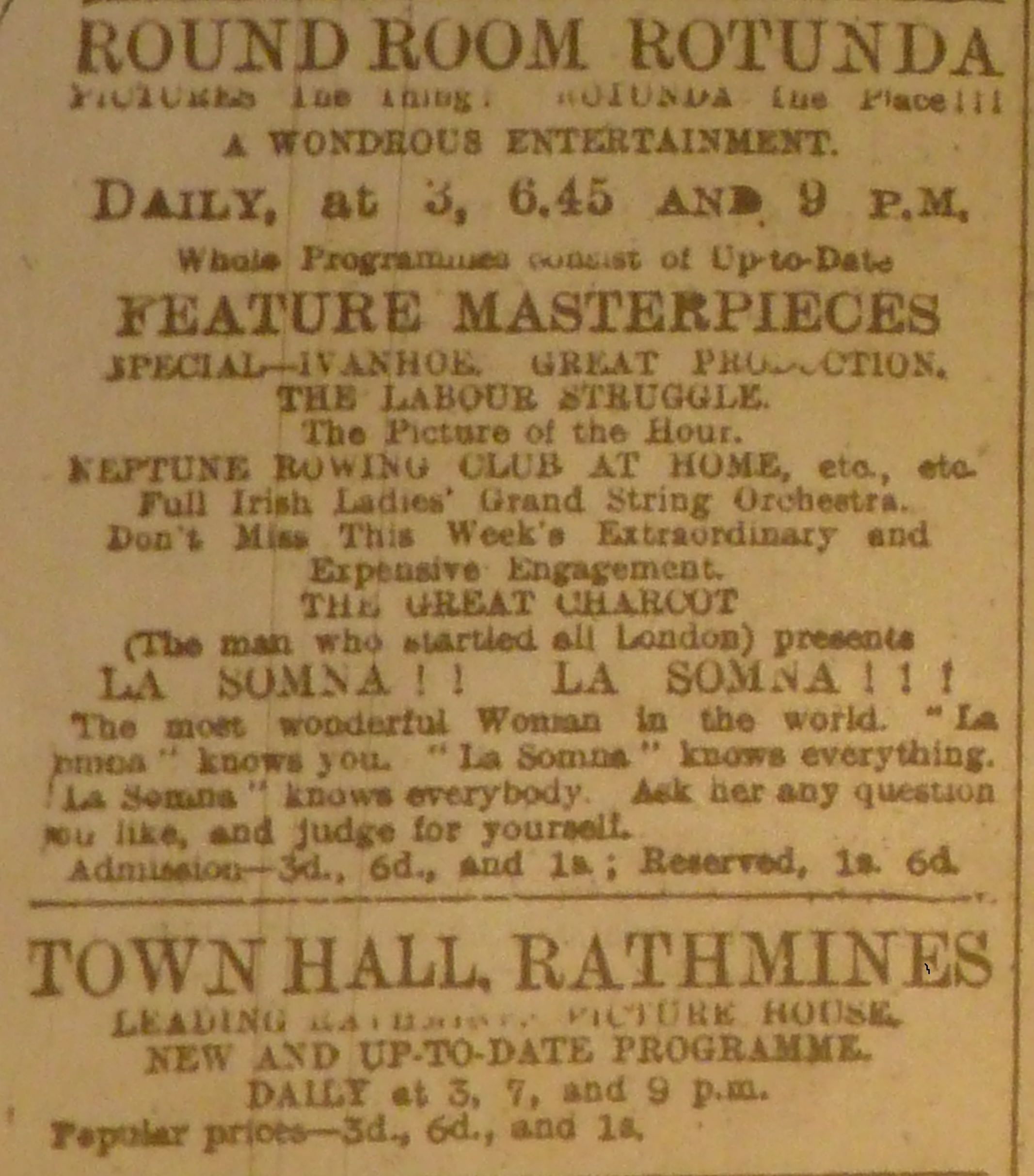
As such, activity in Dublin’s picture houses during the last week of August into September 1913 demonstrates something of how the new cultural institution of cinema would mediate the momentous Irish events of the 1910s, and how the institution would be shaped by these events in turn. As regards programming, only the Rotunda in O’Connell/Sackville Street (both names were used at the time, with the preference usually based on whether ones politics were nationalist or unionist) appears to have allowed unfolding events to influence its choice of films. For the three days (the usual length of a cinema programme) from 1-3 September, the Rotunda showed the American film The Labour Struggle (1913), made by Kalem, a film production company particularly well known in Ireland because of the many films they had shot in the country. However, The Labour Struggle had nothing to do with Ireland. Although a reviewer of another timely choice of production that week, the play The Labour Leader at the Queen’s Theatre, commented that “visitors will not see much resemblance between the hero of the play and the local product” (“The Queen’s Theatre”), another writer took allegorical meaning from the conclusion of The Labour Struggle:

If its conclusion were to be interpreted in one sense the raging fire against which by mutual help the employer and employes in the end fought successfully may be taken to picture anarchy. When both sides to the struggle came to recognise the peril which threatened them, they ceased to quarrel, and, turning their strength against the common foe, they subdued it, and then taking a juster measure of one another it looked from the last film as if they were likely “to live happily together ever after” (“The Rotunda”).

How Dublin workers and employers might – Metropolis-like – identify a common foe, the writer does not speculate, and a happy ending to the dispute must have seemed remote to anyone walking the city’s streets. In any case, the film’s engagement with radical labour politics would likely have been diluted not just by its conclusion but also by its appearance on a bill with the live telephatic performer La Somna, a screen adaptation of Ivanhoe (IMP, 1913), and two film comedies featuring Vitagraph star John Bunny.

Sep 1 1913 DEM Rotunda Labour Struggle

Advertisement for the Round Room Rotunda showing Kalem’s The [Great] Labour Struggle and a local film of the Neptune Rowing Club. Dublin Evening Mail 1 Sep. 1913: 4.

Apart from fictional representations produced elsewhere, local film producers could have filmed the demonstration themselves to produce a local news film. Norman Whitten had set up a company in May – with an office at 76 Talbot Street (“Irish Enterprise”) – to take such films. James T. Jameson and his sons, including Ernest who managed the Rotunda – but Ernest had got married on Thursday 28 August, so perhaps he deserves congratulations and the benefit of the doubt – had been shooting such films for a decade. Tellingly perhaps, neither Whitten nor Jameson caught on film Jim Larkin’s famous address to the proclaimed demonstration of workers in O’Connell Street on 31 August or the notorious baton charge that followed it, despite the fact that both had business addresses on or just off that street. The bills at Jameson’s picture houses had long been known for their local films. During the week of 25-30 September, both the Rotunda and the Jameson-run Town Hall Rathmines had shown films of each day of the prestigious Dublin Horse Show. And in lieu of a local strike film, The Labour Struggle was accompanied at the Rotunda by a film of a social event at the Neptune Rowing Club, “a local event of direct personal interest to numbers of the citizens” (“The Rotunda”), but those citizens were likely to have been the middle-class audience Jameson had long courted.

Quo Vadis Phoenix ET 9 Aug 1913

For Horse Show Week 1913, Dublin’s Phoenix Picture Palace revived Quo Vadis? Evening Telegraph 9 Aug. 1913: 2.

Other exhibitors more reliant on a working-class audience do not seem to have modified their bills in response to the strikes even to the extent that Jameson did. The Phoenix Picture Palace on Ellis Quay widely advertised the fact that it was showing Quo Vadis? (Cines, 1912) for the whole of Horse Show Week; in April, the Phoenix had been the first Dublin picture house to show the Italian spectacular. A similar taste for a full week of spectacle to attract well-heeled Horse Show visitors inspired the Dame Street Picture House to book The Life and Works of Richard Wagner (Messter, 1913), which allowed the house orchestra to accompany the silent film with a different Wagner selection at each performance. Other programmes from picture houses that advertised in the newspapers at this time – the Town Hall, Rathmines, the World’s Fair Varieties, the Mary Street Picture House, the Picture House, Sackville Street (called the “O’Connell Picture House” by the nationalist press), the Grand, the Volta, the Theatre de Luxe, the Camden Picture House, the Clontarf Electric Theatre and the Assembly Picture Hall, Serpentine Avenue – show no immediate impact of the Lockout.

Although the picture houses largely failed to represent the early days of the Lockout on screen, the impact of the struggle for workers’ representation that was being fought out in the streets was also felt in the auditorium, projection booth and cash box. Dublin projectionists had organized themselves into the Irish Cinematograph Operators’ Association and initially affiliated themselves with the National Association of Cinematograph Operators (“N.A.C.O. Dublin Branch”). However, in order to represent themselves in solidarity with other picture house workers, the projectionists later affiliated instead with the National Association of Theatrical Employees (NATE). As a result, even the unskilled cinema workers were able to make strong demands for fixed wages to the cinema owners at a special meeting of the Irish Cinematograph Exhibitors’ Association in early September: “In the case of the doormen this should be 26s. for the first doorman, 20s. for the second, and 18s. for the third. It was also proposed to give the inside attendants 12s. per week, the cash-box girl getting 15s” (“Pictures in Ireland”). The cinema owners were not altogether happy with these proposals, and by mid-September, NATE members would be picketing the Theatre de Luxe in Camden Street (Rockett 43). But that is a story for another day.

References

“Irish Enterprise.” Bioscope 12 June 1913: 781.

“N.A.C.O. Dublin Branch.” Bioscope 29 May 1913: 623.

Patterson, Joseph Medill. “The Nickelodeons: The Poor Man’s Elementary Course in the Drama.” Saturday Evening Post 23 November 1907: 10+.

“Pictures in Ireland.” Bioscope 4 September 1913:

“The Queen’s Theatre.” Evening Telegraph 2 Sep. 1913: 2.

Rockett, Kevin and Emer. Film Exhibition and Distribution in Ireland, 1909-2011. Dublin: Four Courts, 2011.
“The Rotunda.” Evening Telegraph 2 Sep. 1913: 2.